Issue no. 82
January 2026
Bloom and Gloom
Pour one out for the Chinese paddlefish, its habitat destroyed by dams on the Yangtze; the cryptic treehunter, the bird’s range in the Brazilian forest cleared for sugarcane plantations; or the gastric-brooding frog, one of over a hundred native species of plants and animals that have gone extinct in Australia since the continent’s European colonization. The death of a species is a tragedy, that of a genus an unfortunate statistic, what with vertebrate genera being lopped off the tree of life at thirty-five times the extinction rate of the past million years. All this at the behest of Homo sapiens, whose single-minded drive to render all of nature into commodities causes the pH of the oceans to plummet and the CO2 concentrations in the atmosphere to soar without pause.
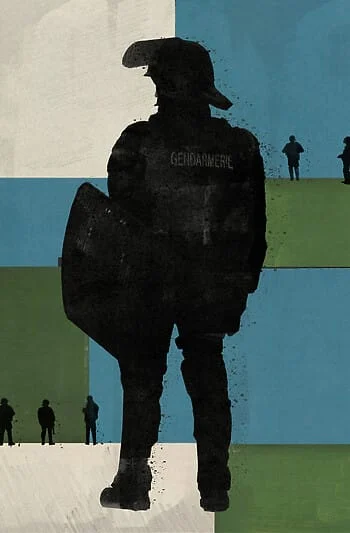
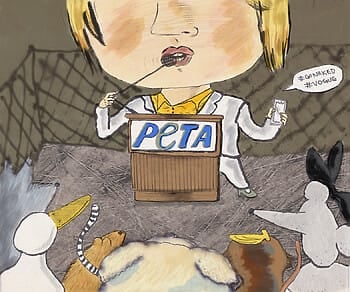
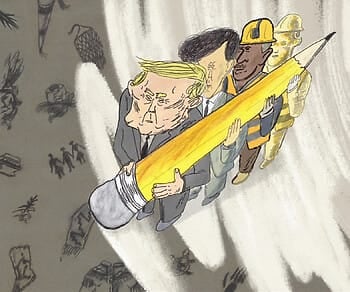
“Bloom and Gloom” surveys the state of the environment and asks: Who will defend the Earth against our predations? Not the People for the Ethical Treatment of Animals, as Lindsay O’Connor Stern writes, their all-too-human obsession with virality too solipsistic to be truly efficacious. Direct action against polluting agribusiness is met by state violence in Christopher Ketcham’s missive from France, where new reservoirs destroy ancient riparian systems. In the United States, as Lauren Markham reports, organic milk producers partner with Trumpist Republicans to fight against conservationists championing the roving wild elk of Northern California against the land-hungry cow.
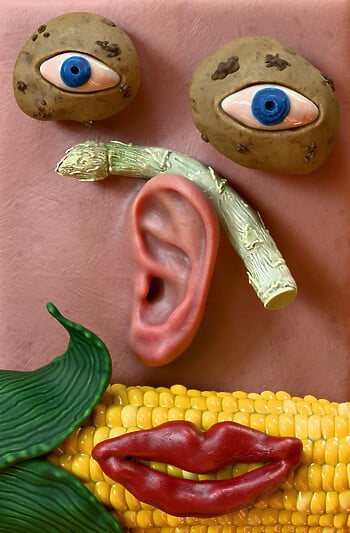
Elsewhere in domestication, ears of corn lament their toxic codependency with man in Anelise Chen’s short story, which provides a series of telepathic confessions from crops. We’re not so great at intraspecies cooperation, as history tells us: Scott W. Stern winds the clock back to the 1972 UN Conference on the Human Environment to show that international environmental law was dead on arrival, its utopic vision hamstrung by wealthy industrialists and the United States’ insistence on a unipolar world. A similar fate has befallen the Biden administration’s attempts at fighting climate change, with Trump rolling back fuel economy standards and decimating the Environmental Protection Agency. (Trump’s second term has seen many such attacks: Kristen Martin writes on the federal government’s current assault on Native sovereignty.) Biden’s technocratic efforts, however, excluded needed voices—e.g., the poor, the non-white—as Rhiana Gunn-Wright and Maria Lopez-Nuñez explain in their conversation with Dave Denison. In Ireland, as Caitlín Doherty writes, a preference for peat, that traditional (and cheap) source of fuel, is overridden by a Green Party more concerned with household emissions than poverty.
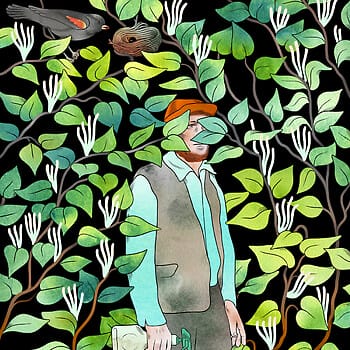
What’s one to do, then, as the wildfires rage and insurance companies pull out of markets, per Tyler Maroney’s interview with a public insurance adjuster? Antinatalists champion our own demise—“May we live long and die out,” goes the motto of the Voluntary Human Extinction Movement. That’s a narrative that’s a bit hard to swallow for those who have been born, and those who will give birth, though other mothers aren’t always so reassuring, as Madeleine Watts learns reading books about pregnancy while herself being pregnant. If we’ll never be able to undo the worst of our actions, perhaps we can appreciate nature’s adaptations, as Jennifer Kabat does with knotweed, an invasive plant species particularly fond of highways and parking lots, the latter’s flora chronicled in Andrew Conboy and Bobby Doherty’s field guide to what grows in the asphalt by the mini-mall.