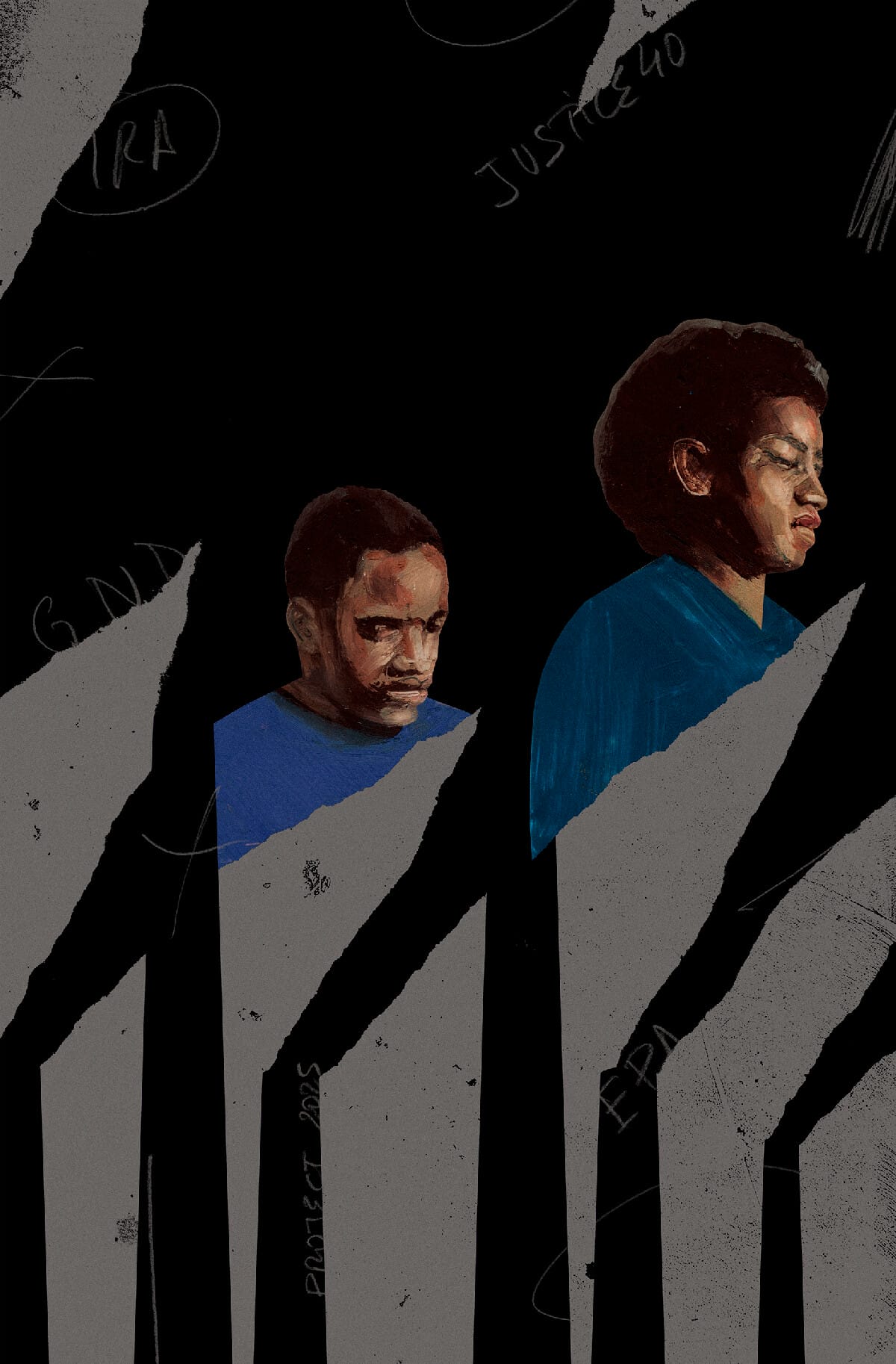
It’s an odd fact that when environmentalists in the United States talk about the ups and downs of their movement in recent years, much of the discussion turns on something called the Inflation Reduction Act of 2022. Efforts to push the potentially transformational Green New Deal—both the original resolution introduced in Congress in 2019 and subsequent legislation introduced by Vermont Senator Bernie Sanders—were consistently rebuffed by lawmakers, with opponents claiming it was too ambitious and expensive. Instead, after Joe Biden was elected president in 2020, environmental policy issued from key spending bills on infrastructure and inflation reduction as well as a series of executive orders. The IRA, the Biden administration’s signature law, was primarily marketed as a way to tame inflation by cutting the federal budget deficit. Yet the bill devoted billions of new spending to clean energy, while Biden announced parallel government-wide environmental justice policies: Justice40, billed as a way to direct investment “to disadvantaged communities that are marginalized by underinvestment and overburdened by pollution,” and the Community Change Grants Program, which Biden’s Environmental Protection Agency announced in late 2024 would award nearly $1.6 billion “to advance local, on-the-ground projects that reduce pollution, increase community climate resilience, and build community capacity.”
Though some mainstream environmental groups hailed the Biden policies as sweeping and historic, a single four-year term was not enough time to reverse decades’ worth of inadequate and counterproductive policies on climate. The Biden years ended with the U.S. environmental movement in a fractured and demoralized state, partly because of a sense that the administration didn’t do enough to break the grip of the fossil fuel industry. A critique emerged that the Democratic policies were not able to meld clean-energy initiatives with the kind of racial and class equity envisioned by Justice40. As Politico reported in the year after the passage of the IRA, “The most aggressively climate-minded president in history is getting flak from his green base.”
A single four-year term was not enough time to reverse decades’ worth of inadequate and counterproductive policies on climate.
Both Rhiana Gunn-Wright and Maria Lopez-Nuñez are leading critics of the top-down technocratic environmental policymaking that many in the Democratic Party see as the only serious way to address climate change. Gunn-Wright joined the New Consensus economic and social-policy think tank in 2018 to work on the development of the Green New Deal; she later worked for almost five years on environmental and climate policy for the Roosevelt Institute, a progressive research center. Lopez-Nuñez, as a community organizer in Newark, New Jersey, helped pass a state law that is described as one of the toughest in the nation in restricting the cumulative effects of pollution. Lopez-Nuñez was also one of thirty-six members of the White House Environmental Justice Advisory Council, which Biden created by executive order almost immediately after his inauguration in January 2021. From there, Lopez-Nuñez watched as the Biden administration looked for technocratic solutions in the energy sector while failing, in her view, to connect with working-class communities. Gunn-Wright also faulted the Biden policies on equity grounds, writing for Hammer & Hope in 2023, “Black people [are] at risk of being left behind and locked out of the clean energy economies spurred by the IRA.”
Then came the election of Donald Trump. With its Project 2025 blueprint drawn up by the Heritage Foundation, the Trump administration started to move aggressively to reverse as much of the Biden agenda as possible. Trump issued an executive order on the day of his inauguration freezing all IRA funds. Although courts ruled he did not have the authority to cancel spending that was already appropriated, his agencies found ways to eliminate billions in funding. Passed last summer, the administration’s “One Big Beautiful Bill” rescinded some of the IRA spending and tax credits while directing new subsidies to the fossil fuel industry. Meanwhile, the EPA made huge cuts in staff and ended funding for environmental justice measures, while the Department of Energy issued a report in July asserting that the effects of carbon dioxide in the atmosphere are “less damaging economically than commonly believed, and that aggressive mitigation strategies could be more harmful than beneficial.” The moves through 2025 were directed at clean energy and environmental justice: in August, Trump’s EPA announced the termination of $7 billion in grants that were meant to help low-income households install solar panels on their homes and expand community solar power initiatives.
In speaking over Zoom and following up by email with Gunn-Wright and Lopez-Nuñez this fall, I wanted to understand the critique that recent Democratic policies were skewed against minority groups, as well as their views on how the environmental movement might move forward with new strategies in these years of all-out federal assault. This conversation has been edited for length and clarity.
—Dave Denison
Dave Denison: Let’s zero in on what took place in the Biden years. You’ll hear from the Biden partisans about all the billions of spending on environmental policy that happened. There also was a lot of talk in the administration about how to benefit diverse communities, right? But was it mostly talk?
Maria Lopez-Nuñez: Let’s start with the good. For the first time, community organizations could get access to up to $20 million at a time. The Community Change Grants were the start of something beautiful—the start. And they should have got it out much faster. Most of those Community Change Grants did not go out until the last six months. It’s funny because the Trump people complain that they were throwing money out the window. I wish they were! They were being slow as molasses to get money out the door. Now, at the same time, there were a lot of bad things in the IRA that were pushed, quite frankly, by environmentalists. Like carbon sequestration: what we saw on the ground is these science-fiction projects that were going to absorb the carbon. Instead of ending fossil fuels, we’re going to suck carbon up, put it back in the ground, and push carbon dioxide along pipelines—sometimes to extend the life of fossil fuel production. Things like that were problematic, to say the least. Another example: the hydrogen fuel projects that are probably going to be financially stranded assets—because who uses hydrogen? The whole making-fuel-out-of-water thing costs too much money without federal investment and would require the whole system be built anew—it is extremely challenging to reuse pipelines we already have. Hydrogen gas molecules are so small there would be leakage. So once the federal money is gone the whole thing falls apart. A bunch of these projects were being pushed on communities of color with no ability to refuse. And then there were all the “community benefits plans,” which were, again, to communities on the ground, often seen as extortion. Like, “Oh, we’ll give you a few jobs, but you’re going to trade in generational health, and you’re going to have a lesser quality of life because of these power plants that get dumped in your neighborhood.” It was a mixed bag with the Biden administration. I thought they were terrible messengers. They kept relying on influencers and the lily-white environmental people to go spread the message. They were not talking to the average person.
DD: Rhiana, you’ve written that after the IRA you saw the United States “relying on white supremacy to decide how to allocate the power and resources that come from going green.” I think that you’re talking about a whiteness problem in the environmental movement.
Rhiana Gunn-Wright: Whiteness is a problem for policymaking in general, right? I don’t think it’s unique to the environmental movement. It’s pronounced in the environmental movement because the movement has been segregated for a really long time. It’s understandable, however, because we have a political system that privileges white people and white voters. So when they’re at the center of that system, and you have electeds who want to get elected through that system, putting forward policies that center those folks and help them the most makes sense electorally. For you to think that a policy that primarily benefits white people is a net good requires a studied ignorance about how we are connected as people in the country. It just makes terrible sense in terms of sustainability.
DD: Give a quick example, though, of how some of these policies were geared toward more affluent white people.
RGW: The IRA’s tax credits, for instance. Individuals were going to get money for, say, putting solar panels on your house or switching to an induction stove. Tax credits are not distributed equitably. They privilege people who have tax burdens—if you don’t have a tax burden, you’re not going to see that money. And you need to have the money to do the initial investment and have a home to begin with. There was very little for renters, who are disproportionately people of color. They’re younger and have less money. Homeownership is like 75 percent white in the United States. So if most of the money that’s moving through the IRA for individual electrification of residences is moving through tax credits for homeowners, that’s going to be disproportionately white and affluent. The vast majority of people who took those credits made over $100,000 a year.
But it was also the whole debacle around permitting reform with former West Virginia Senator Joe Manchin. This was a fight to curtail the environmental review process in order, ideally, to make it easier and faster to build clean energy infrastructure. The problem was that Manchin, and later much of the climate movement—especially the clean-energy wing—wanted to accomplish that by gutting the National Environmental Policy Act, the law that requires agencies to conduct environmental review for all energy projects, including fossil fuel projects. Weakening NEPA also makes it much easier to build these projects, largely by making it harder for communities to bring suits against them—even in places like the Gulf South, where residents are already saddled with tons of pollution. The climate movement advocated for permitting reform over the objections of the environmental justice movement, only for Trump to turn around and gut NEPA once in office, using the movement’s arguments to justify it, and cancel clean-energy projects and federal clean-energy funding. So now the only energy projects really benefitting from so-called permitting reform are fossil fuel projects.
What happens if you gut NEPA? How do people push back on fossil fuel permitting? These concerns were shrugged off by groups like the Citizens’ Climate Lobby, and the American Clean Power Association, and “abundance” advocates like Ezra Klein, the Institute for Progress, and the Breakthrough Institute as environmentalists being too picky, caring too much about birds and trees and not understanding what the stakes were. Many of the people who would be affected, particularly if fossil fuel projects became easier to build, were low-income folks—black, white, brown, Native, you name it—already living amid the kind of pollution that these dudes don’t even drive through. But it didn’t matter. Permitting-reform advocates put them in the same bucket as rich homeowners going to town council meetings to shout down a new wind farm. You’ll hear this language often when it comes to environmental justice: “They don’t understand the stakes of climate change. They don’t understand how our system works. They don’t understand the trade-offs that need to be made.”
DD: What you’re saying reminds me of a story I heard Yale professor Dorceta Taylor tell: when she got to her first environmental science class in college in the early 1980s, she was the only non-white person in the class. She asked the professor about it, and the professor came right out and said, “Well, black people aren’t interested in the environment.” So there is a stereotype—but that was a long time ago!
RGW: You see dog whistles in that direction still. If black people are involved in climate, they’re assumed to be environmental justice activists. Even if they don’t work on environmental justice, they’re called activists—even if they’re policy experts. Very prominent voices in the climate movement came out post-IRA and said they don’t know if environmental justice advocates care about climate change because they had reservations about the act.
MLN: I want to be clear: when I say white, I mean white upper-class rich people. Because I really feel a lot of solidarity with working-class white folks. They’re also being dumped on with a bunch of power plants and chemicals in their neighborhoods. Working-class people are busy enough as it is without having out-of-touch environmentalists tell them they need to take personal responsibility for stopping climate change. You get a solar panel on your roof and change your car, and that’s going to solve climate change? They don’t have the money to pay for those things upfront and then wait for a tax credit. And even if everyone did those things, they wouldn’t stop anything unless we go to the source, which is fossil fuels. Those are societal shifts, not individual ones like recycling or buying the right car. It should be about corporations ending their fossil fuel dependency.
RGW: You see this huge emphasis on expanding clean energy, but there’s so little attention paid to actually reducing the supply of fossil fuels. The Republicans have been very good about making clean energy an enemy of Americanness. You’re going to see very, very few politicians sign up to reduce the amount of fossil fuels or to deal with those very hard problems that come with fossil fuels.
DD: We don’t expect the Republican Party to stand up against fossil fuels. The Democratic Party, you know, there is a certain rhetoric that you’ll hear about climate change—but when it comes to a national movement against ExxonMobil and the banks that are behind ExxonMobil, the Democratic Party is petrified. And look back, not just to the Biden years but the Obama years. He’s the one who ramped up oil and gas and said, “That was me, people.”
RGW: You still get a lot of kudos on both sides for expanding fossil fuel production. In the Biden administration, there was this push and pull. You saw a stated commitment to environmental justice and steps toward that. But when you look into the programs, you see them watered down in a way to create the least amount of friction. For instance, Justice40 said that 40 percent of the benefits of environmental investment should go to disadvantaged communities. Sounds great. But then you start to get into the nuts and bolts of it. You’re not saying 40 percent of the money, you’re saying 40 percent of the benefits. Which means the Biden administration ends up counting funding of carbon capture and sequestration projects as part of Justice40—even though the White House Environmental Justice Advisory Council asked them not to. There were community benefits plans where project developers agreed to invest some of the federal funding they would receive for the project in “employment and equity benefits” for the host communities. You also end up seeing a lot of preexisting programs, like the Weatherization Assistance Program, the Rural Energy for America Program, or HUD’s Healthy Home Grants, where money that was already going to disadvantaged communities is also being counted as Justice40 funding. So what you’re seeing is not an infusion of new investments or benefits in these communities so much as existing funding being recategorized in a way that suggests, perhaps, more progress than was actually happening. Similarly, a lot of the clean-energy money going out in the IRA was not included in Justice40. The tax credits to corporations, that wasn’t included in Justice40. That means that some of the biggest investments that the federal government is making environmentally are actually not subject to Justice40, because that would have been a commitment to environmental justice that could have upset really powerful donors.
“If every policy has to help white people—at least white upper-class folks—have a greater share of material resources, there’s only so many ways you can solve a problem.”
MLN: There were plenty of opportunities for state and municipal Democrats to get in line as well and look at their own budgets. A huge percentage of federal funding goes through the states. If there was a true Democratic commitment to Justice40, then states with Democratic governors should have stepped up and implemented Justice40 allocations within their budgets. Communities needed to see that money faster, and the path to that was through state governors, who should have taken up the Justice40 mantle. That would have gotten them the approval that they were so desperately looking for. Instead, they were like, “Okay, let’s direct a lot of the money and programs toward red states, and then Trump will protect it.” Sixty percent of the announced projects, making up 85 percent of the investments, were in Republican congressional districts. The hope was that Trump and the Republicans would not attack the IRA after their constituencies saw the benefits, but they went after all the funds anyway. We’ve seen he respects no line. He’ll run over anybody, even his supporters.
DD: I feel like that brings us back to where we are right now, with the near-total triumph of fossil fuel power in this Trump administration. You know he’s perversely opposed to wind power and solar power. There will be no talk in this administration of environmental justice or diversity—that’s all been squelched. And I wonder if you both think that the environmental movement is in any shape to take this challenge on. Is it too fractured, or too slumbering, to respond now?
RGW: What Maria was talking about, about civic engagement, is so true. Especially at a time when people don’t trust government and see the government not responding to the desires and the needs of everyday people, particularly if you are working class, broke, poor. This is an example of white supremacy really hampering policymaking, because it hampers your ability to think broadly and widely. Because if every policy has to ultimately help maintain white privilege or help white people—at least white upper-class folks—have a greater share of material resources, there’s only so many ways you can solve a problem. And again, we have to be very real about the history of the United States. For all that we talk about democracy, true democracy—as in public participation, everyone mattering—is coded as black and brown and dangerous to white people. And you see it in the Republicans. There’s this call, “We don’t want a democracy, we’re going back to the republic. We need an ordered republic.” Some people get a say. Other people don’t get a say. Only some people are fit to make these large-scale decisions. So when you ask if we are too fractured, I think, in raw materials, in people power, no. Even big climate groups that people think of as Big Green, they’ve had budget reductions, but they are not broke. There’s still a lot of money in the environmental space. Clean-energy investments in the United States are really taking a hit; new investments in renewable energy, for instance, fell 36 percent in the first half of 2025—about $20.5 billion—compared to 2024. But they’re not gone. Those were historic levels of investment in 2024, so even with the decline, there is still money going into clean energy, especially globally, where investments in clean energy have actually increased. And the environmental justice movement, I think, has in fact not lost energy, the way that the climate movement has post-IRA. There has been, for example, a lot of attention around environmental injustice related to data centers, particularly with Elon Musk’s xAI facility in Memphis. I’ve seen far more coverage and energy around those kinds of stories than I have with, say, the increase of greenhouse gas emissions over the last two years. The question is whether we’re willing to work together toward a vision of climate activism that likely does not look the way that white, affluent folks want it to look or are comfortable with it looking. Because there are lots of ways to tie in climate to the things people care about: health care, affordability, even antiauthoritarianism. There’s so much that the climate connects to that we can build coalitions around. It requires not making climate secondary but knitting it into an overall idea of what a good life is. People of color are some of the most persuadable people on climate change, if you talk to them and make the connections. Environmental justice groups vary in size and strength, but they often do know how to do this sort of organizing.
DD: Maria is in the middle of some of that. As you know, there is no White House Environmental Justice Council—that was done away with very quickly under Trump. But I saw that you’re part of an effort now called the People’s Advisory Council on Environmental Justice. It sounds like you’ve got an idea to take some of this discussion out of Washington and ignite it at the grassroots, right?
MLN: Environmental justice got on the radar during the Biden administration. He said it a few times on the campaign trail and created a council after being elected. It was short-lived, but for people on the ground the essence remained the same: How do you have a functional government that works for you, that doesn’t work for corporations? To that end, me and some of my colleagues decided that the best part of the White House Environmental Justice Advisory Council was the public hearings. At this moment in time, we need more of them. I don’t think that it’s possible to come up with good policies without the people that that policy is meant to serve. And that’s why we’re on tour to listen to communities. We are going to places that are unexpected, often neglected, less visible. We’re making sure we then reach out to every corner of the state where folks are working toward a better quality of life. In Greensboro, North Carolina, five hundred people came out without any promotion. There’s a need out there. Many communities feel neglected by both parties and disillusioned with processes and their governments at all levels. They spoke to enduring issues and dysfunctions in government, about how the silos within agencies and between different departments meant that people lived with contamination and health issues without hope for resolutions. There were communities living with the impacts of failed federal policy, with no access to programs that might make a difference. They don’t know that there is a national movement and have never heard of most mainstream environmental organizations. It just shows how much of a field there is out there. There are so many people in all the corners of this country who have not been engaged yet. No movement has ever knocked on their door and asked them for their vote or their opinion on what policies should be. So that’s what we’re trying to do.
RGW: For the climate movement to help, there needs to be real, frank conversations and reckonings around race and class, right? We did a little bit after the Green New Deal. We did some of that coalition building. Part of the reason I was so heartbroken by the IRA was that it felt like we had tried so hard to build these coalitions and were starting to work together in a way that was more productive. But when the rubber hit the road, it was more of the same. Climate activists and environmental justice activists are going to be most powerful when we are knit together in a larger coalition. So that means supporting immigrant rights. That means supporting voting rights. Supporting as in leveraging our money, our connections, our bodies to further these fights. The Biden administration, for all of its successes, really showed us the limits of that model and the need to move away from it. It didn’t really get us to where we needed to go. We had the biggest climate investment that the United States has ever made, and people didn’t know about it.
MLN: The only thing I’ll add is, with the IRA, I was there at the signing. It didn’t look like America. I hope that when we have another historic bill that regular people in everyday communities are actually excited. They know what’s in it. They know how it’s going to work for them. And it wasn’t because someone just pushed messaging on them but because they were a part of creating it. It could be the day for the average American—we’ve got to give our country back to the everyday person.