, March 10, 2026
Problem Child
The creative crisis at Pixar
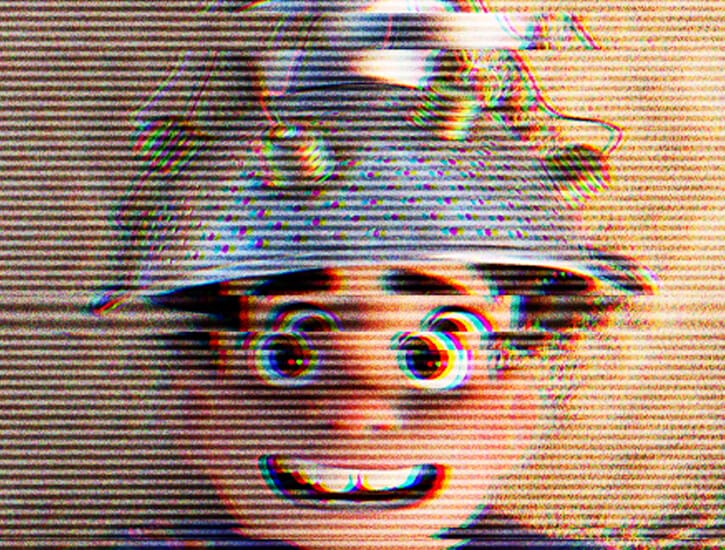
Pixar/The Baffler
Pixar was, for years, near bulletproof. It’s not a studio most have associated with crisis—even though it has courted disaster, only to come out on top in the end, numerous times throughout its forty-year history. Toy Story 2, arguably its best film, had a legendarily terrible production cycle, crowned by an incident in which the film was deleted from the studio’s servers and was only salvaged because a technical director happened to have a copy on her home computer. In cofounder Ed Catmull’s book about the company, Creativity, Inc., crisis seems to be something of a good-luck charm. Indeed, he writes that Pixar’s first film without a major one—Toy Story 3—made everyone nervous: staff bristled, interpreting comments about the calm atmosphere to mean “that they hadn’t tried as hard as their colleagues . . . that they hadn’t pushed themselves enough.”
Then things changed. In 2018, John Lasseter, Pixar’s chief creative officer and much-mythologized central “genius,” left the company amid allegations of workplace misconduct. His departure coincided with, and perhaps accelerated, Pixar’s efforts to diversify their output: they put out their first films focused on characters of color and built up a more diverse pool of directors, including Domee Shi, the first woman to solo-direct a Pixar film. But backlash was brewing over the supposed turn from “universal” to “woke” and “identity-driven” stories, which reached a fever pitch in 2022, when Lightyear, Pixar’s first post-pandemic theatrical release, was rumored to feature a lesbian kiss. Conservative media worked itself into a reactionary froth, and Pixar blinked, reportedly cutting the scene, only to restore it after an internal pressure campaign.
When Lightyear still bombed at the box office, internal blame landed squarely on the queer content, not on the fact that Lightyear was a conceptually baffling, mediocre film. Another scare came along when Korean American diaspora fable Elemental had a historically bad domestic opening week, even though it went on to turn a tidy profit. The receptions of these two films did not clearly indicate an audience rejection of identity-driven stories, but Pixar got anxious. In 2024, Lasseter’s successor, Pete Docter, told Bloomberg they would be reorienting back toward making the “most relatable films” possible, whatever that means.
But unease at Pixar runs deeper than culture wars over the days of Lasseter versus the days of diversity. The studio’s most recent two features could not be more different—a blockbuster, “mass appeal” sequel that topped the year’s box office, and an eerie original that had the studio’s worst box-office opening to date—yet they share something in common: they both smell like fear. Pixar isn’t just dithering about diversity; it has become visibly scared of children themselves.
The figure of the child collects cultural anxieties like an air filter collects dust. Children’s media has to navigate a foundational challenge: the things kids want can easily go against the things parents want. For children to have grand adventures, they often must get away from their parents. In the books I read as a child, this was usually accomplished in one of two ways: killing the parents or boarding school. (I’m British.) In Pixar films, the child usually comes into conflict with their parents over their lack of independence, initiating the film’s plot, with both parties ultimately learning from the experience and reconciling, offering the child more freedom and love in exchange for their return home. This template—the Finding Nemo model, if you will—is their go-to family story: Brave, Coco, Luca and Turning Red follow it faithfully, and it fits Inside Out and Onward pretty well too.
The figure of the child collects cultural anxieties like an air filter collects dust.
Elio, however, opts to kill the parents. When we meet our titular eleven-year-old, he has just become Pixar’s first fully orphaned protagonist, sent to live on a military base with his harried Aunt Olga, an Air Force major. His parents’ death has bisected his childhood into a “before” and a “now,” which is failing to become an “after”; grief has left Elio friendless and unable to imagine a future. In a sequence set to Talking Heads’ “Once in a Lifetime”—perhaps Pixar’s most effective needle drop since “Put on Your Sunday Clothes” in Wall-E—we learn what Elio wants: to be abducted by aliens.
This premise is so volatile that the rest of the film struggles to domesticate it. Is Elio suicidal, at least to some degree? Is there a deeper cause for his feeling unloved, his desire for escape, than an alien intelligence’s later pronouncement that he has “low self-esteem”? Olga, unable to cope with Elio’s defiant and erratic behavior, plans to pack him off to a militaristic boarding school. This is an opportune time to note that a week after Elio’s release last June, the Hollywood Reporter revealed that the film’s original director, Adrian Molina, had left the project years into development for unexplained reasons, with insiders claiming that the film was subsequently stripped of its queer themes. (Molina is openly gay.) As such, when I later went to see it—partly to see if there were early signs of an ideological shift at Pixar, partly for reasons of nominative determinism—I expected to see a straightened-out, blandly “relatable” film about a child who had been evacuated of dangerous subtext. What I instead found was someone clearly in the closet.
The new Elio had, indeed, changed: he had lost his interests in environmentalism and fashion, and the rumored “pictures suggesting a male crush” in Elio’s bedroom had been replaced by, or covered by, posters of spaceships. But Elio talks like he’s received a lot of off-screen messaging about the kind of, as it were, alienating masculinity he should be aspiring to. When he sends a message to an alien ship, he lies that he’s “shredded,” and he later unconvincingly gives himself a pep talk: “You’re the alpha. You’re the killer.” Yet, when aliens finally do come for Elio, they come for him just as he’s about to be attacked by a group of older boys who have chased him through the woods in the middle of the night. Elio’s desire for a new world, the film seems to intimate, comes partly from a lack of options in this one—not just because of Elio’s loss of his parents but because of his inhospitably gendered environment.
The aliens who come for him—who mistakenly believe that he’s Earth’s leader—end up being part of the “Communiverse,” a sort of galactic royal society of very posh, cowardly aliens. (This is the first way Elio domesticates Elio’s desire, containing it to a hankering for colorful drinks and cool gadgets.) A Communiverse reject, the warmongering Grigon, declares war against them; Elio attempts to negotiate, unwittingly insults him, and is thrown into prison, where he meets Grigon’s son Glordon. Glordon’s introduction cements the film as one about children seeking asylum from familial expectations of masculinity. Elio meets Glordon while escaping his own cell; Glordon happily agrees to help Elio negotiate with Grigon. “I’ve never been a bargaining chip,” chirps Glordon. “I’ve been a liability, a disappointment. . . . Lately, I’ve just been ignored.” Glordon doesn’t live up to his parents’ hypermasculine standards, and he secretly dreads the coming-of-age ceremony in which he will become a war machine, no longer able to “play, or swim . . . or do anything.” Elio, in a dazzling show of solidarity, attempts to free Glordon of the ceremony by sending a clone of Glordon instead. But Grigon sniffs out the subterfuge, resulting in a showdown where Elio must return to Earth, rescue an imperiled Glordon with his aunt’s help, and stop Grigon from destroying the Communiverse.
At this point, the film overplays its hand; having immersed itself in Elio and Glordon’s plight, it desperately needs to return both boys to the family, burying the specificity of their suffering and the role of their caregivers in creating it. Grigon wipes clean his years of insults and neglect with one spectacular act of love, saving Glordon’s life and uncertainly agreeing to his request not to become a warrior. “I may not always understand you, but I still love you,” Grigon says, delivering the rhetorical form of a Band-Aid for a bullet wound. Elio, meanwhile, must consider whether to stay with the aliens or to return to Earth with his aunt. The film feels tight with anxiety. Olga’s eyes fill with tears. When he chooses to go back to Earth, at least for now, his former quasi-suicidal despair is reconfigured as giving up too soon: “I didn’t give [Earth] a chance, but now I want to try. With you. We’re family.”
With this one line, Elio cuts to the heart of the creative crisis at Pixar. Hesitant to critique the military or the nuclear family, let alone venture too powerful an argument for the autonomy of the child, the writers throw up their hands: maybe the kid just needs to give hyperviolent and homophobic America a second chance. It’s not so bad, right?
If Elio is about evoking—and then frantically neutralizing—the child’s desire to leave the family, its immediate predecessor is about the control of a child’s desire on an even more intimate level. Inside Out follows five emotions that pilot the mind of Riley, an eleven-year-old girl. Joy, the pixie-like protagonist-within-the-protagonist, is a bouncy yet overbearing internal parent, desperate to keep Riley happy at all times and at all costs; this puts her in opposition to Sadness, whose interventions go against Joy’s goal of total, brute happiness. (Riley’s parents’ incantation of “Where’s my happy girl?” starts to sound like a threat.) In the original film, Riley’s family moves, and her feelings of loss threaten to destroy her carefully maintained happiness. In the end, of course, Joy is saved, and with the help of Sadness, Riley withstands the move. Fear has been pleasurably defused, but further crises lurk on the horizon.
It’s fitting, then, that the sequel stars Anxiety itself. Inside Out 2, Pixar’s highest-grossing film to date, is set about a year after the original; it bills itself as the story of Riley hitting puberty, but it’s less about puberty per se and more about being torn between childishness and self-consciousness. Newcomer Anxiety, who is better attuned to the judgments and disapproval of older kids, argues that Joy is setting Riley up badly for high school, where her well-being will depend on making new friends. So Anxiety stages a coup, attempting to worry enough about Riley’s future that she can save Riley from it.
Pixar’s most recent child protagonists reveal them to be a studio trapped on battleground of the “family friendly.”
Like its predecessor, Inside Out 2 is ostensibly about accepting change and uncertainty. Yet Inside Out 2 feels so straitjacketed that the real message seems to be more that surveillance and control are in a child’s best interest. When, in the ending sequence, Anger tells us that Riley sometimes may “do the wrong thing” and that this renders her no less lovable, the illustrative example shown is Riley accidentally breaking a pepper mill. A pepper mill! The it’s-okay-to-have-flaws mega-blockbuster cannot actually afford Riley more than a minimal license to make mistakes. Her climactic error is accidentally knocking over a friend, which the film takes pains to emphasize is accidental; this is a noticeable downgrade in autonomy compared to the still recent Turning Red and Luca, whose protagonists both deliberately betray their friends at points.
In the end, Riley feels focus-grouped to the point of suffocation, scripted so rigidly to serve as a symbol of relatable American childhood that she cannot express her autonomy or transgress the boundaries of normality. Even the specter of impermissible thoughts is scrubbed from the film: at one point, the emotions briefly move past Riley’s “Mount Crushmore,” a diorama that shows off her crushes on boys; as this serves no narrative purpose, it’s difficult not to interpret this moment as an attempt to hurriedly safeguard Riley’s sexuality, within a film where Riley has no male love interest and is visibly awestruck by Val, her female teammate. Pixar has, again, written the character of a child and then recoiled in fear.
We are in a scary time for queer—and especially trans—kids. Project 2025, which is apparently “52 percent” complete, is viciously focused on mandating a disciplinary, male-dominated, heterosexual vision of the American family through legislative means. Half of U.S. states have banned gender-affirming care for minors. In July, the White House joyfully intoned that Trump “Promised to End Child Sexual Mutilation—and He Delivered,” by which they mean transgender health care. And last fall, the Supreme Court heard a Colorado therapist’s challenge to a ban on conversion therapy for minors; if they deem the ban unconstitutional, which seems likely, the widely condemned practice could make a comeback in states where it is currently restricted. But even if the court upholds the ban, workarounds are already prominent, such as the ability for therapists to launder conversion practices through rubrics like “gender-exploratory” therapy. That’s just the tip of the iceberg.
Too much ink has been spilled on the topic of Disney and Pixar’s dealings with queer representation, which mostly consists of one-dimensional lesbian characters and ham-fisted self-censorship. But the Pixar films that have resonated most with queer audiences, at least in my experience, don’t require those cameos; they’re stories about intimacy and desire, in the platonic or childlike sense, and about the necessity of certain forms of disobedience in order to live a free life. When Pixar cares about what kids might actually want, the result often looks pretty queer. But the studio’s recent output has been animated by intense fear of that desire.
Is that because of Trump? Disney? Money? The impulse to remain “universal”? None of these pressures are new, though they have evolved over time. Pixar’s most recent child protagonists reveal them to be a studio trapped on the battleground of the “family friendly.” To be family friendly can mean a lot of things: appropriate, welcoming, conservative, natalist. Here, it means naturalizing more subtle restrictions on children as ultimately beneficial. Pixar has become terrified of creating—or endorsing—a child who is too free, who wanders too far, who remembers their grudges too well. The likes of Elio and Inside Out 2 are ambivalent, strange, and sad, suffused with a knowledge that something is wrong with what is expected of kids, but unable to comment on what that something might be.
The signs for Pixar’s immediate future are not promising. Toy Story 5, the studio’s next “relatable” movie, will feature Woody and the gang going up against Lilypad, a malevolent iPad-esque tablet. This could be a premise that allows Pixar to move back onto more exciting territory, to think about the autonomy of children and their desires, but that might smack of radicalism. After all, in an era of hyperconservatism and brutish domination, to be “family friendly” is to commit to disciplining children over understanding them.