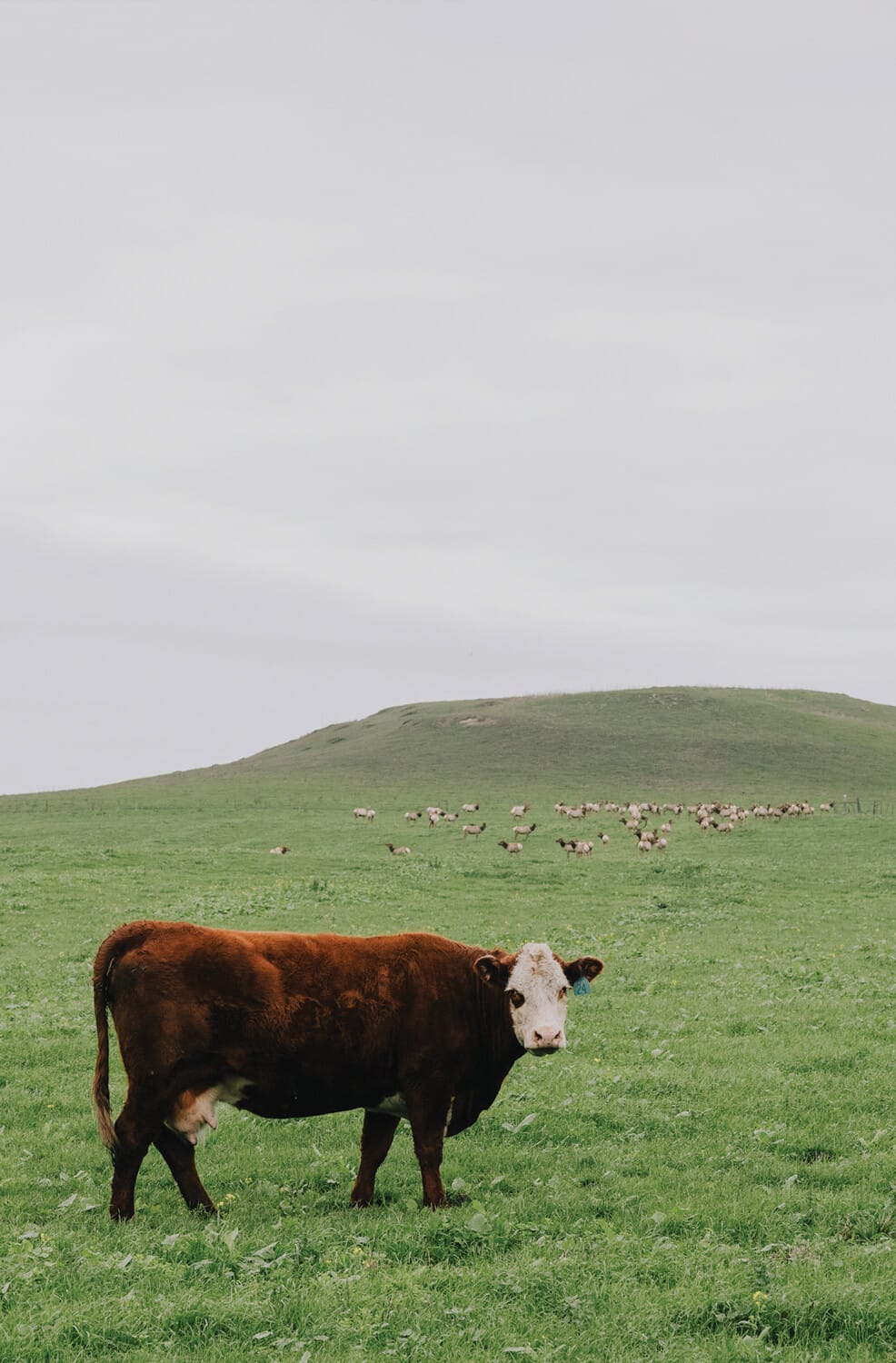
It was the tule elk, of all things—those velvet-pelted, doe-eyed creatures once thought extinct—that ultimately drove the organic ranchers, an imperiled species themselves, out of the Point Reyes National Seashore. Point Reyes is a place whose beauty is heightened by contrast: a foggy peninsula where, just a thirty-mile drive north of San Francisco, coastal prairie meets virgin forest, rugged tide pools meet wetland esteros and sprawling lagoons, and, at least until very recently, domesticated livestock graze on oceanfront pastures within mooing distance of the fabled elk—the oafish cows and majestic tule the town’s unofficial odd-couple mascots.
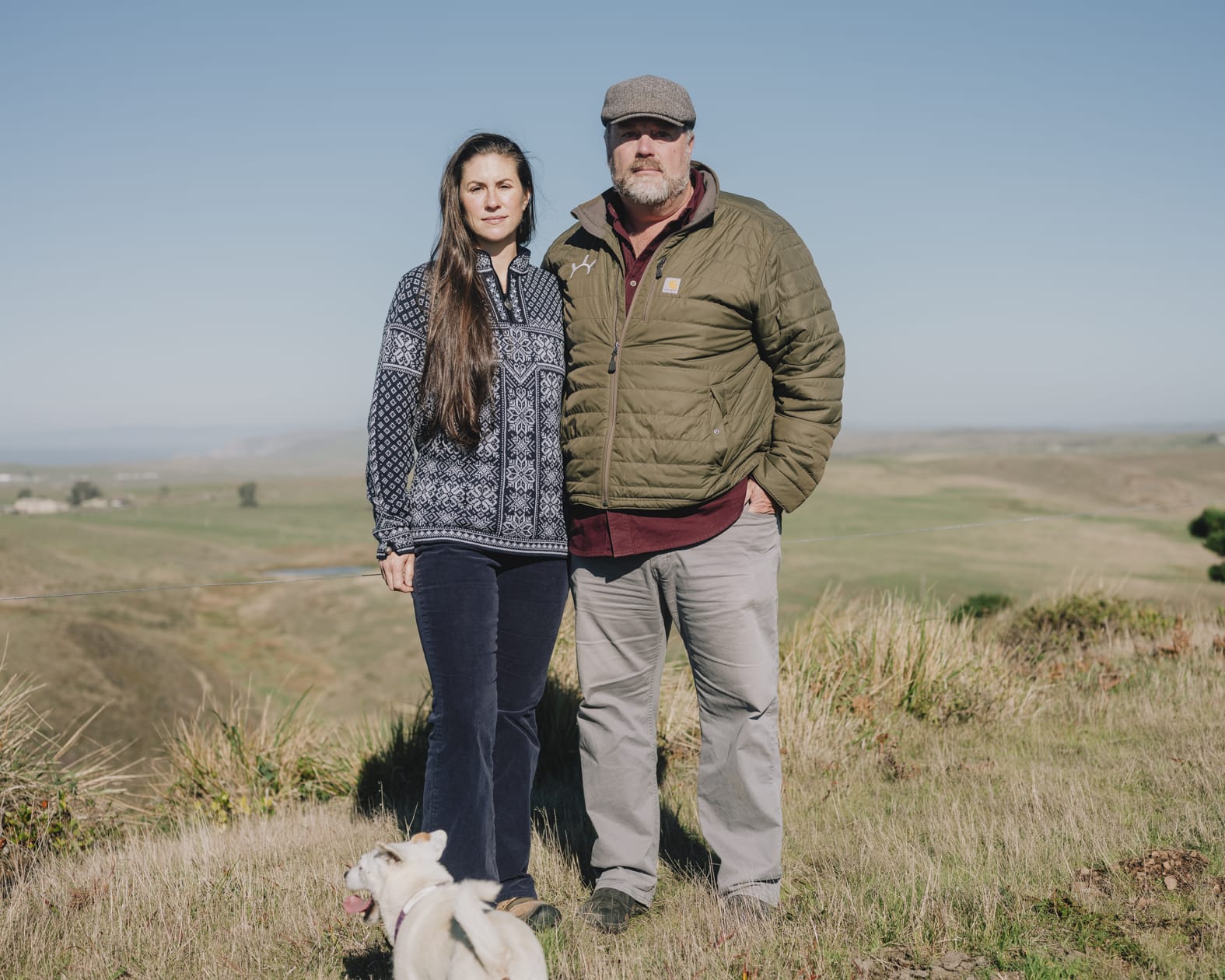
In October, I took a drive through this landscape with David Evans, a rancher who grew up inside the Point Reyes National Seashore, the federally protected wilderness area that stretches along eighty miles of undeveloped coast. Evans’s family has been running cattle on the peninsula since before California was even a state, but despite his beef bona fides, he isn’t your stereotypical meat-and-potatoes cattleman: in addition to riding his ATV, he likes to forage for mushrooms and make jam. In 1999, he launched Marin Sun Farms, an organic, pasture-raised meat and egg company he now runs with his wife, Claire—a former vegetarian—that supplies some of the Bay Area’s highest-quality organic meat to its most upscale markets and restaurants.
Since the Point Reyes National Seashore was established in 1972, ranches like the Evanses’ have been a part of a Bay Area sustainable-food revolution that helped reconfigure our nation’s understanding of what we should eat, how we should eat it, and the ethics of its production. Bill Niman, of Niman Ranch fame—now the largest source of humanely raised, sustainably produced meat in the entire country, sold everywhere from Whole Foods to Michelin-starred restaurants—began ranching in what is now the Point Reyes National Seashore in the early seventies. Until last year, Albert Straus, of the beloved Straus Family Creamery, sourced nearly 15 percent of his organic milk from dairies inside the park. Evans’s Marin Sun Farms created a one-stop shop where the region’s organic ranches—some of them his neighbors on the Seashore—have their meat slaughtered, butchered, and sold at market, cutting out a number of middlemen and thus reducing costs and waste. Encouraged by their geography, the high quality of land, and the environmental regulations that govern the hundreds of people and some 1,500 species of plants and animals that live within the boundaries of the Seashore, many Point Reyes ranchers have joined influential Bay Area locavores like restaurateur Alice Waters and food writers Michael Pollan and Samin Nosrat in advocating for local food systems that support regional economies, reduce carbon and the use of toxic chemicals, improve human health, and restore soil quality. Ranches like Evans’s were presented as proof that these grand designs were possible.
So successful (and rare) is this regional model that, when then-Prince Charles visited the United States in 2005 on an official tour of promising organic agricultural practices, he made a point to visit the farmers market in the eponymous town of Point Reyes—situated just a few miles outside the park boundary, with a population of 485—where he chatted up vendors, celebrating the region as one of the most successful examples of a pastoral landscape that still actually fed people rather than just attracted tourists and looked quaint in social media posts.
At the same time, since 1978, the Seashore has provided crucial habitat to dozens of threatened, rare, or endangered species, including the tule elk, which had nearly gone extinct until finding sanctuary in Point Reyes. In fact, the Point Reyes National Seashore has proved to be one of the only places on Earth that this imperiled subspecies has been able to thrive, flourishing alongside the cattle. If elsewhere in the United States people with an investment in the country’s natural landscapes have too often fallen into a set of antagonistic binaries—tree huggers versus loggers, conservationists versus hunters, vegetarians versus ranchers—the beef and dairy farmers and the wilderness lovers of Point Reyes achieved a rare peace. Their conviviality proved that ecosystem conservation and sustainable food production could, in fact, coexist, even on a warming planet teeming with evermore hungry humans.
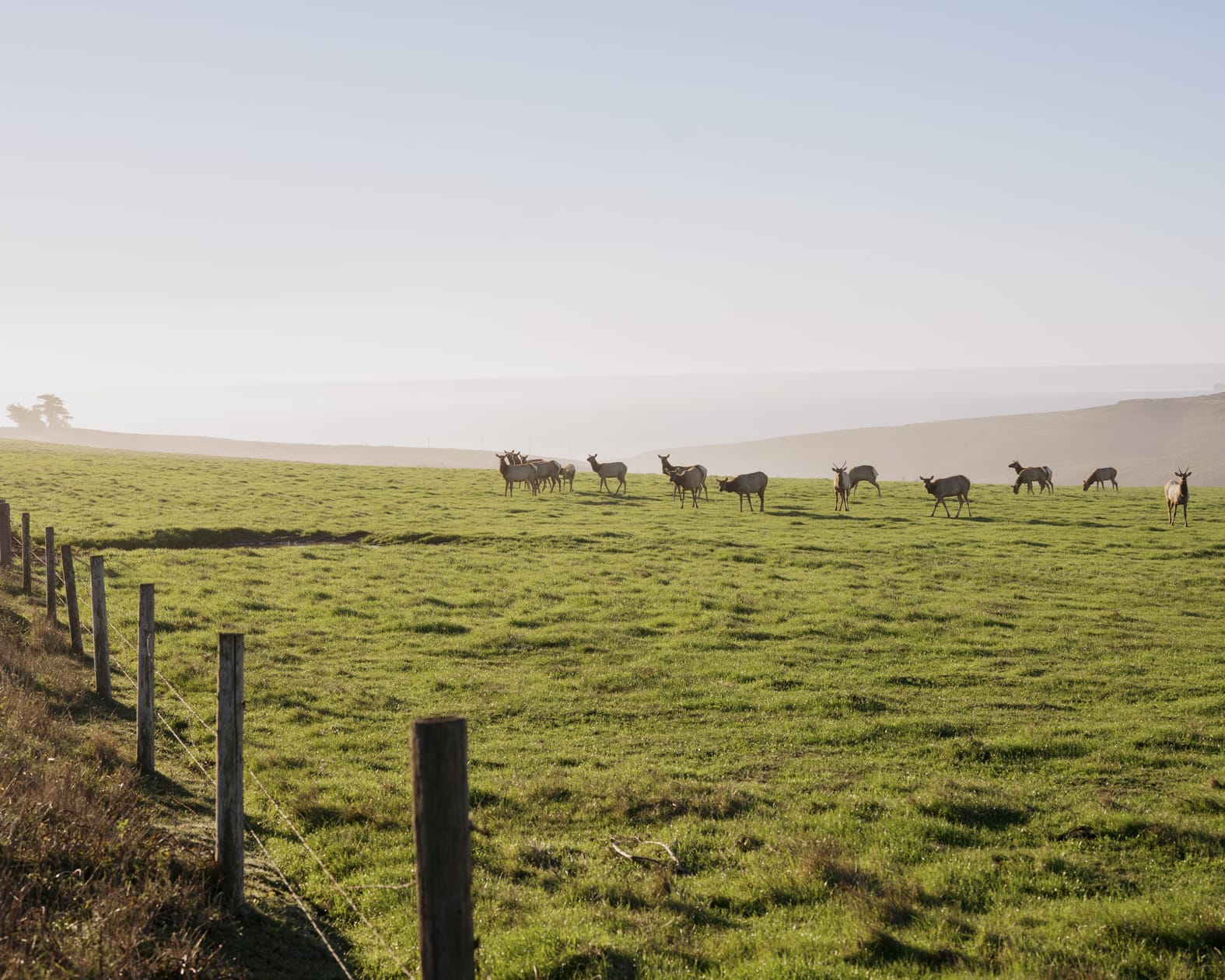
But that accord collapsed a few months before my ride-along with Evans, and now he suddenly pulled his truck over to the road’s shoulder so that he could point out to me a sign of the changing times. A tule elk buck, rack of horns and all, marched unimpeded through its new empire: a former cow pasture whose tenants had been moved out months ago. The animal was just a tawny speck trudging through a field of browning grass, overgrown because cows no longer grazed there, but even from the car I was impressed by the tule’s stature, its silhouette bringing to mind the dramatic and rare presence of a moose.
“Look at that beautiful buck,” Evans said tenderly. So tenderly, in fact, that I wondered if he’d momentarily forgotten that the elk—or their champions, in any case—had been the cause of the doom that had befallen the ranchers of Point Reyes.
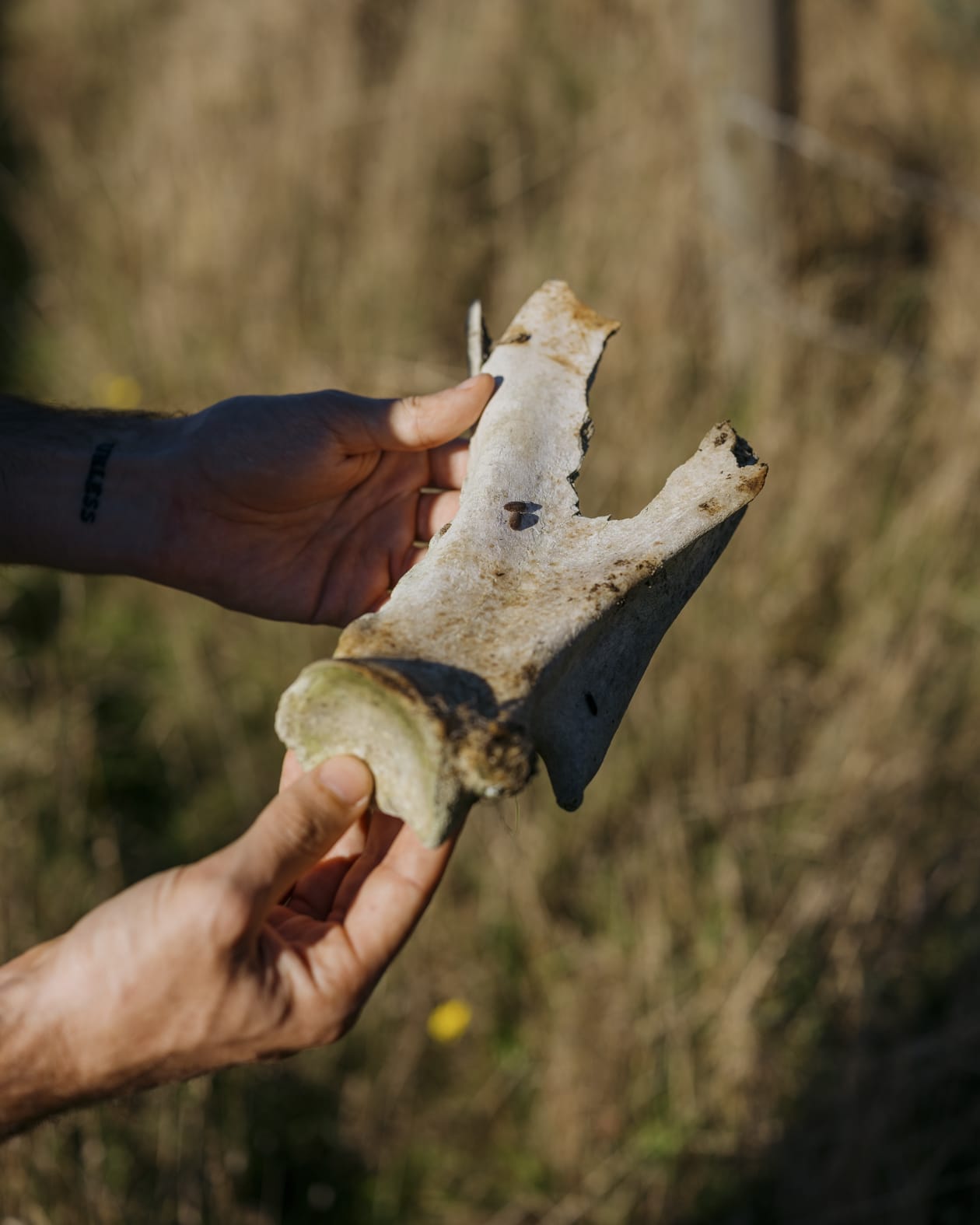
The story of how and why exactly the tule elk and their defenders led to the ranchers being kicked off their land has more twists and turns than the road on whose shoulder Evans and I were presently parked, but the most important part to understand is that, one day in the summer of 2012, the tule elk had suddenly and mysteriously started turning up dead, their emaciated bodies found rotting into the ground as if they were on an episode of CSI: Animal Victims Unit. That’s when the forty-year peace between the ranchers and conservationists started to go cold. Some two hundred elk died over the following two years, nearly halving the population of the imperiled species. Animal rights and environmental activists blamed the ranchers’ resource-intensive presence on the Seashore, which forced the elk to be fenced into a preserve when instead, they argued, they should be free to roam. (The activists also blamed the National Park Service for letting ranchers operate on the park’s land in the first place.)
The specifics of whether the ranchers’ presence really was to blame for the elks’ mass deaths and the details of the lawsuits and countersuits and counter-countersuits that followed are yet more zigzags on the switchbacked road that leads to the present, but the outcome of it all is straightforward enough. In January 2025, the Park Service announced the results of a mediation settlement that evicted all but two of the local ranch operators from the Point Reyes National Seashore, leaving the farms and creameries vacant and nearly a hundred (mostly Latino) tenants and ranch hands without jobs or homes, and halting the annual production of roughly a million gallons of organic milk and tens of thousands of pounds of sustainable and pasture-raised beef. At the behest of conservation-minded environmentalists, in other words, the local food system was being eviscerated, with some environmentalist organizations in the area now cheering the eviction of their neighbors who had produced some of the most sustainably and humanely produced meat and dairy in America. “This agreement will finally free the park’s magnificent Tule elk, forever,” wrote one organization, In Defense of Animals, celebrating the departure of ranchers like Evans, whom they mocked as “sewers of the land.”
From afar—well, from my home in nearby Berkeley—I had watched the conflict unfold with a mix of skepticism and disbelief over some of the activists’ depictions of the ranchers as “greedy corporate monsters in overalls making a buck any way they can,” as one blogger put it. Environmentalists picking on small organic farms, for goodness’ sake? The whole affair seemed almost cartoonishly Californian, like an Onion gag skewering my home state’s love of litigating the absurd. The punch line to the joke came in the spring, when the kerfuffle attracted the attention of a group of Republican lawmakers on the House Committee for Natural Resources (led by Representative Ben Westerman of Arkansas, no less) who opened a congressional probe to challenge the legal decision. Along the way they made sure to milk the cow conflict for culture war clout by insinuating the ranchers’ removal was not only a Democrat conspiracy that had “muzzled” the cattlemen, per a letter penned by the lawmakers announcing their inquiry, but also evidence of what inevitably occurred if you let crazy environmentalists pass laws. When Chadwick Conover, a local surfer and wellness influencer better known as Ceadda, texted Health and Human Services Secretary Robert F. Kennedy Jr. for help fighting the supposed leftist plot, Kennedy declared he was working “full bore on a solution” and dispatched a member of the Department of Interior to visit Point Reyes. The absurdity had an air of slapstick to it, but the Republicans’ narrative about overzealous environmental legislation wasn’t funny, especially because it seemed to all too conveniently complement the unprecedented attacks that the second Trump administration has launched on wildlife and environmental protections—things like firing one thousand National Park Service employees, issuing five thousand new oil- and gas-drilling permits on public lands, and, of course, wiping out USDA funds that support organic farmers while dismantling federal regulations on the “certified organic” label. While clearly in bad faith, however, the Republican interlopers also sort of seemed to have a point. Was the war of Point Reyes yet another instance of liberals’ (decidedly non-vegetarian) lust for cannibalizing themselves? I hoped not. But even if it was, there still seemed to be something else afoot, some deeper conflict between differing visions of what “nature” even was, that had caused everything to unravel.
All of this clanged around in my head in time to the truck’s suspension as we continued our tour of the battlefields, Evans steering us through a swath of coastal prairie, the Pacific Ocean coming into view ahead. We passed his childhood ranch near Abbotts Lagoon, where his parents still lived and which his sister now operated; it would shut down and the family would all vacate before spring. We passed two closed ranches and one soon-to-close dairy. By April 2026, all of the ranchers and their workers would be gone.
Except Evans. He was one of the two ranchers staying, at least for now, the result of yet another one of those dizzying zigzags (in this case a legal one, his staying behind being the result more of an accident than defiance). But even though he’d been spared, he wasn’t sure for how long he’d be able to continue to make a living, or any kind of peaceful life, on his patch of land—what with the brutal costs of operating a small-scale ranch, the vicissitudes of his Park Service landlords, and the drone-wielding environmental activists who’d been surveilling the ranches, and his in particular, of late.
As if to underscore this newfound isolation, on the drive back to Evans’s ranch we came across a final sign of change: a large, southbound truck cresting a hill, followed by two more, bellowing toward us. It was the Nunes dairy ranchers hauling the last of their livestock out of the park. The cows were headed to Oregon, meaning the milk was leaving the local foodshed for elsewhere, where it may or may not stay in the hands of organic producers. Other evicted ranchers were setting up new operations in even farther-flung states. Others still had quit ranching altogether, taking more organic food out of circulation in not just the local economy but the United States at large.
Evans let out a long low. He still didn’t see why elk and cattle, organic ranchers and conservationists, couldn’t all just get along. The ranchers of Point Reyes had been stewarding this land for generations, but somewhere along the way, he felt, the Park Service—like many of his neighbors—had turned on him. “It feels like they’ve just left us out here to die.”
Prairie Shadows
If it wasn’t for the heroics of a cattle rancher named Henry Miller way back in 1878, there likely wouldn’t be a single tule elk left alive on Earth.
At the behest of conservation-minded environmentalists, the local food system was being eviscerated.
Prior to that—which is to say also prior to the Gold Rush and the arrival of scores of settlers to the West Coast—the tule elk had thrived in California for thousands of years. Along with bison and pronghorn, they had been a native keystone species, an animal that held the whole ecosystem together. The elk had been so plentiful that early European visitors noted that they covered the coastal prairie like a shadow. But the settlers who rushed west chasing gold or hitching rides on the new transcontinental railroad soon decimated the tule elk’s population, in part by turning so much habitat into farms filled with cows. So drastic and rapid was the tule elk’s decline that a California law banning all elk hunting was passed in 1873. The intervention came too late, however. By then, hunters, scientists, and government representatives all thought the elk had gone extinct.
So imagine Miller’s shock when, one day, at his vast ranch just west of Bakersfield, his workers discovered tule elk drinking from the tule marshes of Buena Vista Lake. (Tule, a staple of the elks’ diet, is a wispy, grass-like plant that thrives in shallow water.) It turned out they were part of a herd of thirty or so that had taken refuge on Miller’s land—the last thirty on Earth. Feeling responsible for the species’ survival and not wanting to attract the attention of trophy hunters, he fenced off a portion of his property, offered a $500 reward for reports of anyone coming after the elk, and—save for his workers and a local game warden—did his best to keep the herd’s existence a secret for decades, until it grew too large and began to trample his fences, causing him to reach out to state officials for help moving them elsewhere.
Fast-forward to 1971, a big year for the tule elk. With a population now numbered roughly five hundred alive on the entire planet, with a small herd still living at now-deceased Miller’s ranch and the rest scattered throughout different parts of California, the elk was added that year to the endangered species list, created under President Lyndon B. Johnson in 1966 to provide the first federal protections for vulnerable species. That same year, the state passed legislation funding the relocation of the elk to suitable habitats with the goal of reaching two thousand tule elk statewide. One of the locations chosen was the newly created Point Reyes National Seashore, where, in 1978, the Park Service moved ten elk from the Miller ranch to a fenced-in 2,600-acre preserve on a former dairy in the northernmost tip of Point Reyes.
The elk arrived to a somewhat unorthodox landscape, especially for a national park. In addition to being home to hundreds of bird species, 18 percent of all of the plant species that grow in California, and aquatic life like octopuses, anemone, and gargantuan elephant seals, the Seashore was also home to more than a dozen family-run dairy and beef ranches that took up about half of the park’s total land. Among the eighty-five million acres of federally protected parkland in the country, Point Reyes was one of the few parks that hosted year-round commercial agriculture.
This peculiar arrangement was the result of the political compromise required to create the park. While Congress had recommended the creation of the Point Reyes National Seashore all the way back in 1935, the rising costs of land in the area, the machinations of local developers who saw big dollars in the landscape, and the ranchers’ longtime refusals to sell their pastures had successfully stymied that and every other attempt to seal the deal since. But in 1971, California politicians had come up with a unique financial and political proposal: buy the land from the ranchers below market value ($14 million back then, about $100 million in today’s dollars) and allow them to rent the land for years to come. It worked. Fourteen ranchers, among them David Evans’s great-grandfather, sold their land to the government in exchange for twenty-five-year leases (and, in one case, a life estate—essentially, a lifelong lease). They did so under the understanding—which was never explicitly enshrined into law—that they could ranch there in perpetuity as long as they kept their land dedicated to ranching activities that did not “upset the pastoral scenic effect of this particular area” and did not threaten the park’s fundamental purpose: to offer public recreation opportunities and preserve the cultural and natural landscape of the country’s wild spaces.
If the terms sound somewhat vague in practice, they were—almost ensuring, if inadvertently, dueling future interpretations. As one history of Point Reyes put it, “Legislators discussed and tried to resolve some of the land-use problems, which they knew would make life complicated for future administrators at the park. They ironed out some of the potential conflicts in their construction of the Point Reyes bill, but other problems were only temporarily avoided or swept under the rug in order to ensure the bill’s passage.” They kicked the can down the road, in other words, to ensure the park’s creation.
Because permanent ranching isn’t typically allowed in national parks, the architects of Point Reyes came up with another novel idea: the creation of a “pastoral zone” of some twenty-six-thousand acres to be privately managed by the ranchers with park oversight. Once the ranchers were officially operating on public land, the Park Service limited ranching activities in order to maintain the integrity of the ecosystem. Even within the pastoral zone, the service partially dictated which pastures could be grazed and when and which areas (erosion-prone hillsides, for instance) were off-limits. Only certain activities were allowed: a ranch couldn’t just start a pig operation without special permission and such permissions for expanded use were often denied. Park administrators conducted reviews, too, to ensure that no pasture was overgrazed, animals were being well maintained, and water contamination was being controlled. The Park Service strictures, while not formally prohibiting pesticides and other harmful chemicals, helped create an atmosphere that encouraged and incentivized ranchers to stay (or become) organic. Having the federal government as landlords meant a good deal of red tape for the ranchers—it could take days to get permission to build a new fence, for instance, let alone to build a new barn or dig a well—but the ranchers thrived.
The elk did, too, taking easily to the Point Reyes ecosystem that had generations earlier been the creatures’ home. They remained in a relatively small fenced-in area of the park, and tourists from all over the world came to behold the miracle creature in the semiwild. The purpose of the fence was to keep the elk out of the cattle pastures to the south, so as not to disturb the cattle or their forage and also to prevent the transmission of diseases from one species to the other. The ecological impact of grazing in Point Reyes is complex—ranching, after all, had contributed to the displacement of the native ruminant foragers in the first place—but grasslands do still need ruminant grazers. Cattle ranching now served an important function in the ecosystem of the park’s pastoral zone, playing the role the tule elk had once done back when they’d been numerous enough to shadow the state’s prairies. By munching grass, they help maintain the health of plants and soil, encourage a diversification of native species, prevent fires, and provide habitats and hunting grounds for the numerous animals that live there. Even though cattle aren’t a native species to California like the tule elk, they, too, can accomplish these tasks extremely well when managed correctly. The Point Reyes National Seashore administrators saw it as a success of their experiment that their ranching tenants successfully helped maintain critical habitats for raptors, who need low grasses to hunt for voles, and other creatures like the endangered California red-legged frog, who thrived in the ranches’ stock ponds.
Still, even though cattle was now king, the elk population did so well in Point Reyes that the herd began to outgrow its sizable enclosure. To address this, and to encourage further growth and genetic diversity among the inbred elk, the Park Service introduced twenty-eight tule in 1998 to a wilderness area near Limantour Beach, far from the pastoral zone, where the herd roamed free. Within a few years, this group had split into two, as healthy, growing herds do: a signal that this free-range experiment was working. But there wasn’t enough space on the peninsula to set all the tule elk free—certainly not without risking angering the ranchers, who had reasonable fears that too many tule elk would cause competition for grass—and so the main herd remained hemmed in between the Pacific Ocean, Tomales Bay, and the fence that kept them off the pastoral zone.
Then came the drought in 2012. The two free-roaming herds fared fine, but the enclosed elk died by the dozens. Those fenced in were living without adequate year-round water sources, and in some cases thirsty elk had been found drinking from mud pits. As tule elk biologist Julie Phillips explained to an activist at the time, the social patterns of the elk are such that the dominant bucks will guard limited water sources and keep the others away, especially during mating season. “They are a captive species,” Phillips lamented of the herd behind the fence. To her and other activists, it seemed clear that the elk could have gone elsewhere to find better water and forage sources had there not been a fence—and had there not been cattle in Point Reyes, there wouldn’t have been a fence.
For their part, Park Service scientists dismissed concerns over the ongoing elk deaths as a cause for alarm. The drought was an adverse factor causing a “natural” population bust, just as it would in the wild: in favorable conditions, elk thrived, and in unfavorable conditions, they died. Water wasn’t the issue, the Park Service claimed, the deaths were instead the result of “overpopulation and poor nutritional quality of forage.”
It was true that the population had rebounded enough by now that the tule elk had been removed from the endangered species list. Indeed, the species’ reproductive success in Point Reyes had foreshadowed other success stories statewide, such that, by the time of the die-off, the nation’s total tule elk population had rebounded to about 3,200 animals. But this was still such a small number, and the population gains so recent and precarious, that, to the environmental groups and activists monitoring the situation, the dismissal of the mass deaths in Point Reyes as the acceptable result of overpopulation was an abdication of duty by the very agency entrusted with defending them. Even more enraging to some was the fact that the Park Service’s explanation didn’t seem to make much sense. The elk that were dying weren’t a free-ranging natural species but a captive herd unable to roam to find more favorable conditions, so deeming the deaths natural seemed odd.
As the elk body count kept rising, and the Park Service refused to reverse position and release the captive herd from their enclosure, local activists grew increasingly impassioned and numerous. Animal rights groups hitched themselves to the cause and began flying drones around ranchers’ properties looking for evidence of environmental harm. The elk’s advocates become almost as notorious as the animal they defended, and they began calling themselves “elktavists.” They demanded that the elk fence—which had now come to signal the emergent and growing divide between the ranchers and the Park Service on one hand and the wilderness conservationists on the other—be taken down and that the tule be liberated from the “elk prison.”
Prison Break
To Chance Cutrano, the elk enclosure was a violation both ecological and moral, and the fight to try to tear it down was a triumph of recent history.
“Can you believe how beautiful it is today?” he said cheerily despite the sagging gray sky overhead, as I met him near a hiking trailhead in the Seashore. He was going to give me a tour that would turn out to be almost identical to the one Dave Evans gave me but with very different points of emphasis. We ducked into his Tesla, remarkably clean for someone who spent so much time in the wild, where a “We Bought This Car Before We Knew” sticker was affixed beside the gearshift.
As we drove beneath rain clouds past abandoned ranchland in the direction of the elk fence, Cutrano was cheery. As one of three staffers for the Resource Renewal Institute—a scrappy local NGO that, along with two larger nonprofits, had filed all of the important lawsuits against the park and the ranchers, including the one that was ultimately successful—Cutrano had just won the fight of his life. To boot, the Park’s elk were doing well again after a period of ups and downs. When the drought eased in 2016, their population rebounded to upward of four hundred, only to see another die-off in 2020, with 152 new elk dead. Since then, the Point Reyes elk population had stabilized yet again, with a total park-wide population of roughly seven hundred elk—an almost record high. Life for them, Cutrano assured me, was about to get even better now that the ranchers were leaving.
His current optimism was a far cry from the way he felt in 2014, when he relocated to California from the Midwest at the age of twenty-one. The die-off was then ongoing; some of the first elk he ever saw were corpses. Huey Johnson, the head of the Resource Renewal Institute, hired Cutrano to collect evidence that would help the nonprofit challenge the Park Service’s narrative that so many elk had died suddenly of “natural” causes. If any species was suffering in a National Park, the organization felt, then they wanted to make sure that private interests weren’t being supported over public ones. He immediately got to work assembling the case, spending his days hiking around the park, documenting the perils the elk faced, filing FOIA requests, and poring over scientific studies and Park Service paperwork.
The whole affair seemed almost cartoonishly Californian.
From his sleuthing, he learned that many of the tule elk suffered from Johne’s disease, a communicable bacterial infection that they likely contracted from the cattle (possibly from their manure). He obtained internal Park Service studies showing Point Reyes National Seashore administrators had known for years about the adverse impact the cattle had on the park’s water quality and terrain, including a comprehensive water-quality study from 2013 that showed high levels of fecal matter and other contaminants in areas of the park due to sewer discharges and agriculture.
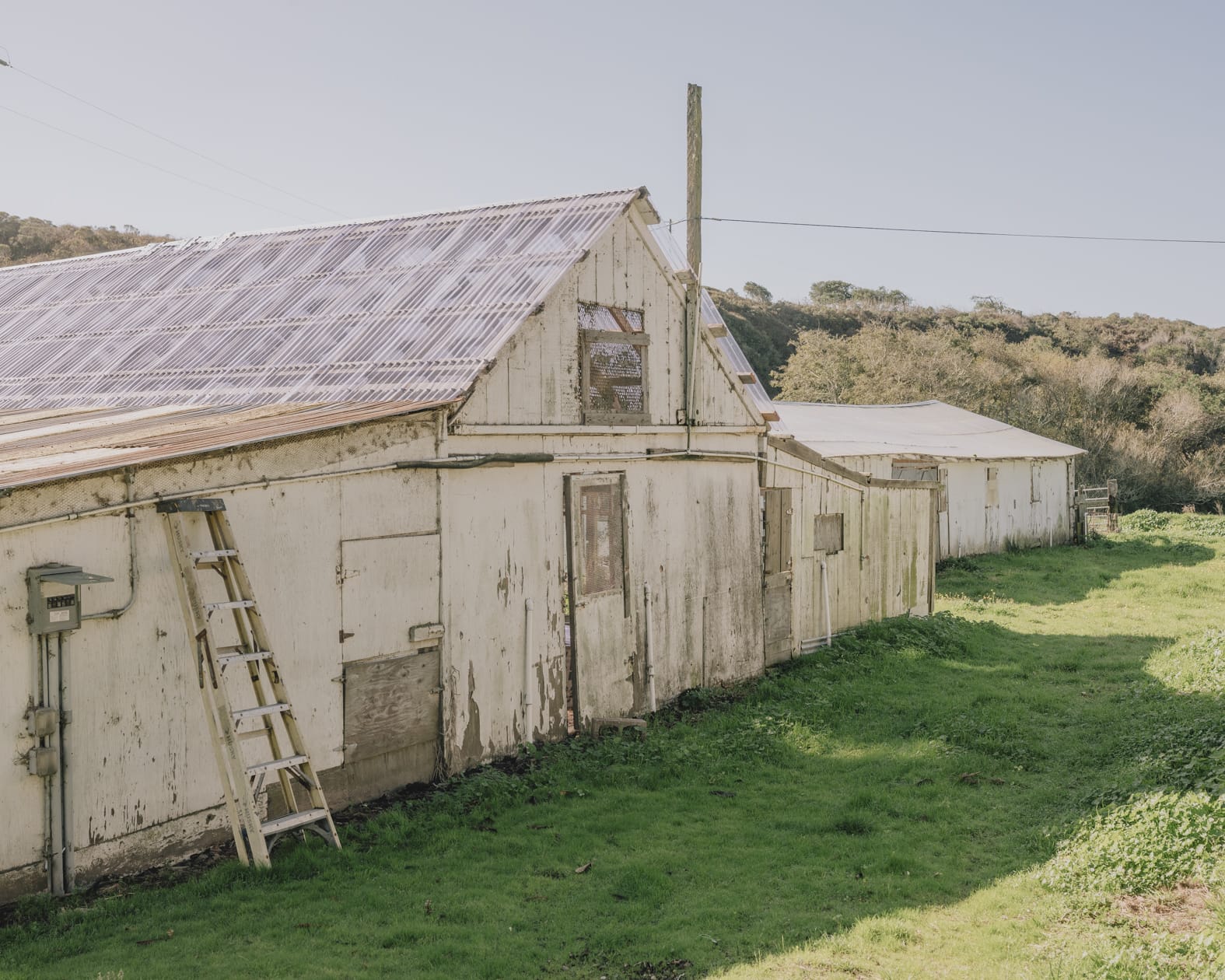
Cutrano pulled the Tesla over at the old McClure’s Dairy with its now-vacant white clapboard barn. This dairy, he pointed out, was one of several positioned in a basin in the topography, meaning its runoff drained into key water sources like Kehoe Creek and Abbotts Lagoon and caused rampant fecal-contamination issues. Back on the road, he pointed out the Nunes ranch, where, in 2021, hikers found what was essentially a massive trash pit of oily car parts, rusted metal, and leaking engines—a clear violation of park rules about polluting.
Cutrano’s findings constituted the bulk of evidence in the first legal case against the Park Service and the ranchers, which began in 2016. Crucial to that case and the one that followed was his discovery that the park had been following an outdated set of guidelines for years. Every national park in the country has a “general management plan”: a master plan that establishes protocols for how the park manages the interests of the different species (including humans) under its authority. Cutrano’s crucial discovery was that the Point Reyes National Seashore still operated according to a general management plan from 1980—that is, a document that was then over thirty years old. As a result, its guidelines and rules neglected to account for any impacts of climate change, any change in wildlife population that had occurred since Jimmy Carter was president, or any new impacts of the ranches on the park’s ecology. The Park Service did have a more recent tule elk management plan, which provided more detailed rules relating specifically to the species. But even these protocols hadn’t been updated since 1998, when there were hundreds fewer elk to manage. Even the 1998 plan, though, clearly outlined the problematic fact that the enclosure would soon become too small, as there was no reliable year-round source of drinking water for the elk in the preserve—just eight “water impoundments” originally built for cattle and seasonal creeks and low-lying marshes that turned to mud pits during dry spells—demonstrating that the park’s administrators knew about the potential dangers years before the die-offs occurred and did nothing to prevent them. In the lawsuit, the plaintiffs sought to show that, with its outdated management plan, the park had prioritized the ranches over the wild areas and creatures it was entrusted to protect, alleging that the Park Service had not done its due diligence in studying the impact of the ranches.
The Resource Renewal Institute filed the lawsuit with the Center for Biological Diversity and the Western Watersheds Project, two other environmental organizations that were considerably bigger, more experienced, and better resourced. Like Cutrano’s Resource Renewal Institute, these organizations saw the fight in Point Reyes as part of a larger battle to protect the wild and keep it fully under the control of the public. In previous legal battles, these organizations had helped stall permits for the Keystone XL and other oil pipelines, blocked the opening of mineral mines throughout the West, and secured protective statuses and habitats for species ranging from gray wolves to spotted owls to the Florida bonneted bat. For them, the tule elk was yet another one of these fights.
As part of their efforts toward wilderness protection, the Center for Biological Diversity and the Western Watersheds Project had frequently targeted ranching on public lands. Roughly 80 percent of public lands in the West and 35 percent of public lands overall are used for grazing at some point during the year (most of this land is operated by the Bureau of Land Management and the U.S. Forest Service, not the National Park Service). Part of the organizations’ objections came down to the question of public versus private use. The Center for Biological Diversity believed that, by relying on public lands, where ranchers (including those in Point Reyes) were typically given lower-than-market lease rates, the cattle industry was getting a massive subsidy at great ecological expense. “The western livestock industry would evaporate as suddenly as fur trapping,” they claimed in one report, “if it had to pay market rates for services it gets from the federal government.” It was irrelevant, to these groups, that the subsidized ranchers in Point Reyes just happened to produce very sustainable food. (When asked on the tour whether driving organic ranches out of the area—and, in some cases, out of business entirely—was ultimately bad for the environment, Cutrano admitted that he wasn’t entirely unsympathetic to the concern. Feeding people, however, was simply not the job of public lands, and of a national park in particular.)
In yet another of this story’s zigzags, this initial lawsuit gave way, in 2021, to yet another lawsuit, which was settled in a three-year-long mediation that ultimately determined the fate of the ranchers last year. The mediation by all accounts was brutal. The ranchers by now had intervened in the legal proceedings, having convinced a judge they had a stake in the matter and should have a seat at the table. Like many to follow, the first mediation session was held at the Bear Valley Visitor’s Center, a building filled with taxidermized local wildlife just inside the park boundaries, where tourists come to secure camping permits, plan their routes, and pee. In June 2022, the relevant parties and their lawyers filed into the conference room and took their seats around the table: Cutrano and his compatriots, the Park Service administrators, and various members of the participating Point Reyes ranching families. (This included every ranching operation in the park except the Nimans’ and the Evanses’. The Nimans opted out of the negotiations because they held a lifelong lease to their property and thus were largely insulated from the outcome of any lawsuit. The Evanses had two small kids and simply didn’t want the bother. They assumed some deal would be worked out and the drama would just go away.) Items up for discussion included the problem of competing uses (as between the elk and cattle), the appropriate stock pond rations given the increasing water shortages, the length and terms of ranchers’ leases, and, most importantly, whether ranching was in fact intended to occur in the Seashore in perpetuity.
Given the rancor that had preceded the mediation, the participants unsurprisingly struggled to make progress. Every participant was required to sign a nondisclosure agreement, barring them from even discussing the proceedings with one another outside the mediation room, which for some made finding consensus among their peers, much less their adversaries, challenging. About a year in, a powerful nonprofit called the Nature Conservancy, which had mediated numerous public-private land use matters in the past, offered to help the different groups navigate the conflict. But despite the Nature Conservancy’s guidance, the conflicts persisted. To help ease tensions, the Nature Conservancy held occasional group meetings in ranchers’ homes and met with individual ranching families to understand their perspectives and plight. One of the mediators told a local paper the disagreements were so intense that “I can remember times where I teared up on the drive back to Inverness after leaving a ranch.”
For his part, Cutrano had initially been disappointed and even surprised by how intractable the parties’ disagreements seemed to be. He had entered the mediation on the defensive—stung by the results of the first lawsuit, in which the Park Service seemed to side with the ranchers, not even considering the “no-ranching option.” But as the ranchers and environmentalists settled into increasingly deadlocked positions, he saw an opportunity: If the ranchers wouldn’t agree to any of the terms his team was suggesting, might they agree instead to sell their properties and vacate the Seashore entirely? The Nature Conservancy had a wealth of financial resources that might fund such a buyout, and Cutrano knew that a number of the ranchers were near retirement anyway.
The plaintiffs sought to show that, with its outdated management plan, the park had prioritized the ranches over the wild areas and creatures it was entrusted to protect.
Kevin Lunny, like many of the ranchers, had grown up on the Point Reyes National Seashore, and he’d always figured he’d die there. His family had been ranching its pastures since his great-grandfather’s generation. In the early 2000s, the Lunnys were the first ranch operators in Marin County to secure an organic-beef certification. But after suffering through years of lawsuits and attacks from the conservation groups (including a recent post entitled “Two Short Videos Expose Kevin Lunny’s Latest Lies” on a blog called The Shame of Point Reyes), the ever-increasing operating costs of ranching, the long odds of sustaining a small family farm, and arguing around a mediation table since 2022, Lunny was tired. He had entered the mediation hopeful for compromise, hoping above all to secure a reasonable lease length, preferably of twenty years, which would allow him to continue and even expand the activities that made his ranch profitable. He had also hoped that, by sitting face-to-face with the environmentalists, he might put an end to the idea that the rancher was an enemy to the ecological health of the land. But by now, Lunny had accepted that he’d been foolish to think that would happen.
Lunny wasn’t the only rancher who was tired. Of the twelve parties, some decided that they wanted out when presented with the possibility of a buyout—they were retiring anyway and were done fighting. But others didn’t want to go at all. Because the ranchers were coplaintiffs, however, and thus a unified team, the outcome would have to be an all-or-nothing deal: either every rancher took it or none would have the chance, trapping everyone around that mediation table for the foreseeable future.
Lunny was one of the last holdouts, he told me, until it became clear to him that, even if he somehow figured out a way to stay on his ranch, the rest of his life in the park would be mired in conflict, harassment, infuriating lease negotiations, and future lawsuits. “I didn’t have a gun to my head,” Lunny said, but in the end he, too, was forced to accept that there was really only one workable option: take the money and leave the ranch whose lease he’d inherited from his father, who inherited it from his father, who inherited it from his own, and whose lease Lunny had planned until now to pass along to his own children.
When the Nature Conservancy announced the results of the mediation in January 2025, people in Point Reyes were shocked. Clueless as to the proceedings because of the NDAs, the Nimans and the Evanses couldn’t believe that they were going to be the only ranchers left on the peninsula. Even Cutrano, who had been part of the proceedings every step of the way, was stunned by the outcome, a coup that he’d never imagined when the proceedings began. The plaintiffs had expected to win concessions from the Park Service, and maybe even a bid to eventually phase out ranching in the future, but given how entrenched historically and economically the ranches were in Point Reyes, they hadn’t expected a full-scale buyout. To Cutrano, the fact that the ranches were gone represented a historic victory for the ecology of the National Seashore—and a road map, perhaps, for the eviction of ranching off other public lands in years to come.
“We had no idea it would be this successful,” he told me now as he drove, struggling to suppress a grin as he gestured with one hand toward an abandoned dairy in the distance, the spoils of war.
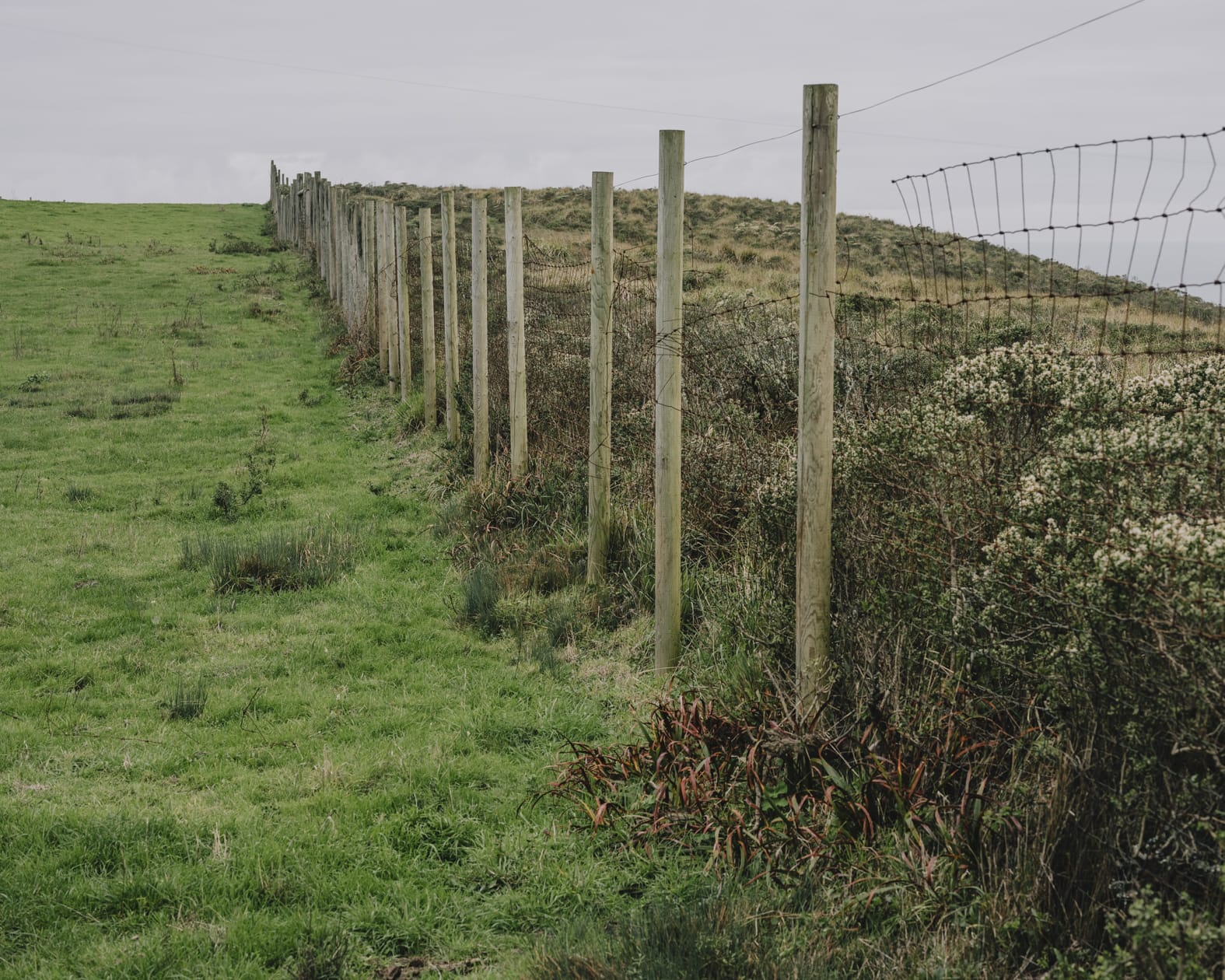
In contrast to the moments of frustration and hopelessness he’d just told me about feeling in the years leading up to this point, his happiness now suddenly struck me as yet another sign of change in the park—though, perhaps, not as dramatic of a change as the one he was about to show me. Parking the Tesla and rolling the car’s windows down, he instructed me to look outside, pointing into the thick mist. I could make out a two-tone field. On one side, the grass was uniform, short and brown; on the other, the earth was wild and varied, a swirl of tall grasses and thickets of coyote brush. Down the middle was an eight-foot-tall wall of mesh tethered by hefty wooden posts: the elk fence. Cutrano beamed as he pointed toward a portion of the fence that had been removed, leaving the entire park open for the elk to roam. The rest, he said, would soon be dismantled.
We turned around and headed south again past the shuttered dairies. Just as with Evans, I spotted elk in the distance, an antlered trio also tramping through what had once been pasture for cows. It was mating season, Cutrano explained, and the elk that don’t win mates are sent away by the herd. “This is the farthest south I’ve ever seen bull elk,” he said. “We’re seeing in real time the change. Wildlife coming back to these areas.”
Future Primitive
Today, all the Point Reyes ranches that participated in the mediation are either on their way out or already gone. The Lunnys held their final cattle run in May. After that, they began to pack up their barn and their home. Even with the settlement money—which remains confidential but has been reported to be around $3 million per lessee—the Lunnys couldn’t afford to buy a place anywhere nearby that was big enough to hold their ninety cattle. In the end, they moved a few hours away to the foothills of the Sierra, bringing just three cows with them.
Of the other eleven departing or departed ranching families, one—the Nuneses—has moved to Oregon. Another ranch sold its cattle and got out of the business entirely. One dairy trucked all its cattle to Texas. Other families didn’t know where they were headed, or didn’t respond to my calls, or were unreachable—on the move and hard to locate or loath to talk about the whole affair.
Given the rancor that had preceded the mediation, the participants unsurprisingly struggled to make progress.
“That’s not milk that’s going to be available in California anymore,” Albert Straus, founder of Straus Family Creamery, told me. Before the ranches shut down, the company sourced 15 percent of its milk from Point Reyes, about three thousand gallons of milk per day that had previously ended up in local grocery stores with the Straus name. When small ranches and dairies close in California, land prices being what they are, they often move out of state. When this milk goes out of local circulation, its market share goes to the larger organic conglomerates who use far less stringent environmental practices—or to large factory farms that aren’t organic at all. Straus Family Creamery is committed to sourcing all of its milk from local producers to reduce its footprint. Until Straus manages to find new sources, consumers will have to find milk elsewhere—maybe from nonorganic dairies, with far more deleterious environmental practices, or from dairies farther away, increasing the carbon footprint of each pint sold.
The ersatz eviction of the ranchers so upset Straus that he had been the one to reach out to Conover, the wellness influencer, in April 2025—in turn leading to Robert F. Kennedy Jr.’s entrance into the affair. “Albert just kept getting more desperate,” Conover told Politico earlier this year. “I was like, you know what? Fuck it. I gotta just text [Kennedy].” Kennedy was—perhaps unsurprisingly, given the “food is medicine” pillar of his Make America Healthy Again agenda—sympathetic. “Everyone is involved,” Kennedy replied to Conover, according to reporting by the local North Bay paper the Press Democrat, “including [interior Secretary] Doug Burgam (sic) and [Agriculture Secretary] Brooke Rollins and the White House.” Burgum reportedly asked the acting deputy secretary of the Interior to help broker a solution that would have allowed ranching to continue in the park. But, as of now, like with the Republican probe led by Congressman Westerman, nothing concrete has come of the political theater—and the deal remains in place.
Others, too, are waging a fight—if not to reverse the deal itself, then at least to change its outcomes and implications. Local attorney Andrew Giacomini, himself a descendent of a prominent Point Reyes ranching family, filed a lawsuit on behalf of displaced ranch workers, alleging a conspiracy between the Park Service and the Nature Conservancy “that compelled the Departing Ranchers to accept the pay offs and terminate their leases with the National Park Service.” Financial restitution, the suit argues, must be given to the workers kicked out of their homes. David and Claire Evans also joined with Bill Niman and his wife, Nicolette, to file their own lawsuit, arguing that the pastoral zone is a congressionally designated space for ranching and that the Park Service has a responsibility to protect it as part of the region’s cultural heritage; thus, even if the former leaseholders are gone, those areas must remain available for active ranching. These cases are also still pending.
Meanwhile, though the Nimans are protected by their life estate, the Evans family is currently operating without a lease. After he got wind of the deal, David Evans sent a letter to the House Committee on Natural Resources, beseeching lawmakers’ help in negotiating a new lease. “We know that as the last (multigenerational) ranching family on the peninsula, we will be the next target for these green groups,” he wrote. “We will be harassed and pushed out, and family ranching on this peninsula will be gone forever.” Evans also went to the Park Service to negotiate a new lease. He wrote down twenty requests, many of them, he told me, in line with previous lease arrangements. The Park Service did not agree to a single point. “It wasn’t a negotiation,” Evans said, suspecting the agency wanted to make things as difficult as they could in hopes he’d eventually just roll over and close.
To add insult to injury to the ranchers, the Nature Conservancy—which is in charge of the transition implementation for Point Reyes—plans to seasonally truck in some 1,200 cattle each year for temporary grazing, acknowledging the importance of livestock grazing on public lands to maintain the health of the Point Reyes ecosystem.
Twelve hundred seasonal cattle, of course, aren’t enough to do the work of the more than six thousand that are being evicted. Theoretically, the tule elk could at some point take over the grazing work of the cattle—and without the environmental impact, like manure contaminating the waterways. At present, however, their population is nowhere near large enough to replace the departed cattle, either. Herds big enough to take over all grazing duties would cause yet another problem, however, as the tule elk no longer have real predators in Point Reyes. The Park Service would have to introduce predators as population control or bring back the wildly unpopular practice of culling the elk.
And anyway, as Grey Hayes, a biologist and coastal prairie expert, impressed upon me, even if the elk were the ultimate answer to this land’s future management, which he has his doubts about, the transition should have happened more slowly, replacing cattle with elk one by one. But now that the cattle are gone, he told me, whatever plan to replace them needs to happen “immediately.” Even six months without large ruminant grazers can cause enough environmental damage to a pasture to require years of remediation and restoration. “Every month counts,” he said.
“We are entering a critical first step in establishing a land stewardship program to support grazing and restoration efforts on the Seashore,” a representative for the Nature Conservancy wrote to me (they declined an interview). In collaboration with the Park Service and the Federated Indians of Graton Rancheria, whose ancestors managed what is now Point Reyes for millennia, the Nature Conservancy wrote that they will “develop a research and monitoring plan that will, when implemented, be the foundational science needed for the National Park Service and partners to adaptively manage the grazing and other restorative actions over time to get the best results.” It’s unclear when the temporary grazing is to begin; where these cattle will come from (in December, the organization released a request for proposals for ranchers seeking to run cattle in Point Reyes); where the 1,200 number came from (there were 6,000 cattle in the park); or how these cattle will be managed differently than those that were already here.
The future of the approximately ninety farmworkers and their families is also uncertain. On my last visit to Point Reyes, just before the Thanksgiving holiday, I met up with a former Point Reyes dairy worker and his wife, whom I’ll call Diego and Maria, in the town of Point Reyes, about a ten-minute drive from the Seashore.
At their suggestion, we met at Toby’s Feed Barn, a West Marin institution that hints at the region’s shifting demographics: a farming heritage store trying to survive in a context of increasingly extreme wealth. Toby’s sells feed in a towering old barn where birds nest in the rafters; the barn also houses an overpriced coffee shop (chai: $6.50), a yoga studio and art gallery, and a store selling fancy candles, food sundries, and nature-themed tchotchkes. As we spoke, a Latino employee stacked hay bales and pallets with a beeping pump truck while locals and tourists enjoyed their coffee in the sun.
The future of the approximately ninety farmworkers and their families is also uncertain.
Originally from Mexico, Diego and Maria had moved to Point Reyes with their three children in 2018 from Tulare County in California’s Central Valley. There Diego worked in a massive industrial dairy and Maria picked grapes. Their middle son, whom I’ll call Fredy, suffered from a rare genetic disorder that required frequent medical appointments and testing. When Diego missed two days of work to take his son to see a specialist hours away in Sacramento, his employer fired him. Maria’s cousin worked not too far from Point Reyes and managed to land Diego a gig at McClure’s Dairy in the park, which Cutrano and I had visited a few months prior. The whole family moved north. When McClure’s shuttered in 2021, Diego got a job working at another dairy in the Seashore. The pay was $16.50 an hour, and the family didn’t have to pay rent because, with average rents of $6,500 for a home in the area, ranch workers and their families were typically provided free housing.
Diego told me he found out about the ranch closures from his employer (he asked me to use a pseudonym, and not name his employer, for fear of retribution—especially because he is still living on the rancher’s land). One afternoon, when his shift began, his boss rounded up his three employees—Diego, another father with a young family, and a single guy, all of whom lived on the property in separate houses—and told them the news. Worse than the closures, perhaps, was the severance pay. While the Nature Conservancy awarded the ranchers $3 million settlements, the ranch workers each received a single month’s pay, around $1,000, which wouldn’t get Diego and his family a long weekend in a local Airbnb. “He was out there rain or shine, sick and healthy!” Maria told me. “A single month! He kept that place going. It’s ugly, what these ranchers have done.”
The family has been in something of a tailspin since then. The ranch shuttered last spring, but they are still living on the property—the only ones there, by permission of the former owner. The kids don’t want to leave. Their youngest, now in seventh grade, wakes up crying in the night. Maria was angry at the ranchers but also at the people who’d run the ranchers out of town. As we spoke, I detected an articulation of the view of ecology that had lost out in Point Reyes—the belief, shared by many of the biologists and ranchers I spoke to while reporting, that it’s a myth that a healthy environment is one that is untouched. Humans have always managed landscapes, something that California’s leaders have begun recognizing in transitioning to controlled burns of the kind that Indigenous communities once carried out, back when the prairies were still shadowed by grazers, to thin forests and underbrush. Restoration is, by definition, a human imposition on the land. Preservation is, too, as is, of course, the pesky human need for food.
“I don’t understand what environment they are trying to protect,” Maria said. From her perspective, the land was healthy, the cows part of the environment—mooing, shitting ruminants, grazing along the same zigzagging roads upon which the tule elk now run free.
This story was produced in partnership with the Food & Environment Reporting Network, a nonprofit news organization.