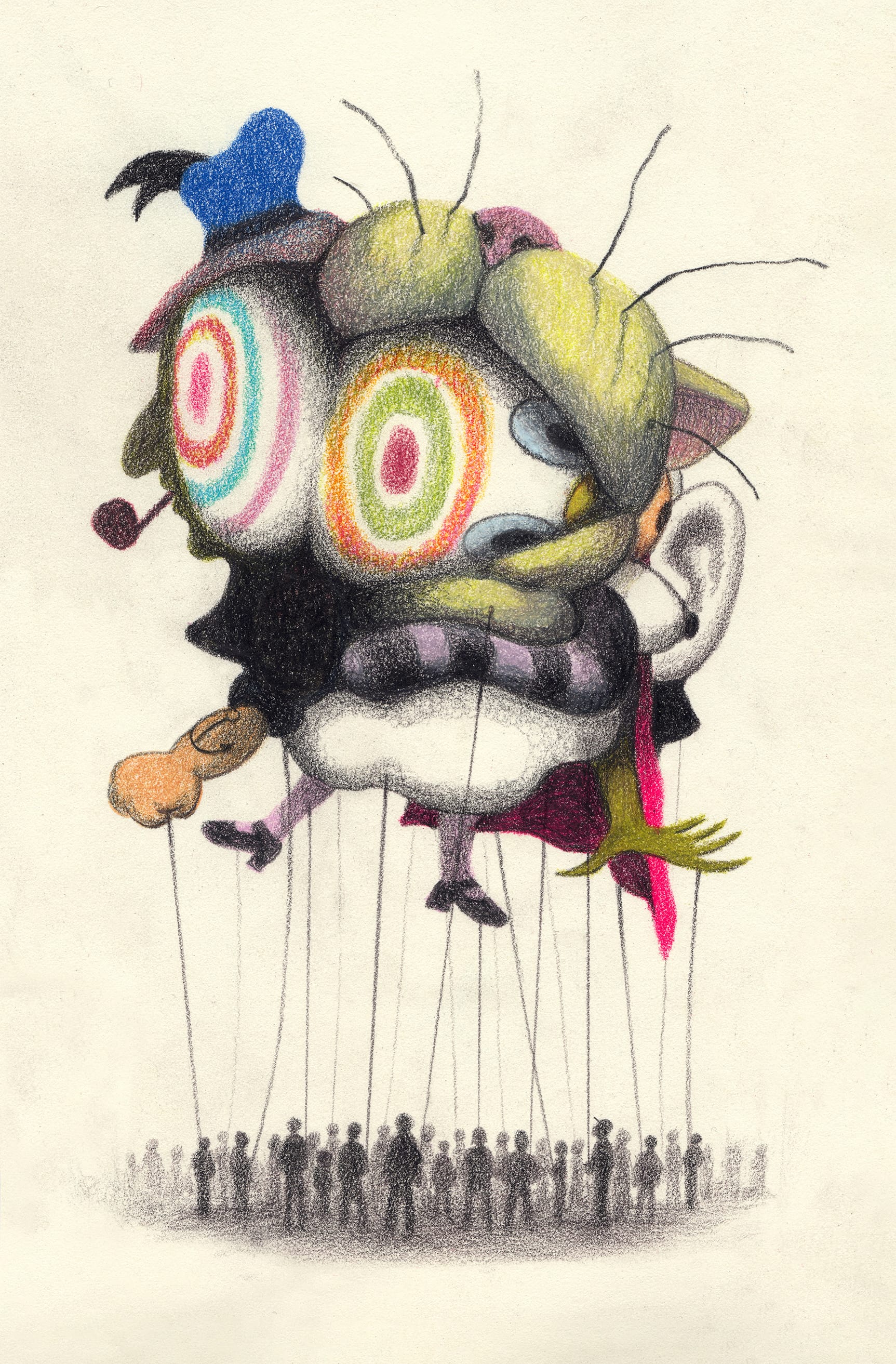
What buffer, blackguard, or mountebank was behind the ghastly disappearance and presumptive murder of the blessed innocent Edwin Drood? Was it the cadaverous old stonemason Stony Durdles? The “sullen, angry, and wild” orphan boy Neville Landless, dead set on making the gentlefolk of the cathedral town of Cloisterham answer for the bad sign under which he was born? The “Angular” pettifogger and foiled swain Hiram Grewgious? And let us not forget John Jasper, Drood’s opium-eater guardian and lech of a village choirmaster! Could that “muddy, solitary, moping weed” have manufactured an ignominious end for his ward within the cathedral crypt out of intemperate desire for Drood’s betrothed, the comely Rosa Bud?
Well, if you take the words of Charles Dickens’s biographer, his illustrator, and his son—and heed an egregious amount of foreshadowing—yes. Dickens died in 1870 with scarcely half of The Mystery of Edwin Drood in a state of completion, but the nascent mystery genre wasn’t all that mysterious yet, leaving little doubt for the avid reader that Jasper was indeed our rapscallion. None of this discouraged more than a hundred years of imitators, parodists, and would-be successors from supplying the unfinished book with a resolution: Dickens protégé Wilkie Collins (whose 1868 book The Moonstone likely motivated the waning master novelist to try his hand at a whodunit in the first place) was reported to be finishing the book with the blessing of the estate; an American spiritualist ghostwrote a conclusion by channeling Dickens’s unquiet specter in 1873; and the 1985 musical allowed the audience to vote on a culprit from the assembled persons of interest. (There was even cosplay avant la lettre: G. K. Chesterton presided over a 1914 mock trial for Jasper in Covent Garden.) All the while, burlesques and film versions proliferated, variously allowing Neville Landless to clear his name and solve the crime in disguise, revealing that Edwin survived the attempt on his life after all, or siccing Sherlock Holmes on the case. Forever the canny publicist, taking the secret of Drood’s killer to his grave was brilliant careerism on the part of Dickens.
It also calcified a trend for the continuation novel, the industry term for that peculiarly rapacious subgenre in which an unfinished or open-ended mass work of art is improvised upon by one or more heirs who are typically paid to provide an ending, milk the property for sequels, or sketch in a prequel. Oh, Drood wasn’t the first—Euripides, Sophocles, and Aeschylus each improved upon another back to the anonymous polyphony of Homer, whose epics were given a state-sponsored sequel in The Aeneid; Don Quixote got an unlicensed knockoff between installments; the Marquis de Sade’s Justine began life as an eighteenth-century corruption of Samuel Richardson’s virtuous Pamela; and the juvenilia of George Eliot, Jane Austen, and the Brontës consists of fangirlsome pastiches of historical romance novels—but the fervor for Droods was a sign that extending a work, or series, past its author’s expiration could be a bumper crop for publishers.
Never has the abstract labor of publishing been so nakedly commercial as in the cavalcade of Wizards of Oz after L. Frank Baum; the more than one hundred odes to gothic teen horniness attributed to V. C. Andrews after her death in 1986; the further adventures of Miss Marple, Hercule Poirot, and Lord Peter Wimsey; or when James Bond outlives creator Ian Fleming to foil a serial killer at Euro Disney, go undercover as a hipster to sip beer in a dive bar, come to the rescue of Margaret Thatcher and George H. W. Bush, or fuck atop a mountain in Kathmandu in an insane succession of official continuations by mercenary novelists.
As a necromantic commodity, these novels operate according to the “socially diffused, all-encompassing capitalist phenomenon” that theorist Sianne Ngai calls the gimmick. Ngai applies the Oxford English Dictionary definition of the gimmick (an idea “adopted for the purpose of attracting attention or publicity”) to the economic ambiguity of making art under capitalism, “increasingly reliant on concepts, signs, and information in what is sometimes the same process of becoming deskilled.” Granted, Ngai is largely thinking of the conceptual art regimes of “poststudio” artists like Marcel Duchamp and Cindy Sherman, but the point stands: the continuation novel is a gimmick insomuch as it is a ploy hiding increasingly repetitive (and repeatable) labor behind a market-tested pseudonym, creating the illusion of an infinite extension of possibilities for bankable properties beyond the mortal coil. Both more and less than the sum of its parts, it is an impossible object cobbled together in expectation of a hungry market in defiance of its author’s demise. As in the cadavers of alleged Chinese origin arranged in athletic postures to greet visitors to Bodies . . . The Exhibition or the numerous collectors and museums that historically looked to profit off of Grigori Rasputin’s pickled penis (at least one of which was a dehydrated sea cucumber), death itself is the gimmick. If capital demands it, secret agents, detectives, and pulp heroes will reanimate according to the whims of rights holders, the cultural commons be damned.
As of this year, Nancy Drew and Betty Boop have entered the public domain, joining the open season on Winnie-the-Pooh, Steamboat Willie, Tintin, and Popeye that gave us an onslaught of cheapo horror movies with titles like Screamboat and Popeye the Slayer Man (may I venture Boop Goop?). Nor is it just comic ephemera that has found itself transmogrified into grody decoupage: witness the degenerate likes of Pride and Prejudice and Zombies, Abraham Lincoln: Vampire Hunter, and Kanye West—Reanimator. But a smart estate knows better than to let a valuable property go the way of Dracula and Frankenstein hawking breakfast cereals. Regurgitating the creative leavings of Sir Arthur Conan Doyle or Agatha Christie through new novels by nobody for everyone is the same impulse that keeps something like Star Trek from falling into the grubby hands of a fan base whose sole ambition is to make Data teabag Captain Picard.
It’s a slippery slope in which copyright leaves détournement, cut-up sampling, and common cultural memory in a ditch: Joe Brainard might be able to get away with drawing a dick on Ernie Bushmiller’s Nancy and claiming fair use or transformative parody, but God help you if—to take just three famous cases—you cadge so much as a bar of “He’s So Fine” by The Chiffons, try to make Donald Duck teach kids about Marxism, or print T-shirts that quote Martin Luther King Jr.’s “I Have a Dream” speech and circulate them beyond the market for bootlegs. Not even academics and biographers are safe from the litigious estates of James Joyce or Picasso. The real shot in the air at the time of writing is artificial intelligence; it’s still unclear how (or if) copyright is going to exist in a post-AI world.
The Statute of Anne passed the parliament of the Kingdom of Great Britain in 1710, granting exclusive rights to authors over their lucubrations for fourteen years, with one opportunity to renew, which generally became “life plus seventy years” in America after 1978. The public domain took its cues from the ongoing philosophical arguments over land rights. Noah Webster advocated for alodial lands, or civic territory immune to feudal obligation, and Thomas Hobbes had a bee in his bonnet over the gifts of God being common to all freemen, while John Locke believed labor made property private. But ideas, as Lewis Hyde points out in Common as Air, cannot be logged, farmed, or hunted on like a sliver of forestry leased from a lord can. The public domain frames innovation as a common good and intellectual utility as a natural right: something that is beneficial to all of us ought to be beyond possession. The trick of the continuation novel is to accomplish for books what drug companies did for insulin and turn an intermutual resource into a product fenced in by corporate lawyers and monopolies with deep-ass pockets.
But if the progress made by large language models in emulating, appropriating, and disseminating trademarked images in just the last year is any indication, the continuation novel might soon be nothing but a signpost pointing the way to a netherworld of cultural soup, in which Dante Alighieri—who pioneered the juxtaposition of pop and personal by putting his friends and enemies in hell alongside Judas and Cleopatra—disco dances with Alex Trebek, and Jay Gatsby paints Cthulhu’s toenails in a perpetuity fleeced of any meaningful arc, intent, or motivating factor. Continuation novels might lack these properties too, but the automation of art drowns an already flooded market with wet facsimile and mise en abyme serialization. The good news and the bad, as Webster and company foresaw, is that such a world might well belong to any of us, provided our aspirations for art remain within the parameters for memes, crude propaganda, and ad copy.
View to a Shill
It wasn’t supposed to be this way. Roland Barthes promised that the death of the author would liberate interpretation from the despotic control of the writer, who didn’t actually have to die for their work to find new life. Of course, characters had been showing up unchaperoned by their authors for decades before Barthes: there were the aforementioned Droods; J. M. Barrie delighted Sir Arthur Conan Doyle with a story in which Sherlock Holmes becomes sick of footing the bill for Doyle’s fancy carriages (“Fool, fool! I have kept you in luxury for years. . . . Henceforth you will ride in buses!”); Barrie’s goddaughter Angela Thirkell set most of her own novels in Anthony Trollope’s fictional county of Barsetshire; and H. P. Lovecraft opened up his mythos to a coterie of fellow creeps.
It’s a slippery slope in which copyright leaves détournement, cut-up sampling, and common cultural memory in a ditch.
The Anglosphere countries are famously sticklers for copyright. But overseas, where the laws are often looser, a Swede with the all-American pseudonym John David California distributed a pastiche of J. D. Salinger in which a geriatric Holden Caulfield escapes from a nursing home; Russian novelists scraped together popular, censor-pleasing sequels to The Lord of the Rings and The Wizard of Oz; and the Icelandic “translation” of Bram Stoker’s Dracula turned out to be a completely different, more political and sexualized novel—something nobody noticed for more than one hundred years. Meanwhile, in cinema, Hong Kong proxies for Bruce Lee and Clint Eastwood were free to face off in hell, and Italy’s sordid sequels to Jaws, Night of the Living Dead, and The Terminator are classics in their own right. But these cases are more like fan fiction, the labor of love Anne Jamison calls in Fic: Why Fanfiction is Taking Over the World the transformation of “reading and viewing from an act of silent consumption into one of active conversation.” No such playfulness pervades the contractually obligated heirs of the continuation novel.
After Ian Fleming shortsightedly sold off most of the film rights to James Bond in 1961, his estate retained a large share (and creative control) over the literary rights in a then-unheard-of deal in which a sugar firm that also owned Agatha Christie’s works held 51 percent of the shares. (The Ian Fleming estate bought them back altogether in 1997.) After the author’s death in 1964, the estate, aiming to protect their copyright and foil Japanese and Bulgarian pirates quick to cash in on the temporarily benched secret agent (007—With Love from Hell and Avakoum Zahov versus 07 [sic]), embarked on the first James Bond continuation novel—the glut of which far surpasses Fleming’s output—with Kingsley Amis’s Colonel Sun in 1968. It was something of a false start. Unlike his successors, Amis was a literary darling who’d written Bond tie-in books and even been a consultant on the posthumous manuscript of The Man with the Golden Gun (he suggested making kitschy villain Scaramanga gayer). Fleming’s widow, Ann, for one, felt Amis didn’t “capture the spirit of Fleming’s writing.”
Further installments were dispatched to more tractable guns for hire like John Gardner, Raymond Benson, and Anthony Horowitz. As the post-Fleming 007 infiltrated religious cults, bested nefarious ice cream moguls, became a bullfighter, met Hugh Hefner, and learned how to text, the estate was fairly lenient with its hand-selected journeymen, its few provisos including a ban on tender, even filial feelings between Bond and M, as well as nixing any sleeping in the nude. As an incredibly static, reliably conservative incarnation of masculine swank, James Bond is the ideal protagonist for a form that discourages originality or interiority; he’s so bland compared to, say, Batman that the books can’t really be all that much better or worse than each other, and the characteristic boxes—cars, gadgets, girls—are easily checked (his backstory, developed in Charlie Higson and Steve Cole’s Young Bond novels, is both consistent with his boarding school demeanor and boring). But Horowitz had harsh words for the insinuation:
I will say straight away that I really dislike the phrase continuation novel. . . . Your job isn’t just to continue. It’s much more complicated and complex and more rewarding than that. It’s an act of limitation, yet it also has to be original. You have to live inside the world . . . yet you have to find ways to extend it. You have to balance this with the expectations of people who love the books but with a determination to do your own thing. The whole idea of a “continuation novel” slightly short changes what the book actually is.
Let’s give it a shot, for the sake of argument, and imagine the continuation novel to be a valid microgenre with its own rulebook of characteristic restraints. Maybe making something like Trigger Mortis strictly answerable to the standards of regular literature is like blaming Joel Osteen for not proving the existence of God. There are two big one-offs that illustrate just how low Bond could go and how well he could work within the formula.
British novelist Sebastian Faulks, author of Birdsong (1993), cut his teeth as an impressionist writing parodies in which James Joyce writes a best man’s toast, Oscar Wilde does an advice column, William Wordsworth raps, and Martin Amis sends his son to Hogwarts. They’re worse than they sound. (“Next from that baleful twilight emerged ‘Ron’ Weasley, a spavined welterweight who reeked of chav, with his fucked-up bathmat of orange frizz and his eyes full of canceled hope.”) Faulks brought the same principle to Devil May Care in 2008, estimating that his book was exactly 80 percent imitation, approximating Fleming’s register—“short sentences, a lot of active verbs, no semicolons”—with a smugness that comes off as nostalgic for colonial, patriarchal supremacy. With Bond fretting over 1960s drug and pop culture, taking Turkish baths in a Tehran nightclub, and acting boorishly racist over Cold War–era immigration, the book, which became Penguin’s fastest-selling hardcover since J. K. Rowling, positively drips with John Bull contempt for the material, its authors, and its audience.
On the reverse side, William Boyd’s Solo in 2013 gave us a traumatized, sleep-troubled, functioning-alcoholic Bond still destabilizing West African regimes on behalf of British oil interests while masquerading as a humanitarian at forty-five, shuddering at the decadence of New Hollywood, and indulging in a more endearing, pathetic kind of nostalgia. (“Doesn’t seem quite the same,” he says of the moon, “now that we’ve been up there. Lost something of its allure.”) Frank about realpolitik, willing to send the agent rogue once one of his government’s puppet war profiteers proves too murderous even for Her Majesty’s most loyal myrmidon, Boyd’s book is more than superlatively serviceable—it is a conscientious, unembarrassing entry in his bibliography.
Let’s give it a shot, for the sake of argument, and imagine the continuation novel to be a valid microgenre with its own rulebook of characteristic restraints.
By this point, Faulks had moved on to reviving P. G. Wodehouse’s Jeeves and Wooster, and Horowitz Sherlock Holmes, while Boyd subsequently turned down the chance to do the same for Raymond Chandler, saying he’d “learned a lot” but also “had been there and done that.” There appears to be a lesson here about straight-up slumming versus nipping the check without swallowing the hook. “Nothing is forever,” wrote Fleming in Diamonds are Forever, “Only death is permanent.” Chin up, old sock; the James Bond books won’t enter the public domain until 2035, and even with Amazon now in control of the franchise, there is no shortage of freelancers bound to keep bastardizations like the sacrilegious anthology Licence Expired—in one story, the Soviets consign Bond to a Siberian lesbian colony—confined to Canada, where rights lapse at life plus fifty.
The most tragic case of a continuation novel in recent memory is likely that of Robert Jordan’s tetradecalogy The Wheel of Time, the last three novels of which were finished after Jordan’s death from a rare blood disease by graphomaniacal Mormon Magic: The Gathering enthusiast Brandon Sanderson, who makes between $10 and $55 million a year for his own best-selling, ponderous fantasy novels. Hand-selected by Jordan’s widow to complete The Wheel for Tor Publishing Group after, no kidding, auditioning via obituary, Sanderson’s three volumes exchange Jordan’s hard lore regarding the Aes Sedai, Darkfriends, and the prophesied Car’a’carn for stupefied descriptions of buildings (“stonework and wood”); sentences beginning with “women are like . . .”; and so much reliance on plot over prose that people are often “perked up,” described as “tanned,” and, according to one intrepid blog, sniff in disdain 75 times in 978,460 words (which may not sound like a lot, but The Lord of the Rings apparently tallies 28 sniffs total). Supermarket fantasy may not be your bag, but here’s a heavy scene in Jordan’s The Great Hunt:
The void rocked. The world rocked. Everything seemed to spin around him. He concentrated on nothing, and the emptiness returned, the world steadied. “No, Mother. I can channel, the Light help me, but I am not Raolin Darksbane, nor Guaire Amalasan, nor Yurian Stonebow. You can gentle me, or kill me, or let me go, but I will not be a tame false Dragon on a Tar Valon leash.”
An equivalent scene in Sanderson’s Towers of Midnight cuts to the quick:
Slim Doesine glanced at the women around her. “What motion are we standing for?”
“An important one,” Saerin said.
“Well, I suppose I’ll stand for it then.”
Just as reading a stack of Bond novels goes a long way to convince you that these books are mostly about people ordering breakfast, The Wheel of Time largely consists in people waking up and thinking about their destiny. The difference is that when Jordan is writing, they remember their dreams. All of which is to say, Game of Thrones fans looking for a satisfying finish to the saga once George R. R. Martin likely dies with it unfinished may not have a ton to look forward to.
Meanwhile, the most depressing instance of an author’s work falling through the space between their words and their publisher’s profit margins post mortem auctoris has got to be that of Stieg Larsson, whose partner of over thirty years, Eva Gabrielsson, has been long suspected of having cowritten his posthumous Millennium series, which began with The Girl with the Dragon Tattoo, starring hacker Lisbeth Salander. Since Larsson was a left-wing journalist regularly targeted by neo-Nazis, the couple decided to remain unmarried out of concerns for their security, meaning that the estate passed to his father and brother upon his death. Gabrielsson refused a settlement to part with Larsson’s legacy (and laptop) but lost the long legal fight that ended with the next three books being written by David Lagercrantz, best known for ghostwriting a football memoir with the counterintuitive title I Am Zlatan Ibrahimovic, over Gabrielsson’s objections that he was an ideologically unfit opportunist. Lagercrantz, for his part, confesses, “I write best when I sort of collide myself with another man,” which is just a very funny thing to say.
A less burned-out case is the completion of John le Carré’s final novel, Silverview, by his son Nick Cornwell, who writes under the pen name Nick Harkaway. He called the result a “clandestine brush pass,” resulting in a book that, even if the perfectionist le Carré would have found it rough, reads as the metafictional meditation of a gawky bookseller trying to understand his conflicted, compromised father figure. Harkaway would go on to write Karla’s Choice, an excellent prequel to Tinker, Tailor, Soldier, Spy in which he mostly meets Anthony Horowitz’s challenge to meet expectations while doing his own thing. Nebbish anti-Bond George Smiley, as usual, knows the drill: “New product is everything, after all. You can’t just wait for the market to come to you.” (Harkaway can’t resist one bothersome retcon in rehabilitating Smiley’s ice-maiden wife Ann as earnestly exhausted with her husband’s workaholism when she was perfectly legible in his father’s novels as a pragmatic, high-society cuckstress.) But even an after-the-fact novel of Smiley’s Circus can’t do Larsson numbers: when the fourth book in the series, The Girl in the Spider’s Web, was finally released in 2015, its only real competitors were Harper Lee’s Go Set a Watchman and the fourth Fifty Shades of Grey book.
Dead Alive
At this juncture, maybe it makes sense to stop pretending that the continuation novel is a harmless curio of industrial publishing like the movie novelization or Where’s Waldo? instead of a cresting worldview we are paying a dear price for accepting in the first place. Amazon and Disney ultimately own most of the intellectual properties I’ve mentioned so far and turned them into mimeographed serial entertainment. After being courted by Netflix and Paramount, Warner Bros. Discovery seems destined as of this writing for the latter conglomerated content empire, which placed a famously malingering, censorious Bari Weiss as editor in chief of CBS News, in charge of further muzzling investigative reportage and criticism of the Trump administration; and independent publishing exists—mostly as neutered imprints—at the whim of the Big Five (who often at least handle distribution for the meager holdouts). Options for how information is disseminated, and which networks control the streams, have narrowed almost unimaginably since cheap, widely available paperbacks crossed class boundaries to make a vernacular commons with a demotic, promiscuous readership, classics cross-pollinated with genre pulp, and dirty books from Europe won obscenity trials. Novelty is the enemy of arbitrary, monopolized consumption, and when art becomes solely a utility for a consortium of flatterers manufacturing familiar crap—comfort coming at the cost of generative imagination—we no longer know how to ask for originality because we haven’t seen it lately. It’s worse than a fun dystopia with its robotic overlords and pockets of resistance: it is a necropolis in which our most financially surefire storytellers are literally the living dead.
Game of Thrones fans looking for a satisfying finish to the saga once George R. R. Martin likely dies with it unfinished may not have a ton to look forward to.
Gimmicks are, per Ngai, “overrated devices that strike us as working too little.” With too much concept for far too little payoff, the nature of such lazy contrivances is to be disappointing. It is the finger trap in the cereal box, the album where KISS took off their makeup, the post-credits scene so contrived that passing amusement mingles with vague irritation. But a cheap trick is not necessarily cheap labor. Hack work is at least lucrative enough to have tempted many literary writers into one more installment in the Alien saga, Minecraft tie-in trilogy, or squat Jack Ryan page-turner after Tom Clancy popped his clogs (not that the airport ought to be your one-stop shop for the Benjaminian aura anyhow). Andrew Neiderman has been writing as V. C. Andrews for so long that he describes in interviews how she feels about current events, which means there’s a lot of speculative imagination going into all this surplus. But the other thing about a gimmick is that it hides the means of its production in plain sight (usually in embossed font after the word and). In Sianne Ngai’s formulation:
The gimmick is a trick, a wonder, and sometimes just a thing. . . . Overperforming and underperforming, encoding either too much or not enough time, and fundamentally gratuitous yet strangely essential, the gimmick is arguably a miniature model of capital itself.
When it comes to capital, everything old is bound to return in new packaging. Another Raymond Chandler mystery by Benjamin Black—which is overkill since Ben is already a pseudonym for Irish author John Banville—or another legacy sequel no one was asking for but everyone will buy, CGI Dr. Seuss, Back to the Future as a Broadway musical, and on and on until the wheel of dharma reincarnates us all as naked mole rats. The writer’s subordination to the market embodies automation, and the dead will never really die. It’s not that we don’t know any better, it’s that low expectations are still expectations, and the multinational enterprise tends to start digging wherever it sees a hole in the ground. They must, the critic can be heard to object, think that we’re stupid. But the reason they think that is because they made us that way.
Kingsley Amis’s more famous, droller son Martin wrote that “the posthumous pseudo-sequel never amounts to more than a nostalgic curiosity.” This implies, of course, that there was always going to be a better world in which we improve upon the past instead of repeating it for more money. Worse than any merger is the systematic defunding of the National Endowment for the Arts by the Trump administration. The denial of NEA grants has scuttled public broadcasting and severely hamstrung nonprofits and independent publishers, while fears of reprisal for bucking the prevailing, preferred, and mostly false narratives perpetuated by the administration has cowed academics into reticence, if not outright self-censorship. In the broader world of publishing, we’re looking at the same (HarperCollins is, of course, owned by Rupert Murdoch’s News Corp, and we know how fondly the billionaires who own half the IP known to man look upon Trump).
In such an environment, it is no wonder that big business would bet on a sure thing, the continuation novel being only the tip of the iceberg. As Ngai writes of Henry James’s elliptical syntax (a gimmick in instances where it conceals its substance in a mist of abstractions), “It is as if a squid has suddenly gotten nervous about something in its vicinity and squirted ink.” Having saturated the market with perishable commodities pretending to permanence and occulted the labor of its fleets of scriveners under a dependable brand name, capital expels the spirit of innovation from what is produced and invests its technological gains in how it can be produced more efficiently. The hired resurrectionist was always expendable; total automation and structural abandonment of its workers is the natural next step for an assembly line that no longer needs a human behind the curtain to so much as flip its switch.
Page Against the Machine
Machines were made for this. While human intelligence refines itself over a lifetime of conversations and is always in dialogue—or at least interior monologue—AI is trained on just about everything ever published in order to get it right the first time. As Dennis Yi Tenen puts it in Literary Theory for Robots: How Computers Learned to Write, AI is choral and impersonal by design; it is intelligence in the sense of “a collective. It remembers like family does. It thinks like a state. It understands like a corporation.” Google’s LLM, Gemini, can gin up a James Bond story instantaneously and without recourse to a ghostwriter. In fact, here’s one:
The air in the MI6 headquarters was unusually thick with tension. M, Q, and Moneypenny were gathered around the war table as James Bond, Agent 007, entered the room. A shadowy organization known as Maelstrom, previously only a whisper in intelligence circles, had emerged from the depths, threatening to dismantle global security. Their leader, a ghost known only as “Aethelred,” planned to hijack the world’s newly synchronized power grids, plunging nations into chaos and holding them ransom.
That’s pretty much par for the course. It is not casting aspersions to observe that job security gets pretty tenuous if your gig can be supplanted by a hyperliterate Chuck E. Cheese robot. Freelance fabrication may well go the way of switchboard operators and the poetasters behind Paul of Dune or Scarlett: The Sequel to Margaret Mitchell’s Gone with the Wind (832 pages of weepy butternuts) are canaries in the coal mine for what seems likely to befall mainstream literature once demand for the undreamed of is outpaced by demand for more of the same.
When it comes to capital, everything old is bound to return in new packaging.
Tenen makes the point that artifice only seems autonomous; in fact, it is the abstracted labor of a galaxy of craftspeople dislocated “from bespoke workshops to the factory floor.” Writing was destined for automation, from the punch cards of Charles Babbage and Ada Lovelace to Turing machines and, hell, Choose Your Own Adventure—but an AI can’t “know” what makes a good story any more than CAPTCHA knows what does and does not make a motorcycle. What it can do is meet our expectations based on pattern recognition. As making becomes manufacturing, the intellect will—as political disinformation campaigns and ChatGPT have shown us—take the shape of the market and tend toward creative paralysis.
If the new alodial spaces exist online, where surreal AI slop defaces the very notion of copyright one Michelin Man surfing with Edgar Allan Poe at a time, it is not a particularly auspicious omen for collective resistance to corporate ownership of our imaginations. What we’re looking at is a false choice between refried ectoplasm and a serial aesthetic in which mass media has stabilized redundancy, what Ngai calls a “continuous novelty of content based on a fixity of syntax.” Nor is critical discretion enough to stem the tide of mass-produced continuations of books no longer allowed to belong to the past. The answer, instead, is to return to a piece of storytelling that we’ve lost the touch for somewhere between The Mystery of Edwin Drood and The Winds of Winter: endings. Let heroes die, stories resolve, and works perish with their authors. A story that rambles on forever gets hoarser as it goes, and the commercial is no place to playtest immortality. Art will fare about as well as Rasputin’s genitalia if we never stop playing with it.