In the fall of 1971, Wallace Stegner, who was running his eponymous fellowship at Stanford, offered the writers in his program some financial advice. The Stegner Fellowship, which included a $3,500 annual stipend—the equivalent today of about $28,000—was one of the most prestigious an early-career writer could receive. Past participants included Larry McMurtry, who had written his debut novel, Horseman, Pass By, while in the program, and Ken Kesey, who had done the same with One Flew Over the Cuckoo’s Nest. Now, the fellows—looking forward to completing the program, publishing their novels, and maybe even earning a bit more money—asked Stegner what to expect. In the twenty years the program had been operating, one fellow asked, how many were now making a living as writers? “Young man,” Stegner replied, “you don’t understand. You’ve chosen a profession that doesn’t exist.”
Fifty years later, being a writer is still unreal. According to the Authors Guild’s most recent income survey, which queried 5,699 book authors in 2023, the median book-related income for traditionally published trade authors was between $15,000 and $18,000. When combined with other writing-related income, the total climbed to a measly $23,329. Fifty-six percent of the respondents relied on side jobs to survive.
Today, by some estimates, the average freelance journalist is paid around $0.25 to $0.50 per word, and at the highest-paying glossies, rates have hovered around $2 per word for more than a decade, even as inflation has diminished the purchasing power of that seemingly handsome fee. Trump’s slashing of hundreds of National Endowment for the Arts grants in May 2025 may have been unique as an expression of political malice toward the arts, but otherwise it was on trend with years of cuts to fellowships of all types. Even the Stegner Fellowship has suffered from tightened budgets: in August of last year, Stanford’s Creative Writing Program, which Stegner founded, gathered twenty-three of the program’s lecturers and announced that their current contracts were being terminated.
Writing itself can serve as a form of spiritual recovery from the labor that funded it.
People at all levels of the publishing industry, meanwhile, are mostly mum on money matters, perhaps even more so in private than public. At so many parties or book launches, a quick way to earn the scorn of attendees is to ask: “How do you really make a living as a writer?” How did the twenty-seven-year-old freelancer who wrote all of three New Yorker features a year buy her Brooklyn Heights two-bedroom? By what magical means did the short story author for all the hot lit mags convert pennies and prestige into health insurance? Could book reviews, even brilliant ones, pay for bicoastal lives in Brooklyn and Los Angeles, or even bohemian ones in Lisbon and Berlin?
Worse than being curious is appearing confused when no (credible) answers are given. This silence, of course, conceals the way in which cultural capital is underwritten by capital capital; the ways in which literary legitimacy is made possible because someone subsidized it. It’s ironic that we call this supposedly tactful silence “class” when one’s class status is precisely what it conceals.
Answering this question candidly, on the other hand, is risky, especially in the wrong company, and even more so if survival has included taking on work that isn’t teaching or more mercenary forms of writing and editing. A side hustle can be treated as evidence that one has not been “successful enough” with her creative work to survive on it as her sole source of income. In this way, silence conceals from a collective narrative not only the privilege of wealthy writers but also the side hustles that underwrite the creative work of writers who aren’t wealthy, those dubious gigs so many of us have had to do at one point to pay the rent and buy groceries while trying to survive the MFA program, waiting on the late magazine fee, burning through the book advance.
A skeptic might say there’s no need to compare oneself to others. But when you are attempting to figure out a career in a profession that doesn’t exist, comparisons are useful, even necessary, because they clue you in to the fact that your struggles might be real rather than imagined—that is, they might be as much the result of structural obstacles as purely personal stumbles. I myself arrived in New York in 2011, a bumpkin from the rural provinces and the son of a waiter and an ex-con, to take an unpaid internship at my favorite magazine; growing up, I hardly knew an adult who had a white-collar job, and I had certainly never met a professional “writer.” In the city I worked as a lifeguard and dogsat to pay for sardine dinners and cell phone service, and I drove myself mad trying to figure out how my peers paid for cocktails and brownstones, until I figured out my primary side hustle, one common among writers: editing. Navigating the fifteen years that have passed since then would have been much easier if people had been more candid about the realities of survival. Not every writer floated on family money—unbeknownst to me, heaps of my peers were also patching together piecemeal existences—but because of the taboo on discussing the survival math of the writing life, I too often assumed every writer had a sugar daddy somewhere. This made the already solitary nature of the nonexistent profession even lonelier, even more alienating.
I wish more people had the courage to be as honest with me then as the contributors to the forum are now in relaying their own side hustles. The writers here and in the accompanying online material include a celebrated novelist with a major publisher who has worked in New Jersey factories for twenty years; a current MFA student at Columbia (in fact, one of my students whom I met in the course of one of my other side hustles) who is paid to cuddle strangers; and a Pulitzer Prize winner who wound up waiting tables in New Orleans’s French Quarter before becoming homeless.
The accounts here describe the financial compromises, the emotional costs, the physical exhaustion, the moral injury, and the drain on the imaginative reserves that are the costs of a side gig. They describe the way that writing itself can serve as a form of spiritual recovery from the labor that funded it. They also detail the satisfactions of service work and manual toil, employment outside the cosmopolis, and mastering skill sets more material than putting words to paper. The forum, I hope, serves as a partial history of the hidden labor that makes possible the poems, stories, essays, books, and periodicals you read—including the magazine you currently hold in your hands.
Up in Smoke
In the summer of 2002, I was well into my fourth year of work at the Wall Street Journal, first as a news assistant, then as a copy editor on the Leisure & Arts page. I thought I had a pretty cushy gig, rearranging commas and repairing split infinitives in pieces about wine and art and theater, sports and books and opera. And it was pretty cushy, until the moment I was told my duties would soon expand to include copyediting the editorial page of the European edition of the paper.
I balked. I didn’t want to work any harder than I already did, nor did I wish to dirty my hands with right-wing editorials, and I said so. That got me nowhere. I was told that I would dirty my hands with right-wing editorials and I would like it.
I took a vacation to visit a friend at the fire tower where she worked in the wilderness of New Mexico, thinking I would use the time away to assess my options. The best option was staring me right in the eyeballs: this job my friend had, getting paid to look out the window all day. Sensing my desperation for a way out of cubicle life, my friend kindly offered to grease the skids for me to take over for her. “My boss has the hots for me,” she said. “I can probably get him to do anything I want.” She was correct. I flew back to New York, gave my notice at the Journal, and signed on with the United States Forest Service, trading one tower (World Financial Center, Building One) for another (a lookout in the Aldo Leopold Wilderness).
If you want to make your name, your first book should be the one only you can write.
I couldn’t believe my good fortune. I had been working on a book about my life in the shadow of my brother’s suicide, writing for an hour or so every morning before I boarded the subway for the long commute from Queens to Lower Manhattan, and at the pace I was going—I am a very slow writer—I would require a decade or more to finish the book. I could sense that I needed all the mental elbow room I could gather around myself to go deep on the saddest story I would ever tell. And here was a job that felt like a paid writing retreat with good views and ample solitude, the kind of situation a writer dreams of. If I couldn’t make it as a writer with this sort of setup, I couldn’t make it as a writer. As side hustles went, being a fire lookout seemed to be about as good as it got.
I quickly found that the work offered something more interesting than a writer’s retreat. The view out my window encompassed the first place on earth designated as a wilderness in our culture’s sense of the word: a landscape off-limits to roadbuilding and anything motorized or mechanized. It was also the place where the Forest Service first experimented with letting fires burn on their own terms after almost a century of fanatical suppression. The beauty of a place unmarred by roads and industrial tools, plus the rejuvenating landscape-scale drama of wildfire, combined to give me a sense of having accidentally blundered into a whole other story worth telling. I not only had a job that offered me time to write; I had a job that offered me subject matter for the writing. The symbiosis felt practically orgasmic.
The only problem was it didn’t pay the bills. Back then, I earned a little more than $10,000 from my temporary term on the payroll, as fire season only lasted from April until August. I supplemented my income with an offseason gig as a bartender. In a good year I might make $20,000 all told. But what I lacked in money I papered over with a naive faith that someday soon I would have a community of readers and a self-sustaining career as a writer.
This faith felt sustainable because I had already done the hard part: I had found a lifestyle conducive to getting words down on the page. During those few months each year at the fire tower, I set myself up with a manual typewriter on a waist-high shelf, so I could write and look out at the same time, my first and only success at multitasking. I was a lookout, I was a writer, and I could be both simultaneously. Something about the typewriter—probably its hammering sound and the effort required to strike the keys—gave the work of writing the feeling of a blue-collar job, like I was building a thing meant to last.
Six years into the job, I worked with an editor on a magazine piece about the lookout life. Except for his annoying habit of calling me his “chum” and “pal” when I was neither, I liked the guy, even as I assumed our work together was a one-off. He was jocular and encouraging in the way certain Midwestern high school football coaches I had known in my youth were. One day he called to tell me he’d left the magazine for a job with a book publisher. He invited me to write a proposal for a book on the same subject. Another unearned stroke of luck! It appeared the literary gods had decided to make me their darling.
But like the skeptical and self-abnegating child of the Midwest I never escaped being, I at first said no to his request. I was well along on my suicide memoir, and I had always assumed that would be my first book. I offered to send him the pages I had in hand.
Everyone has a sad story, he said. Not that yours isn’t good. But it won’t distinguish you from the thousand other sad story memoirs published every year. If you want to make your name, your first book should be the one only you can write. That’s the lookout book. Make your name with it, and people might pay attention when your second book is a sad story well told.
His argument had an impeccable logic, so I wrote the proposal he asked for, and in early 2009 I signed a contract to deliver the man a book on the life of the modern fire lookout. I would be paid $40,000 as an advance against royalties, half up front, enough to free me from my offseason job as a bartender miming delight in the company of drunks.
Inking a signature on a promise to deliver seventy thousand words in one year’s time should have scared the bejesus out of me, but it didn’t. I had the confidence of an athlete who’d been training for years to run a marathon. I had started with the 5K—the short essay. I had moved on to the 10K—the longer essay. I had even managed a couple of half-marathons, near-novella-length pieces that were somehow miraculously published in a little magazine read by agents and editors in New York. I had laced up the shoes in every mood and weather, training day after day for the big one, and now I had myself both an agent and an editor. All I had to do was write three hundred words a day, five days a week for a year, and I’d have a book. It would be like running a marathon in hundred-meter increments.
Or so I assumed, until someone I was close to took ill with cancer and required home hospice. He was a very private and very irascible human being, and he didn’t want strangers in his home wiping his ass and bathing his body. That fell to those of us who knew and loved him, a tight circle of a half dozen. We saw him through to the end in his own home, a physically and emotionally brutal journey to the outer edges of selflessness for all of us, which only ended when he ate a bowl of ice cream liberally sprinkled with crushed morphine pills. I did less than anyone else involved, but still the experience wrecked me. I woke up one day to the realization that I had written ten good pages of a book that was due in five months.
I called my editor and begged for an extension on the deadline. Oozing contempt, able to muster only the bare minimum of a kind word on the subject of a loved one’s death, he told me to buzz off, that the deadline was the deadline and it wasn’t changing. This was my first, though not my last, experience of being disappointed and infuriated by the man, and I channeled my bitterness into discipline. I sat down and wrote five hundred words a day, every day, for 150 days in a row. That is how I came to produce my first book under the pressure of an extreme deadline: fueled by spite and resentment to write about love and joy.
In the fall of 2010, with the book written and edited, I made a phone call to the editor which unexpectedly clarified my purpose in life.
The book was set to be published the following spring, and I came to him with a modest proposal. I wondered if there might be some wiggle room on the book’s precise release date, possibly bumping it up a couple of weeks, so I could have more time to promote the thing before disappearing into the wilderness for what would be my tenth season in the lookout. I felt an unaccustomed urge to be a team player, despite having written a book that went on at obnoxious length about my disinclination toward being a team player. It didn’t feel right for the book to go on sale in stores just as I ascended a mountain off the grid. With thoughtful planning and some advance leg work, I could give the book a proper launch before it would have to get up and run on its own.
My editor wasn’t having it.
Oh no, he said. You’re done being a fire lookout.
Excuse me? I said.
We’re paying you real money to be a writer, he said. We need you available for every marketing opportunity that comes along. What if CNN calls and wants a wildfire expert on short notice, and you’re out of pocket?
Then I guess you’ll have to tell Wolf Blitzer to go fuck himself, I said.
I hung up the phone in a state of apoplectic anger and profound confusion. I had written a book about my job because I loved it and wanted to write a love letter saying so—I thought it was about the coolest job a person could have in the twenty-first century. Now the person I had trusted to read the book more closely than anyone was telling me that the price of having written the book was to relinquish the job. I hadn’t seen this coming.
I hadn’t seen this coming because it was absolutely fucking bananas.
There were further confusions. He had used—indeed had emphasized—the words real money. As I have already mentioned but feel obliged to repeat, the contract specified I be paid an advance against royalties of $40,000, half upon signing, half upon delivery of an acceptable manuscript. My agent kept his 15 percent. The federal government and the state of New Mexico took their cut in income taxes. The book had taken me a little over a year to complete from the moment I signed the contract, meaning the half of the advance I received up front had paid me about $1,000 a month, 35 percent of which I had used to rent an office above a bar in the little town where I lived in the winter, and another 20 percent of which I had burned on travel and research.
I woke up one day to the realization that I had written ten good pages of a book that was due in five months.
The money was real, of course. It was backed by the U.S. Treasury and spent as easily as any other money I had ever made. But I couldn’t live off of it. I not only loved my job as a fire lookout, I needed my job as a fire lookout. As paltry as my Forest Service salary was, I made about as much on their payroll as I now did as a writer, and this fact did nothing to convince me that the money I made as a fire lookout was real money in the editor’s meaning of the phrase. I had long since accepted the fact that I would have to take a substantial portion of my compensation in the form of moonlight and birdsong, but that was a bargain I was willing to make.
The bargain I was not willing to make was the choice between being a writer and being a fire lookout. Why couldn’t I have it all? Was there something in the editor’s personality that resented the freedom I had described in the work and made him want to rob me of it? Was he that sort of sadist? Doubtful. Or was he one of those unfortunate New York creatures who worshipped, above all else, the Great God Publicity to such blinding and rapturous extent that he demanded his writers do the same? When I told him that under no circumstances was I going to quit my job, he responded with the most effective emotional blackmail tactic known to a man of his position: “Well, I’ll just have to tell the publicity people to pull up on the reins.”
As if I cared!
Now that I think about it, I must have cared, because in order to prevent my book from being slighted by the publicity people, I offered to split the difference between quitting my job and being totally unavailable to support the book. Some of that old New York creature must have still been alive inside of me, though I had tried in the intervening years to strangle and suffocate that sad, sick, needy little bastard. I told my superiors in the Forest Service that I would have to put off the beginning of my fire season by a month. They assented, reluctantly, and I spent that month flying around the country giving readings in bookstores from New York to Seattle and a dozen places in between.
Despite this sacrifice to the Great God Publicity, my editor never forgave me for not quitting my job. When I delivered him the manuscript of my second book, the suicide memoir, he tormented me with silence for several weeks, then told me he thought I should abandon the project altogether. It required every rhetorical skill I possessed to talk him out of smothering my baby in its crib. It appeared that he just wanted to see me squirm; he had already proven himself as, how shall I say this politely, an unreliable ally. I tried to imagine him telling his other writers—say, the professor at NYU—that they would need to quit their jobs in order to sit by the phone, waiting for an invite to a greenroom somewhere. This beggared, not to say buggered, the imagination.
It was a shame, honestly, because no one else had come forward to encourage my writing a book about my great passion, the mountains of the U.S.-Mexico borderlands, and my great grief, the loss of my brother to his own hand. These were the two subjects that dominated my thinking in those years, and my editor had encouraged my efforts to make music from the thinking. I wonder now if we got so crossways with each other because he misjudged what it was I loved most. Like many editors, he must have assumed that as a writer I craved more than anything the results of the work—the reviews, the acclaim, the money, the blurbs from the big shots. He didn’t understand that what I craved was freedom: both in my life, day-to-day, and in my work, saying what I wanted to say. All the rest was nonsense and noise.
Oh, and I almost forgot to mention—CNN never did call.
My publicity effort for book number two, the suicide memoir, involved the poor man’s version of a book tour: driving in a tiny rental car to thirteen cities across three thousand miles, sleeping on the couches of friends to save on hotel costs. I came back destroyed. A congenital hip condition finally caught up with me, possibly from sitting with my knees up around my ears in a tiny rental car for weeks. I spent a year in bed and only properly recovered after two hip surgeries whose combined out-of-pocket costs totaled more than the nationwide sales of the memoir. This lack of commercial success likely explains why I did not once hear a word from my editor during my year of chronic pain, surgeries, and convalescence. My book had failed in the marketplace; therefore I was dead to him.
It was as if the writerly fates had designed a second test of the bargain, just to make sure I understood. I could either have a career as a writer or a career as a fire lookout. I couldn’t have both. After missing a season in the tower due to my infirmities, I finally and fully accepted the truth. I would rather be a fire lookout than a “professional writer,” whatever that might mean.
This year will mark my twenty-fourth as a fire lookout. It remains the best job I can think of. I do my work totally alone in a beautiful place, and I am never visited by my boss. I see more hummingbirds in a season than I do humans. I spend about three hours a year in an office: when I sign papers and check out my two-way radio on my first day of work, again when I check it back in on my last.
Even as I make less and less money as a writer every year, my lookout salary has moved in precisely the opposite direction. It turns out that global warming is good for lookouts. Hotter temperatures and more severe droughts mean greater fire danger and bigger wildfires, which in turn mean longer hours and more overtime. Last year I made $31,000 watching for smoke, nearly twice as much as I ever made in my best year as a writer. And for the first time ever, I lost money as a writer, because my unreimbursed expenses from travel to support a book published by a small press came in slightly above the amount I was paid for it. Once upon a time I thought of myself as a writer with a side hustle. Now I think of myself as a fire lookout whose income subsidizes a dilettante’s interest in scribbling.
Predictions come annually now that fire lookouts will one day soon be replaced by infrared cameras linked with pattern-recognition software driven by artificial intelligence. Just typing those words gives a guy the feel of a fait accompli, and maybe it would be good for me to move on and find some other line of work with decent health insurance and a 401(k), since the sum total of my retirement savings at present is $15,692.
I jest, of course. Not about the retirement savings. That’s it, down to the dollar. I jest about finding some other line of work being good for me. I have every expectation it will be very bad for me if it ever comes to that.
You have to admit that it does seem unimaginable in our culture, some egregious oversight by the powers that be, that a human could still be paid to live alone on a mountain and bathe in beauty every day. The job is so weird and so countercultural, so perfect for the sort of benighted freak who never worshipped the gods of our age; someone who never joined Facebook, never posted a pouty selfie to Instagram, never mind-farted a tweet on Twitter, never made a dance video on TikTok, never dropped a sick burn or a dank meme that went viral for half a day, and never said yes to being followed around by cameras as the subject of a documentary in order to sell a romantic image of solitude. My bedrock faith has always remained rooted in the actual. I have planted my flag alone in the real. Someone had to do it. Someone had to stay outside.
ISpyForGood
On March 12, 2023, according to the case file I’d been given, Margaret Barlow had experienced a car accident that injured both of her knees, her shoulders, and her pelvis, and left her with neuropathy in her left arm. (Identifying details of individuals in this story have been changed, as has the name of my employer.) At the time, California required drivers to maintain liability insurance with a minimum of $15,000 available in the case of injured parties. If her claim was accepted, she stood to gain at least that.
I worked for a company called MediaStrategy as one of sixty “social media investigators” working in more than twenty-five cities. MediaStrategy described itself as “insurance defense” contracted by legal intermediaries to “mitigate risk” for insurance companies handling auto and workers’ compensation claims. If you have GEICO and you hit someone who then makes a claim of injury, GEICO’s lawyers call MediaStrategy to investigate. Alternatively, if you claim an injury, you become the subject.
It was my job to determine whether people like Margaret were really injured. I investigated their social media accounts looking for discrepancies between their claims of injury and their lives, at least the parts of their lives they shared online, and then compiled that information in a report I sent to my boss, who then sent it to the contracting legal team.
Margaret’s date of injury (DOI) was already seventeen months old by the time I received the file. My main task was to see what kind of activity she’d engaged in since then and if it contradicted her injury claim. At the outset of my investigation, I knew the following about her: forty-five years old; living at 1952 East 105th Street in Los Angeles; a former special education aide at 211th Street Elementary School; the single mother of a nine-year-old daughter. With that, it took me less than an hour one morning to confirm her identity and find her accounts. The first video posted to TikTok after the accident was also the first to show Margaret’s daughter, Niyah. I hit play: Margaret hops into frame, turns to the camera, and she and Niyah begin a choreographed dance. The caption states that daily movement helps Niyah manage her autism; this, along with other tips, is part of a toolkit Margaret had developed for parents of autistic children.
After Margaret’s DOI, Niyah’s neurodevelopmental disorder became a recurring marketing tool on her TikTok posts. Several of the videos had links to a GoFundMe, and from GoFundMe, there was a link to a personal website selling a self-published guide to parenting autistic children with options for Zelle, CashApp, and Venmo. I went on to watch nearly a year’s worth of videos on TikTok, and then Instagram, and finally YouTube. In the twelve months of timestamped material after the DOI, there was no mention of any injury. The accident was absent as well from the captions.
In my final report, I revisited Margaret’s litany of impairments. I had reason to assume that fifteen videos of her performing choreographed dance routines on TikTok contradicted at least some aspect of such a debilitating list. I wrote fifteen entries describing what I found as factually as possible. “On June 5, 2023,” the thirteenth entry read, for example, “the Subject uploaded a video of themselves bending at the waist and knee to place toys in a backpack; the subject carries the backpack in the left hand while holding their daughter’s hand in their right.”
Growing up in South Jersey, I had an aunt and uncle who were slip-and-fall scammers. This was on the white side of my family, my mother’s side, whose members, like the black side, were “complex” in the way that is appreciated in film and despised in life: scrappy hustlers doing whatever it took to survive. My aunt and uncle had been together since meeting in juvenile detention in their teens. Even as a six-year-old with little material for comparison, I found the juxtaposition of “good” and “bad,” abundance and scarcity, creativity and predetermination in their lives perplexing. They’d cobbled together the means to throw elaborate birthdays for their four children, produced hand-stitched and hot-glued Halloween costumes for each of them, and in myriad other ways helped my cousins forget they lived in the projects. They were kind, kinder than most parents I knew. They also scammed in every conceivable way as long as it was bloodless, from selling illegal cable boxes to staging tumbles in department stores. My father’s side of the family was also poor. Their violation of the rules wasn’t always bloodless, however. The first house I lived in belonged to a drug dealer named Tony who employed my uncle and my father as enforcers and then let my mother and I rent a room there after my father went to prison for aggravated manslaughter.
If things had worked out differently, I might have felt all this implied an unforgiving but nonetheless just world: even if it’s for your own survival, when you scam people, your life gets worse. Therefore, do the “right” thing even when it is difficult, and life gets better. But I didn’t experience that, particularly in my teen years. After I turned fourteen, my mom moved us to Florida to start a new life with a new boyfriend. Drug abuse proliferated between them, and our home devolved into a crack den within three months. Throughout the descent, and for the better part of a decade after, he physically abused her. Nothing ever happened to him. Two years later, I ended up living with my father after he had served sixteen years in prison. I learned he had committed many more crimes than he had been charged with, and he continued harming others with impunity after his release. My mom had been a true believer in New Age syncretism; Siddhartha’s line about life being suffering, which she argued was better translated as life being unsatisfactory, was for a long time the truest thing I thought an adult had ever said.
I didn’t have strong feelings about my life’s meaning: I knew I didn’t want to die and didn’t want to kill myself, and that made living an unavoidable source of difficulty to be managed. I didn’t see the point in developing more sophisticated feelings given my position of powerlessness. I was likely going to die in poverty. Within that observation, there was an acceptance that I would occasionally have to be dishonest—not to escape poverty, but to prevent descent into a less-tolerable version of it. In high school, I stole food from the grocery store when there was nothing in my house except water and Stove Top stuffing mix, which I also ate. I fled the foster system and the state to avoid being placed in a group home because I heard abuse was worse there; I forged documents to attend multiple high schools in another state; I sharpened a facile charm that made me likeable to people I disliked because I always needed a backup place to sleep. When I started paying my own rent and utilities, I frequently lied to the landlord and the gas company, saying the check was on its way when it wasn’t. I didn’t believe that scamming, or any illicit activity, even if done correctly, could ever be fruitful enough to get me or anyone else out of poverty—though it could easily attract the police or people of ill intent, who would make life worse. My experience was only that dishonesty of some degree was needed to stay out of foster homes, feed myself, and obtain a few days’ grace on a bill.
It took me until twenty-six to escape poverty. I was midway through graduate school when I secured a remote job at an educational technology company. It was a completely ordinary entry-level educator job at a company that just so happened to be looking toward a bright future. After that, my existence was laundered into something gentler, one credential at a time: team lead, master’s degree, project manager, senior project manager, department head. The money accrued steadily, and the moment I crossed the fiftieth percentile of American income distribution, around $55,000 annually at the time, nothing in my life bore any resemblance to what I had endured beneath the poverty line. As the years progressed, not only did I feel normal, but I started being seen as a source of normalcy for others. Sure, every couple of months, I would wake up at 3 a.m. overcome with the fear of losing my job. But for the most part, the apathy that had defined my inner world gave way to persistent gratitude. Life north of America’s median was Edenic.
Dishonesty of some degree was needed to stay out of foster homes, feed myself, and obtain a few days’ grace on a bill.
It was from that position of strength, stability, and unlimited paid time off that I began writing on the side. Through a cold pitch in a submission form at Current Affairs, I published my first essay in 2021 on intraracial class divisions and popular culture. This is a complicated way of saying that I informed audiences that class exists in black America, and so a diversity initiative at HBO requiring a bachelor’s degree could assist only those black people who regularly obtain degrees—who, as the GEDs of my family and friends attested, were not the black poor.
After the Current Affairs piece, I was commissioned by editors at the New York Times, Dissent, and The Atlantic to write more essays on race and poverty. I signed to a literary agent who encouraged me to write a book based on the Current Affairs essay.
Of course, I was no longer completely ignorant about financial planning. If I quit my day job and used my nest egg and a personal loan to stay afloat, and completed the entire book in two years, even if a publisher paid me $200,000 for the manuscript, that’s four years of life lived at a $50,000 salary. After that, what? Think of another book? No guarantee that I had one. Ultimately, I didn’t see how even the most successful version of my book could produce a monetary situation that would help accumulate the $2–$3 million that one was advised to have in savings going into retirement.
In 2023, my particular segment of educational technology shrunk, and I was laid off from the company that had provided me with security and freedom over the preceding decade. I was now living in Los Angeles, and my share of the rent was $1,100 not including utilities. I had been diagnosed a few years prior with recurring nasal polyps that could proliferate, growing to the size of a golf ball in my sinuses, and were treatable only with a biologic injection that would cost over $20,000 out of pocket each year. The “cheaper” option was to pay for COBRA insurance to maintain the high-quality coverage I had been using, which had a premium of close to $1,000 a month. I still had my old car. The calculation on this vehicle was that it would need an expensive repair once in a blue moon that was cheaper on balance than a monthly insurance payment or a lease.
A blue moon came twice immediately after I was laid off. Eight months later, there was nothing left of my severance, my nest egg, my 401(k), or the small personal loan I had taken out to stretch hope a little further. Without money coming in, and with easily over $3,000 flowing out each month to pay rent, utilities, insurance, credit cards, and the IRS, it didn’t take long to realize that I needed to get back to work immediately. I couldn’t get hired, however. I applied to everything from sperm donation to the plumber’s union without success, being put through rounds of interviews and ghosted by both the public and private sectors.
After signing the offer letter, I felt safe to actually let my mind take stock of what had happened the last eighteen months.
By summer 2024, sixteen months in, I was fully in the maw of poverty. Every week I was negotiating with one creditor or another; whatever the result of the negotiation, the app on my phone still alerted me to another precipitous dip in my credit score. I wrote the charge-off date of every debt on my calendar and waited until the last moment before collections to make a payment and buy another twenty-eight to thirty days. I was living off beans, oatmeal, and whatever green was the cheapest that week. My insurance had run out, and the polyps were causing recurring sinus infections, which made sleeping difficult, which made the infections worse.
I couldn’t pay the registration fee on my car for months; one day late in August, I came out to see a sidewalk cop had run the tag and had it towed. It took one day and $700 to Uber to the DMV, and then from the DMV to the Santa Monica Police Department, before arriving at an impound office that was just the location for money collection. I had to walk, paper map in hand, to the actual lot several blocks away to finally pick up my car.
Then, in September of 2024, I received a notice of an imminent tax lien from the IRS; I owed roughly $15,000. That’s when I received a call back from one of the dozens of jobs I’d applied for and what would turn out to be the only gig I’d applied for that offered me a full-time job: MediaStrategy.
I didn’t fully grasp what a social media investigator was when I accepted their offer. Even if I had known more about the surveillance aspect, I almost certainly still would have taken the job. I wasn’t sure how I would feel in a month, and I was afraid, albeit prepared, to come out the other side ashamed—which was only to join the many downtrodden people who do something they believe is shameful to get by. Growing up, I had seen health insurance agents find every possible way to deny the claims of impoverished people even when they met the criteria for coverage. I had also seen people intentionally scam when the choice was between dishonesty toward a faceless agency or falling into a lower rung of poverty from which they might never escape; as well as people who scam maliciously—the ones who capture the imagination of every American obsessed with punishment—even from those who have nothing, or compulsively, even when they no longer needed to scam anyone.
What I did grasp in the moment was that MediaStrategy would pay me $48,000 a year plus benefits. I needed $1,100 a month for rent, about $80 for utilities, and $155 in insurance. After negotiations, the combination of IRS, Wells Fargo, and Capital One came out to $1,160 a month. Add it all together, and I was left with $1,505 every thirty days for food, emergencies, whatever came. That seemed substantial.
After signing the offer letter, filling out the employment eligibility verification form, and receiving the employee handbook, I felt safe to actually let my mind take stock of what had happened the last eighteen months or so. I also allowed myself to think about writing again. Few things symbolized a return to normal for me more than a life that afforded writing. I certainly would have taken almost any job, but I had hoped for MediaStrategy because it was remote. Initially, it had been listed as “hybrid,” but after a ninety-day probationary period, employees only worked in the office once a month. I hadn’t been sought out by an editor in a long time, but maybe it was a good thing that newspapers and magazines weren’t contacting me anymore. Once the probationary period ended, I would be home. Outside of work, there would be nothing for me to do except write.
The company was located in a large glass building in a corporate office park about a sixty-to-ninety-minute drive from my house, depending on traffic. The main room had a large open floor plan with around fifteen desks separated by shoulder-height dividers made of metal and dimpled plexiglass. The day my supervisor Eduardo led me into that room and told me I could pick any desk I liked, I realized how long it had been since someone with authority had given me a choice. I felt the strangeness of it immediately. Eduardo then asked if I had ever set up a laptop docking station, which I hadn’t. He smiled. “I’ll give you the best set up. Mine.” After a few minutes, he stepped back from my desk so I could appreciate his work: two large screens angled slightly toward the user with the laptop we typed from situated as a center screen in the middle. Then he unboxed a burner phone and slid me a piece of paper with a handwritten code to unlock it before walking off.
As I settled in, I realized how dark the office was. It was 10 a.m. and sunny outside, but the blinds were drawn and most of the staff seemed to prefer working in the dark with no more than the metallic light of screens and the occasional desk lamp. Everyone hunched in front of a different subject’s face queued up in triplicate, spread across two large screens and a laptop. A steady cadence of clicks and desktop whirring was gentle on the ear.
The MediaStrategy staff were predominantly women, and almost evenly split between white and Latino employees. Stacey, our department head, was as kind and earnest as Eduardo. Both of them could have easily passed for public school teachers and in fact reminded me of everyone I had met in my tech job. Most of the staff did too, though I could hear in their voices, in the accents and filler words, that they hailed from backgrounds closer to mine than my past colleagues had.
The cases could surprise me. Sometimes people I couldn’t imagine being interested in filing insurance claims did so in situations that could have been solved in other ways. There was Brendan Norris, a seventeen-year-old male from a large, wealthy family. Brendan’s insurance claim was in pursuit of so little money that the effort of filing such a claim—much less filing a fraudulent claim—hardly seemed worth it. According to the Norris family, a car accident had injured Brendan’s right eye, causing ptosis—a droopy eye lid. Ptosis, a condition I had coincidently suffered and received treatment for, cost maybe a few thousand dollars to correct with bad health insurance and was likely free with good insurance. I spent three hours sifting through Instagram and Facebook, snipping and logging close-up photos of a minor’s eyes. I went through ten years of Brendan’s life to find enough pictures where he wasn’t smiling or laughing or talking to a relative for a fair comparison to be made. In the end, I couldn’t discern a difference in his eyes between the ages of seven to seventeen. Presumably, a lawyer somewhere would see this montage of Brendan and decide the odds of winning were pretty good.
Cases like Brendan Norris’s were amusing enough to almost allow me to access Eduardo’s feeling of being a righteous, albeit small-scale, crusader—he had set the office password to “ISpyForGood”—but they were the exception. Most of my subjects were economically closer to Margaret Barlow and my own family, which made the job difficult. The source and legitimacy of Margaret’s injuries aside, she was undeniably living in poverty and raising a daughter with special needs on her own. I would assume that fraud appeared an option to her only after gainful employment, unemployment insurance, and disability payments had all turned out to be dead ends. It wasn’t as though she was strictly interested in scamming insurance companies. She’d have taken money from anywhere, and this was the play available.
It wasn’t just the prevalence of poverty that made the job difficult for me; it was also the lack of any obvious fraud in most cases I investigated. Eric Gallagher was a typical case. A man in his late sixties, he injured himself on the job while working at a supermarket. His file said he couldn’t walk or stand for long periods of time without pain on his right side. For an insurer, a video of Eric walking, or even an image of him standing, would have been of interest.
I found photos Eric’s daughters had posted of him in the hospital with a cast and afterwards with a walker. Pictures at various family gatherings, getting frailer over time, almost always sitting. I documented these. Then, I came across a Facebook post of Eric with his granddaughter on his lap, her feet on his thighs, and their hands entwined and reaching up to the sky. The photo hardly negated the possibility of injury—but could an insurance company see it and construe it as evidence that Eric’s legs were actually not injured? After all, he was smiling in the photo, not grimacing in pain. Every poor person I had ever known in my life had at some point pretended not to be injured. They went to work construction a day after being concussed. They bent through and past arthritis to clean houses and hotels. They ignored injury through will, drugs, whatever they had. My father would use sleep deprivation as an analgesic to get through gig after gig of manual labor, dulling himself until he couldn’t think about anything at all besides work. In Eric’s case, pushing past pain for a couple of minutes to see his granddaughter smile didn’t deny the reality of an injury. I had likely suffered through many greater pains for much lower rewards. I didn’t include the photo in my report.
The first month, I didn’t pay that much attention to the money coming in. I had done the calculations. But when I signed into Wells Fargo to start distributing funds and paying bills, I found I had made a substantial error thirty days prior. $48,000 annually was a fine number, but it was my salary before taxes. After taxes, it was closer to $34,000, or about $2,840 a month. After I subtracted the $2,495 I owed each month, I was going to be left with $345 for everything else. I was working forty hours a week and driving twelve to fifteen hours a week for the privilege to work it. The remaining $345 wasn’t close to ideal, but there wasn’t going to be time to search for and apply to new jobs until I was remote again. It was back to survival mode. Since I was employed again, I felt comfortable borrowing a couple hundred dollars from my friend to pay down the missed installments to the IRS. For the other debts, I’d have to keep running a delinquency and further cratering my credit score. The paychecks were vanishing as fast as they arrived, especially with the state of my car. Living a quarter tank at a time, the gas pump had dried out from being underfilled. The repair cost $700, but a Lyft to and from work cost $140 a day.
On any given day I was seen as both valuable and disposable, sometimes oscillating between these in the same hour.
I had also underappreciated how brutal the LA commute would be. With nearly ninety minutes each way, I had to calculate my water intake around trying not to piss myself at two different points in the day—and occasionally I entered my car to the acrid scent of a urine-filled coffee cup I had forgotten about from the previous evening. After three hours of traffic combined with eight hours of combing through strangers’ lives, punctuated with calls to creditors for lunch, I’d sit down at my laptop to try to write, but I almost always gave up. The moment I settled in, I was either alerted to all the exhaustion I felt or watched the creative impulse turn from writing to fixating on unsolvable financial problems. Sometimes on these nights, I would check my Gmail after closing Microsoft Word and discover a new message that seemed to arrive from a life that felt increasingly alien: invitations to speak to college students at Occidental; notices that my work was being cited in someone else’s forthcoming book; a warm regard from a professor friend, writing to say that a student of theirs was using one of my essays for their college paper. On any given day I was seen as both valuable and disposable, sometimes oscillating between these in the same hour. I myself wasn’t sure which to accept to make sense of my life.
One afternoon near the end of my probationary period, Stacey called me into her office. Stacey had been a sporadic presence during training, mostly coming on select days to discuss company culture. She was white, in her early thirties, and wore prescription glasses with rose gold frames. Gently, in a voice that conveyed earnest concern, she told me I was working too slowly.
She asked if anything in particular was slowing me down. The real answer, of course, was that I didn’t want to move quickly. I didn’t want to breeze through people’s lives. Doing so felt morally irresponsible: the risk of causing them injury with haste was too great. But I didn’t say that. I told her, no, nothing in particular was causing me trouble, that I was just still getting oriented.
She smiled as she said that she was positive I’d improve—but if I didn’t pick up speed, it was possible that my probation could be extended. It wasn’t intended as a threat, but there was hardly anything that could have been more threatening to me in that moment. I needed time and space to think of some next move. Even if I couldn’t find another job, I needed a way to stop depending on this car that had become a black hole for money.
With three weeks left until I could work remotely, I pushed myself to process at least one person a day. I limited my time researching and the number of images I’d collect, even if that curtailed the context I could provide. I forced myself to tamp down my curiosity about the people I observed and accepted my guilt in order to go faster.
In December, Stacey approved the end of my probation. There was a brief announcement about my success and that of the other trainee. Eduardo helped me pack up my monitors and told me he’d miss seeing me in office. When I arrived home that night at 8 p.m., I set up the three-headed monitor on the same standing desk my old job had gotten for me, where once I had written essays for the New York Times and The Atlantic.
At home, I found the work unbelievably tedious. Finishing early enough to have free time to write took so much focus that it exhausted me. Dragging out the process across a full eight hours also exhausted me, and it came with the fear of being let go for moving too slowly or being called back into the office to be supervised more closely.
After four weeks, another position elsewhere opened up and by January of 2025, I was somewhere new. It paid a little bit more but was still sixty to ninety minutes south, and I still couldn’t find the time to write. Now, at the time of this writing, I’m three weeks from starting another remote job. I’ve signed the offer letter and completed the background check. The pay would return me to the six figures I made in tech, and the perks are of Scandinavian quality. I cannot yet convince myself that it’s real.
Even if it is, I’m not sure what I’ll do once I’m there. Even at my most secure, it’s never really safe for me to write. I didn’t realize that until recently. When I was in tech, I felt stable enough to pursue writing. I didn’t leave when my work took off; I thought there was real maturity, real prudence, in that. But I didn’t take proper stock of my peers at the company. They angled for promotions in the company or left for better jobs elsewhere. They launched their own startups. Their parents had taught them—by word or action or both—to strive endlessly upward, to get as far as you can. I read it as greed, and I’m sure that’s a part of it. But it’s also the case that in a country without much of a safety net, you are dependent on what you and yours can accumulate. Any energy diverted to something other than accumulation is a risk. If you lose your job—or get hurt, as Margaret Barlow and Eric Gallagher and others may or may not have—what you have accumulated has to last until your next opportunity, if there is one.
The energy others put into securing career advancement I devoted to writing. I never sought a promotion that wasn’t handed to me or attempted to negotiate a salary after it became easy to pay my bills. I have no idea how much money I would need to accumulate before I could believe writing was safe for me. I wish it could be, because I’m not sure I can stop doing it. But maybe it’ll always be a risk.
“I’m deaf, OK!?”
In hindsight, it’s tempting to say my time as a server at Friendly’s was my rock bottom, but in truth, Friendly’s was the upgrade. I’d graduated from college the previous spring directly into the Great Recession, and unsure what else to do, I returned to the Philly burbs and to my high school summer job at Kmart, putting the last of my savings down for first and last months’ rent on a grim little apartment. Over the course of my role reprisal at the Big K I’d acquired a boxcutter, intimate knowledge of the kaleidoscopic flavors of Fancy Feast, and the high honor of the Employee of the Month parking spot. I had no car. The work there was almost meditative in its capacity to numb the mind, but it also paid $7.25 an hour. When my loading dock partner—an elderly woman who smelled of rum and cursed with great specificity—dropped dead of a heart attack, I knew it was time to hang up my red vest. I began a quest across the exurb parking lots in search of someplace I could earn tips.
I’d been planning to be Person 1 at the Friendly’s, the one the hearing world regarded as normal (if sometimes mistaken for French).
One of a chain of ice-cream-centric faux diners then popular across the Northeast, the restaurant was one strip mall over. The manager there—who, I later learned, was not a real manager but had been left with the job after some explosive scandal resulted in the firing of the actual manager—hired me on the spot, even though I had no experience. From beneath the register, he pulled out a black apron and cap, the iconic Friendly’s cursive embroidered on both, along with a restaurant supply catalog from which I was supposed to order nonslip shoes. Not Manager instructed me to return tomorrow wearing black pants and a candy-colored polo. I agreed reflexively, realizing as soon as I left that I had no clue what the fuck candy-colored clothing even was. I walked back to Kmart and picked a shirt at random. I couldn’t afford the shoes.
The next day I began my training shadowing Heather, a tall blonde whose Delco accent rivaled the extras’ in Mare of Easttown. She was polite-adjacent, efficient, and never wrote anything down. Her ease in both the requisite banter and remembering orders made it clear why she’d been assigned the task of teaching me; the other server, Sue, was an easily flustered septuagenarian who could not remember anything, including the names of anyone who worked there.
It was at some point during my time tailing Heather that I had the realization: holy shit, I can’t hear. It may sound ridiculous that one could be surprised by the basic fact of their own hearing loss. And it wasn’t that I’d forgotten I was deaf, exactly—more that I’d become an expert at pretending I wasn’t, something that came pretty easily when your only audience was cans of cat food. All through college and after, I’d invested copious amounts of energy into cleaving myself into two separate entities: in the hearing world, I was someone who passed by sheer effort, white-knuckling every interaction via hearing aids and lipreading, sometimes being questioned about where my accent was from or accused of being aloof, but mostly being left alone; in the deaf world, I was another person entirely, with hearing aids stuffed in a pocket, another language coursing through my body with its own puns and stories and gossip. The chasm between the two was why I loved writing so much, the way language could be fully mine again, crystalline.
I had grown up journaling compulsively but hadn’t dared show anyone my writing, keeping it all beneath my mattress. The first in my family to attend college, I had grand plans to study something Serious in order to get a Good Job. Instead, I had fallen in love with creative writing courses. For the first time I was communicating the truth, my thoughts visible to me in a way they never were when I spoke them aloud and felt them disappear into the silence. I hadn’t told Not Manager that I was deaf, and my long hair obscured my aids during our “interview.” Given my tenuous financial circumstances, it did not seem prudent to mention any liabilities, and anyway, I’d been planning to be Person 1 at the Friendly’s, the one the hearing world regarded as normal (if sometimes mistaken for French). But lipreading is a slippery business, a game of context clues in the best of circumstances, and in the worst, a rotating cast of strangers with food in their mouths or a stream of coworkers shouting (as it turned out) behind, behind, behind.
I finally caved during ice-cream training. I was trying to pin down the finer points of the Cone Head versus the Monster Mash—vanilla ice cream with a whipped cream collar versus mint chocolate chip with halved peanut butter cup ears—but Not Manager kept turning away, and I kept wheeling around to try and see his mouth, and he kept giving me a look questioning this weird behavior, and I finally blurted out, “I’m deaf, OK!?” which felt as embarrassing as any ill-timed coming out does.
Then, in the way my colleagues at my worst-paying jobs always have and those at my subsequent fancy academic ones never seem to, everyone adapted. It was a divide I had only begun to broach during my time as an undergrad; as a student I felt compelled to prove my ability and worth to professors that sometimes condescended to me, whereas at Kmart or Friendly’s it was just assumed and expected that I could and would do the job (or be fired). Now that I’d started applying to MFA programs, things had taken a darker turn: I’d recently received an irate email from my mentor informing me that he’d been contacted by a program director from one of my top-choice schools. The director said I’d been short-listed, but upon learning I was deaf, the conversation devolved into a rapid-fire interrogation about whether my presence would slow workshops down and ruin cohort cohesiveness. The rejection letter arrived a few weeks later.
Someone with more shame might’ve been deterred, but I’m a person fueled mainly by spite. I pressed onward with my writing, my graduate applications, and the conviction that I would succeed by brute force. Meanwhile, my coworkers supported me seamlessly and without my asking. Maybe it was because people in blue-collar work, particularly in the service industry, are required to let more roll off their backs, or maybe because inequitable access to health care and education means disability is simply more prevalent among the working class. They put a hand on my shoulder instead of the requisite stage direction behind. They waved to me, tapped my arm, or wrote things down instead of talking at the back of my head. I found my waiterly stride. We became friends. I learned the regulars and the sundaes, how to glide across the greasy tiled floor in my Vans, when to pull the junkie line cooks out of the walk-in, and when to leave them alone. And we had our jokes.
One night while we were clearing down, Not Manager came around the corner whistling, and I reached up to my hearing aid, thinking the sound was feedback from having turned the device up too high. Not Manager, who by then had thoroughly interrogated me about all manner of hearing technology, thought this was hysterical. A challenge emerged: Not Manager would make a whistling noise, and if I reached for my ears, I had to rotate the salad dressings; if I caught him, he would buy my dinner, which I otherwise would have been paying for, though in reality I was just not eating for the duration of my shift, holding out for the bowl of soaking lentils awaiting me at home.
Someone with more shame might’ve been deterred, but I’m a person fueled mainly by spite.
My hunger was matched only by my aching feet after the swing shift. Running a circular route for nine hours made my calves pop with varicosities for which I was allegedly too young. The accompanying lightheadedness was probably why I kept losing the damn whistling game. Since soda was free for employees, I learned to make milkshakes and hide them in fountain soda cups. I bought compression socks to keep my ankles from swelling. I filled out graduate school applications in the back corner booth that served in lieu of a break room, writing the middle pages of what would become my first novel on the backs of order tickets and receipts.
By the numbers, Friendly’s wasn’t exactly a side hustle since I was making exactly zero dollars as a writer and had been published only in a pair of print journals that paid in contributors’ copies. But the rote nature of physical labor also left space for the writing, an escape hatch if only for the time it took to marry the ketchups and roll the silverware. Otherwise, it would’ve been easy to sink into the rhythm of the place, to succumb to the friends and the swollen feet, the chain-smoking and one’s hair smelling perpetually of fry grease, to doing another line or two off the refrigerator shelf, and always losing time.
We went on this way for months, through the summer ice-cream rush and into autumn—the line cooks with the bends, Sue earning demerits for mumbling “let me get that for you with the third hand that comes out of my ass” a little too loudly, the rest of us goofing off and generally getting away with it. Then, my opportunity arrived: I heard a whistling sound behind me and, because I was carrying a large metal cauldron of clam chowder, I had a moment to think before reaching up for my ear. This was my chance! I tried to whip around in dramatic fashion to catch Not Manager in the act but instead slipped Three Stooges–style on the tile and fell flat on my back, dumping several gallons of hot chowder directly onto my chest. I’d never bought the nonslip shoes. On the ground, my ears ringing, Not Manager rushed over and knelt beside me. “You owe me dinner,” I said.
Corporate sent in a real manager a few weeks later. He was a small, sniveling little man who was so smug about his position of authority that it would’ve been funny if it wasn’t so damn sad, and if he wasn’t actually in charge. I got a shiny silver envelope in the mail congratulating me on my acceptance into an MFA program in another state. It was time to go.
These days my side work is more staid: adjuncting, freelancing, writing grants or other utilitarian copy for nonprofits. As side jobs, they are often worse (though undeniably better on the feet) because even when their content is soulless, they draw from the same limited store of creative power as anything else I write. The Friendly’s where I worked is gone now, transformed into a Friendly’s-shaped urgent care, the looping cursive of its original signage permanently sun-faded onto the facade. My hearing has declined. Pitches high as a whistle are years gone now, and my hearing aids provide me with only the most basic information—“sound” or “not sound”—and even then only for things that are very loud. Still, sometimes when I pass the place a phantom whistle zings through my mind. Only now, instead of stopping, it reminds me to get back to work.
Waiting Is the Hardest Part
I was fifty-two years old when I started waiting tables for the first time. It was 2013. At that point I had won a Pulitzer Prize and published a New York Times bestseller, but to say my writing career had stalled would be an understatement.
Over the prior quarter-century in New Orleans I had become one of the most familiar names and faces in town, the most popular byline in the Times-Picayune, the most outspoken commentator on local TV news, the most shameless prankster—and perhaps self-promoter—in local journalism.
My dalliance with local celebrity was nice, but it was the winds of Hurricane Katrina in 2005 that blew me, vaudeville-style, onto the national stage. On the day I watched my family board an evacuation flight from Baton Rouge to my parents’ home in Maryland, joining thousands of similarly and suddenly distressed Louisianians at the airport, I wrote an open letter to my fellow countrymen. I wanted to thank them in advance for opening their hearts and homes to this legion of sullen evacuees who were about to show up in their cities and towns—unannounced, uninvited, and completely unmoored—with nothing but a clutch of clothes and toiletries, some not even with that.
“Dear America,” I began, before offering an introduction I hoped would ease everyone’s period of transition. “You probably already know that we talk funny and listen to strange music and eat things you’d probably hire an exterminator to get out of your yard. We dance even if there’s no radio. We drink at funerals. We talk too much and laugh too loud and live too large and, frankly, we’re suspicious of others who don’t. But we’ll try not to judge you while we’re in your town.”
I had become one of the most familiar names and faces in town, the most shameless prankster—and perhaps self-promoter—in local journalism.
That column ran in more than forty newspapers and surged online through the massive Louisiana diaspora, which immediately embraced me as their guy who stayed behind to bear witness to this catastrophe, tell their story straight, and advocate for their swift and safe return. I wrote my heart out for that paper and that town. The Washington Post called me “the voice of the tortured city”; the McClatchy news service hailed me as “the literary avenging angel of the 504.” (Area code, that is.) Through the darkness, the horror of it all, I tried to make people laugh. Y’know, best medicine and all that. A city was underwater, gasping for life, with sixteen hundred dead, tens of thousands of homes destroyed, hundreds of thousands of persons displaced—somebody had to tell the jokes. For my efforts, I was a finalist for a Pulitzer Prize in commentary, and would win one for public service alongside my team at the Times-Picayune.
By the time folks began returning home in the new year, I was a hero. I signed autographs, got thousands of emails, hosted fundraisers, won civic awards, gave commencement speeches, was petitioned to run for office—an astonishing notion at any stage of my life. Strangers invited me to dinner, hugged me, and cried on my shoulder. I was named king of three different Mardi Gras parades, and if you don’t know how exalted that is, my friend, you don’t know New Orleans. My dog was even crowned queen of the Barkus parade.
In the following years, I was golden, a made guy with a stunning wife, three bright, beautiful kids, and a new addition on the house. Simon & Schuster bought and repackaged my self-published collection of Katrina stories and booked me on all the national morning news programs. I spoke all over the country at bookstores and universities, both NPR and PBS contracted me as a correspondent, and Dr. John asked me to cowrite a couple songs with him for his Katrina record, City That Care Forgot. I was on Oprah, for Chrissake. I was living dreams I’d never had the audacity to actually dream. Turns out, natural disaster can be a great career move for somebody in my line of work. I was one lucky sumbitch.
But oh Fortuna! Prior to the tenth anniversary of the storm, the fickle winds of fate—and some colossally poor life choices—had left me bereft. Depression, which I’d always dismissed as a luxury for bitter poets, took its ferocious revenge, rendering me mute, sometimes catatonic, always frightened. Some said the storm broke me—all that attention and its attendant pressures, the burdens of bearing a community’s collective sorrow, all those sad stories that I transcribed into print. But I did it to myself. Drinking had always been a problem, but it was now a necessity, which is to say, a disease. I vigorously embraced the opioid epidemic to dull the pains of being once pure at heart. My writing went from righteous to caustic to unprintable. In my stagnating haze, I shut out my family.
To settle those issues, the Times-Picayune was kind enough to offer me a buyout before they had to fire me and my wife divorced me. Then I got arrested for drunkenly harassing the woman I was sure would replace her. Instead of writing the news, now I was the news.
Over the next few years, I managed to cobble together some freelance work for the local independent weekly and a glossy foodie magazine given away free at checkout lines in a popular grocery store chain. But that wasn’t covering the bills and my buyout money was draining fast. My addiction had consumed my 401(k) and the book money was long gone. Meanwhile, my expenses had virtually doubled. I had a pricey Uptown rent to pay as well as the upgraded note for the house with the new addition—in which I no longer lived. My child support was $1,500 a month. And with split custody of the kids, now I also had two sets of closets to fill, two sets of books and playstuffs and sports gear, two cupboards and refrigerators to stock. I was drowning.
I don’t know how to do anything but write. I am uniquely unqualified for any other kind of work. My dad had been an academic and a rigorous educator. He made damn sure I knew how to spell a word like carburetor but unfortunately never showed me how to fix one. Turned out I possessed no marketable skills whatsoever. Tools, machines, math, data, manuals, software, hardware, menswear, it didn’t matter; I didn’t know how to do it.
That pretty much left one option, the go-to for anyone in New Orleans treading water: the service industry. The biggest employer in town. The vast monolith of bars and restaurants that bring this fair city light, the last-chance job op for freshly degreed college grads waiting to hear back about a second interview, artists waiting to sell, musicians without gigs . . . and writers waiting for the words to come.
My experience in the field was negligible. My only prior restaurant experience had been the last job I had before newspapering, my college gig as a dishwasher at a Turkish-Italian restaurant in Madison, Wisconsin. But fortunately, I had an in. My partner at the time was friends with the general manager of the Kingfish, a tony new French Quarter eatery that was looking to add a lively bar atmosphere to its bustling dining room. They wanted “colorful” bartenders to keep patrons entertained, and I certainly fit that description. At least, the colorful part. The only area of expertise I brought to the bartending field was my prodigious drinking.
The first question the manager asked in my job interview was how to make a Sazerac, the signature drink of New Orleans—and of this restaurant. Bitters, I said. He waited for more. There wasn’t any more. I was a beer and vodka man. That’s all I knew. So that’s how I got a job, instead, waiting tables at the Kingfish.
I was issued the standard uniform of the server class—white shirt, black pants, tie, vest, and apron. I was now one of the black & whites, the worker bees who scurry about the old streets of the French Quarter at all hours, the very human infrastructure of the city’s famed hospitality empire, the nameless, faceless, replaceable parts of a massive reverie machine.
Beats dishwashing, I figured. A hell of a blow to the self-esteem, sure, but I saw being embarrassed as a choice—and a choice I wasn’t willing to make. After all, waiting tables can be noble work in an internationally renowned dining destination like New Orleans. Some of the lifers at the famous restaurants make pretty significant bank; some are even celebrities in their own milieu. Besides, I told myself, it’s just a temporary gig to buy me time. To shake off the stink and get back to writing once I got the money thing stabilized.
The Kingfish had an accomplished chef and a strong kitchen, a buzzy bar and a great location. There was good energy in the room. I figured I could make this work if I leaned into the same skills that made me a decent newspaperman. I know how to talk to people. Put them at ease, get them talking about themselves. I’m a good listener. I spent my career listening to other people’s stories, asking questions, taking an interest. I’d received a pretty good salary for three decades for doing just that. And I’m friendly. I can listen and talk and smile and congenialize the crap out of anybody, anyplace. Just do that, I thought. Stay on brand and everything should roll easy.
I was issued the standard uniform of the server class—white shirt, black pants, tie, vest, and apron. I was now one of the black & whites, the worker bees who scurry about the old streets of the French Quarter at all hours.
They trained me for three nights and then cut me loose on the floor to learn the rest on the run. I was a lot more nervous than I thought I’d be. I was used to entertaining large groups of people, but this busy little hive was unfamiliar turf; I was comfortably accustomed to being the pampered diner in this tableau, not the accommodating server.
Due to my own local celebrity, I figured there might be some awkward moments, and there were. Down on my hands and knees one night, I heard whispered above me: “Chris Rose is fetching a cherry tomato from under our table.” Fetching? In a sitcom, that’s when I would have raised my head, knocked the underside of the table I was crawling out from under and rattled the dinnerware. Rather, I backed ass-out and away, stood up, dusted my knees, deposited said cherry tomato into my apron pocket, and went about my business.
Kingfish had about a fifty-fifty clientele—half locals, half visitors—and while I knew I shouldn’t, I wondered which ones recognized me and which ones didn’t. Either way, I knew immediately that I had to dispel any fancy that I was a writer who just happened to be waiting tables and embrace that I was now a waiter trying to find time to write. This wasn’t for a byline and a big hoo-ha anymore.
Sometimes I had to explain that to folks. Prior to Katrina, I had fine-tuned the practice of participatory journalism. In reporting out stories over the years, I had taken on the roles of a street mime, a fortune teller, a riverboat pilot, circus clown, cattle driver, alligator hunter, movie extra, etc. You know that guy—there’s one in every big media town—the spectacle journalist.
And that’s what led lots of folks to inquire (with discreet looks over their shoulders, whispering so as to take in my confidence): “Are you doing this for a story?” They were generally disappointed by my reply. Despite my passing resemblance to Anthony Bourdain, this was no Kitchen Confidential, no fine-dining exposé. No prank. This was my livelihood now.
Some folks looked confused. Some looked angry. Some just looked sad. “But you’re still writing, aren’t you?” they would inquire—very hopefully—of me. “Yes,” I would tell them, pulling out my notepad and pen. “I am still writing. How about I start with your drink order?” Pause. Then smile. Always smile. Put them at ease. They were here for a night on the town, not my pity party. Don’t let it ruin their meal, I’d tell myself. Do that Chris Rose thing that you do so well. Ease their troubled minds. A world away from my newspaper columns of righteous civic advocacy, confirmations and consolations, here I was still trying to make my people feel better. The culinary avenging angel of the 504.
And if I hit the right grace notes—adding a well-seasoned side dish of savory pathos to my recitation of the nightly specials—some of the Uptown swells would tip the shit out of me. So there’s that.
Days turned to weeks turned to months. Plates out, plates back, serve from the left, retrieve from the right, top the glasses, fold the napkins, pull out the chair, push in the chair. I developed the patter and the swag. Tonight’s specials are, yes we can do that vegan, let me get you the wine list, I’d recommend the fresh catch, a birthday candle? of course!, a round of Sazeracs for the table, you say? (1½ oz. rye whiskey, ¼ oz. Herbsaint, 3 dashes Peychaud’s bitters, sugar cube, lemon peel garnish, up, well-chilled.)
Turned out, over time, I became a pretty decent server. It was even fun sometimes—more fun than the bartenders ever seemed to be having, so I stuck with waiting. You develop a strong sense of camaraderie—and competition—with your colleagues in this hothouse environment, much like I had experienced in the newsroom. The dining rush was like deadline hour, everyone moving fast, with purpose, tempers on edge, people bumping into one another, and no matter what, no matter when, no matter how, no matter why: the most important thing was to get the story/order right. In a bistro trying to make its name in a dining destination city, they are all high-stakes tables. That’s where Bourdain had it right: the hustle and bustle, the rattle and thrum, the crash and burn. Like in the newsroom, I kept my trusty vodka concealed and close at all times. But mine was no Kitchen Confidential kind of life. It was just a stressful job. And it wasn’t paying enough. It was never enough.
I wasn’t writing about the city I was now seeing from new angles. I was too exhausted.
To accommodate my kids’ schedules, I generally worked the late shift, 6 p.m., so I could hustle and juggle school pickups, soccer practices, homework, hygiene, and valiant efforts to leave behind a reasonably healthy dinner for the kids to pop in the microwave after I left for the evening. I would not see them again until morning. Because I clocked in last, I also clocked out last, which meant I was the guy who mopped the floor after all the other younger folks had swept their stations, rung their checks, tallied their tips, and gone out into the night to get drunk, get high, get laid, or all of the above for the lucky.
Dragging a mop across a cold stone floor in an empty restaurant after midnight gives a man plenty of time to reflect. I’d straggle home around 1 a.m., wading in, around, and through the reveling masses of the French Quarter, invisible to all but the other bedraggled black & whites finding their own lonely way from late night to early morning. Getting home, I’d take off my shoes and shuffle into my kids’ bedroom and sit on the floor, back against the wall, listening to their sleep-snorts and nose-whistles, wondering how I got into this mess. I was tired. I wasn’t writing about the city I was now seeing from new angles. I was too exhausted.
I’d started waiting tables to better my financial situation and have time to write, but neither happened. After just over a year in service, I walked out. Somehow, I found ways to get by over the next decade. I wrote a fairly lucrative biography for a rich man’s family and then started giving music tours and selling my artwork on the sidewalks of the French Quarter. I had finally evolved—or would that be devolved?—into a French Quarter bohemian. It wasn’t a bad life. And it suited my drinking.
Covid put an end to all that—and nearly to me. My drinking escalated, culminating at last in violent illness, hallucinations and—finally—a diagnosis of end-stage cirrhosis. Faced with such stark mortality, I did what any terminal romantic would—got rid of all my possessions, save my dad’s hand-me-down 1999 Honda Accord, and moved into the woods. And quit drinking. At last.
I turned sixty-two in the spring of 2022, making me eligible for the pension that the Times-Picayune had maintained on my behalf from my twenty-five years of service. I have spent the last four years working and living as a volunteer. In the spring and summer, I live at a state park in the mountains of western Maryland; autumn and winter in the piney woods of a national forest in southern Mississippi. You could say I’m homeless, but I don’t call it that. I trade labor for land. I live on-site for free, in exchange for taking care of the place—campgrounds mostly, trails, waterfronts. It’s a wonderful life. In Maryland I fall asleep to the sound of waterfalls; in Mississippi I wake up to camp smoke and songbirds.
For those first four years I wrote nothing and never really thought much about it. I didn’t even own a laptop. I was suitably, sublimely distracted by the water, the wind, the wilds. With newfound clarity and sobriety, I have felt like a child at play in an endless summer. I’ve done a lot of different things over the past four years, had all kinds of crazy encounters and adventures, but the whole experience could best be summed up as one really long walk in the woods to clear my mind.
I skip stones. I plant trees. I paddleboard, harvest wildflowers, and have read more books in four years than in the prior sixty-two. I help people. I chop a lot of wood. I’ve developed six different recipes for s’mores. I talk to plants and animals, and when they start talking back—I guess that’s when I’ll worry.
I depleted my pension a year and a half ago—just in time to start Social Security, and that’s how I live now. It’s not always an easy life—living literally outdoors—but it’s a simple life. I have everything I need and don’t need anything I don’t have. I have come full circle. Once again, I’m living a dream I’d never actually had the audacity to dream.
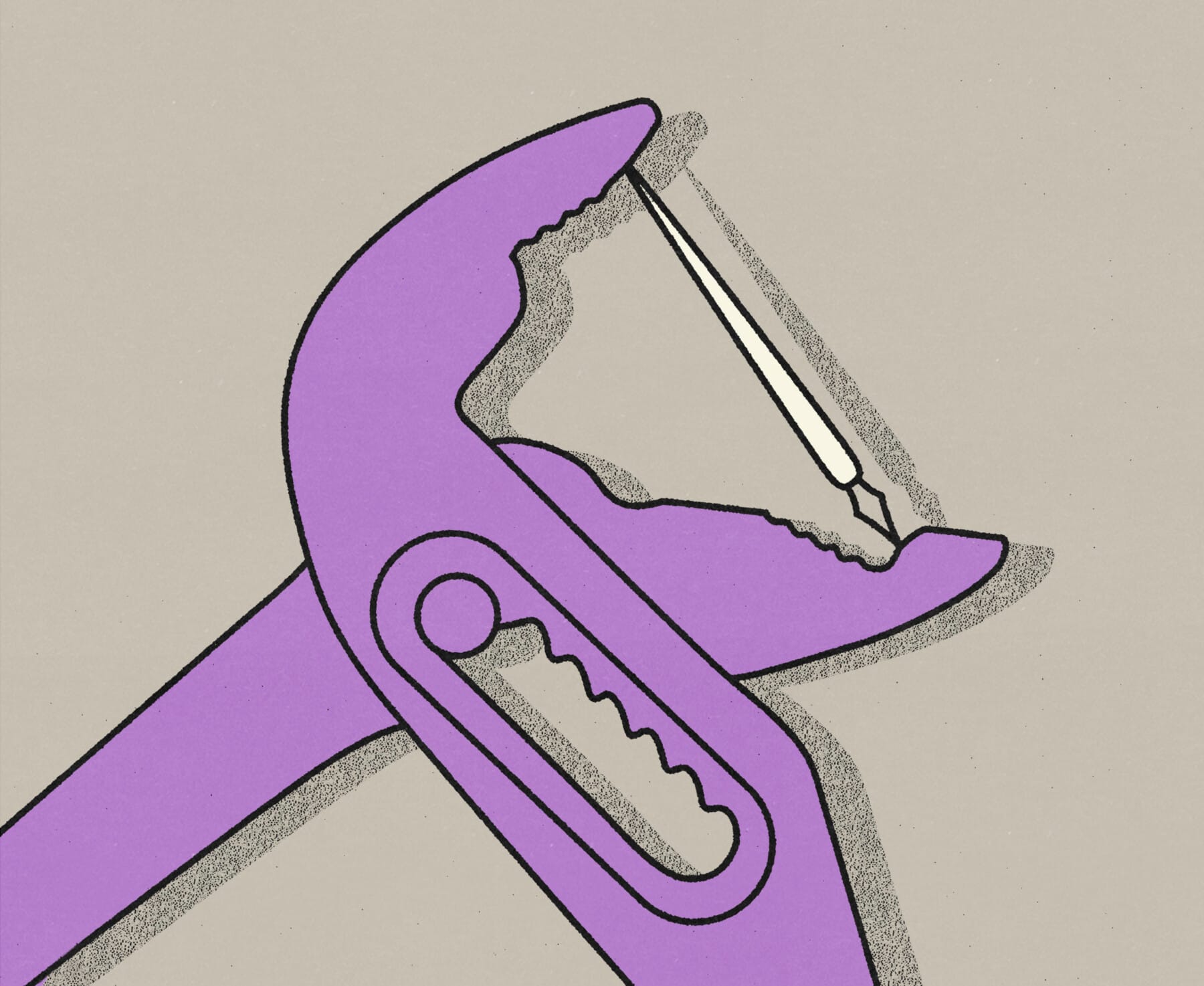
There’s a Future in Plastics
We came in just before sunup and heard the plastic plant had to be shut down for emergency repair.
The foreman drove us to the control house and then went in to talk specifics with the unit operator. We three mechanics remained in the work truck, cellphones lighting up our faces.
One of the guys was watching a video with the sound at a whisper. The other was scrolling. I pecked away at my phone, rewriting by memory a scene from my novel on my Notes app. Even though the book was out on submission, I was trying to make it better.
Sometimes one of the guys would ask me who I was sending so many texts to, and I’d say, “My baby mama.” That was easier than explaining that during every hold point on the construction site, I didn’t want to do anything but work on my make-believe.
I’d written about three hundred words when the foreman opened the truck door and said it was the same ol’. We’d pop open the reactor manways after coffee break. I’d worked in this plant about fifteen years by then and had gone inside the polypropylene reactor thirty-something times to clean it out and repair whatever. This outage would be some variation on all those before it with just one thing for sure: heavy labor, the heaviest we knew.
It was a dangerous unit too, running at high LELs and containing a pyrophoric gas that could burst into fireballs if exposed to air. But I had yet another worry on my mind. My friend who was acting as my literary agent had said to look out for a call today—yay or nay, about my novel he’d pitched to Big Five publishers.
Even though this novel was the best I’d written, I figured if it got rejected I’d put it in a drawer and write a better one. That’s what time was good for.
But I did like the idea of a large publisher picking this book up now, and though I doubted it would happen, I was hopeful someday people in Walla Walla, Washington, or Steamboat Springs, or various Portlands would be able to walk into their local bookstore and see one of my paperbacks waiting for them. Or, even better, they’d be able to ask a librarian to get a copy for zero dollars, and then voilà.
Then I turned twenty-five and got steady on a year-round maintenance crew in a huge petrochemical plant. I’d gotten a smartphone and I kept it in my pocket and I wrote more stories than ever.
The foreman drove us back up front to where our forty-foot shipping containers full of tools and rigging were staged. This is how it is when you work in these sprawling plants. You drive out and look at the job, see what the job is, if it can be done, if they will even issue a permit to do it. If they do, you assess all the hazards, talk about it as a crew, drive back and gather the exact wrenches, rigging, and specialized safety equipment you’ll need. It doesn’t matter how many times you have done this task, each time it must be approached fresh. We did our due diligence and loaded the pickup till it sagged.
Then it was break time. I sat alone in the work truck and pecked away again, adding more to the scene from earlier in the shift. Every day I had a mandated fifteen-minute coffee break and a half-hour lunch. I’d written whole drafts of novels during these many accumulated breaks, which were the reason I’d sought this job to begin with.
Out of high school, I’d worked as a bricklayer. I’d liked the physicality of it, but I’d come home drained and sometimes dozed off on the couch before the sun was down. Already then, I was writing novels, realizing the human body had a finite amount of daily energy that would only lessen as I got older. I’d loved high school but hadn’t gone off to college. Part of it was I didn’t want to wind up with a desk job. I wanted to be on my feet, moving around, preferably outdoors. I thought story writing could be mastered off to the side, over a long time, learning by doing. I wanted to make art part of my life, for my whole life, and suspected it would require a great balancing act, much resilience, and most important, a commitment to having fun.
Yet I knew I was never going to get anywhere without both energy and time. So I went and signed the list at the union hall and waited. The trades appealed to me because they had fair pay, better hours, higher safety standards—and also the mandated break times. I knew how it was going to go if I stuck around doing brickwork. Before too long, I’d wind up having my own business and would always be bidding for jobs, meeting with homeowners, with no time to properly daydream. And even before all that, when I was still the low man on the bricklaying crew, there was still the problem of finding a way to squeeze art into the workday. I could jot things down on lunch break, if I actually got a lunch break. On those crews, it was all at the unregulated whim of a boss who not only owned the company, but who worked in the crew and didn’t want to stop working, ever.
When I was twenty-three and first signing the application to get into the union, some old-timers at the hall warned me that on a good year, I’d only work six or seven months. This was the best news I’d ever heard. Six months on, six months sitting around my apartment, writing all day. At the time it sounded too good to be true. It actually was too good to be true. I had a few years in the beginning with time off like they’d warned, and yes I’d done some writing each day, but just when I was getting into something good on the page, the phone would ring, and the dispatcher would send me on some emergency nightshift at a garbage-burning power plant. But then I turned twenty-five and got steady on a year-round maintenance crew in a huge petrochemical plant. I’d gotten a smartphone and I kept it in my pocket and I wrote more stories than ever. The regularity of going to this humbling, physical job blended with art making, led to a contented, balanced life.
Could I have lived differently?
Who knows. Sure, I guess.
But I picked this way.
After break, we ran air lines up the reactor’s structure and then began to hammer our pneumatic gun on the manway bolts as the process engineer looked on in worry. Nobody could ever get that unit to run smooth. It’d go for a couple months and then come down in some great calamity of heat and noise and pipes shaking and the reactor jamming with plastic. The last bolt came out. We gingerly opened the manway. Best case scenario, the twenty-foot-wide reactor’s interior would have a knee-deep pile of white powder on the floor. Easy to remove, and some new guy in our crew would make a tired joke about it looking like cocaine. What we saw this time was the worst case. The inside of the reactor was filled solid with plastic. Standing outside the manway, we had no idea how high up the solid product went.
We signaled the vac truck guy down at ground level to throw it into gear and then, still outside the manway, we began to suck up loose powder using a four-inch corrugated hose.
Voids formed. Caves and crevices opened. Avalanches began.
We duct-taped an aluminum pole on the hose and stuck it farther inside.
I thought story writing could be mastered off to the side, over a long time, learning by doing.
By late morning we’d exposed what looked like icebergs there amid dramatic drifts of snow. Quite a sickening sight for our crew because we understood how brutal it would be to bust apart the icebergs and get them out. At the first opportunity, the engineer, who desperately wanted to get the unit running as soon as possible, stuck his head in the manway and was thrilled to see twenty-some vertical feet of product instead of one hundred and fifty.
The bosses from the plant had one hypothesis: if we busted our asses (!) and all went smooth, in three days the unit would be up and running.
We went to lunch.
I brewed a pot of coffee for the trailer, cooked us hamburgers, and then enjoyed the rest of my break out in the quiet truck. I took an index card from my pocket with notes on it for the scene I was rewriting. For a moment I wondered if I was making the novel worse, but I discarded that thought. A project would come together if I gave it honest, prolonged attention. I set my phone on Do Not Disturb and began again.
Lunch ended. We drove back out. If the owner of the plant and the corporate shareholders had their way, we would have eaten lunch on the unit and not driven back to the trailers where we washed our hands and even had access to a microwave. But long ago we’d negotiated our unbreakable conditions. There were even contracts written up, stating just how human we were.
Now came the fun part: we suited up in Tyvek suits and donned full-face respirators and climbed inside the reactor. It’s always dangerous inside a confined space. The air has to be constantly monitored, and there’s always the threat of asphyxiation, or getting poisoned by hydrogen sulfide gas, or that you’ll be boiled, drowned, engulfed, crushed, on and on. The foreman was outside with the gas monitor and the rescue radio, watching us, ready to call the squad to save us. We trusted him. We’d picked him. He was one of us. He had our respect. Next week one of us would switch with him and have to play foreman. We took turns with that burden.
We began to vacuum away endless washes of powder, slipping, sliding, losing balance, catching ourselves, catching each other. Some of the boulders could be carried by a single person, while others had to be lugged with a coworker. Huffing and puffing and sweating in our suits, we heaved countless hunks of polypropylene through the manway.
I had no idea if I could pull this off and still go to my day job, but lots of people had done this before me and I understood I was far from special.
There were icebergs of plastic too large to move by hand. We set about busting them apart with pry bars, sledgehammers, and firewood log splitter wedges. There was a process to it, just like working any piece of art. Little by little, more extreme measures taken. Different approaches wielded. Sometimes you have to problem solve more than you want. Retype the novel yet again—first person to third and maybe back again. You only find out by trying. Depending on how brittle or soft the hardened poly was, we’d break out the chainsaw. This time the chainsaw immediately clogged with melted goop and was useless. Your hands hurt, your back hurts, your mind whirs. You print out the novel and mark it up with a red pen and begin to delete. Slowly the massive mess diminishes, and the reactor floor can be seen in spots. To break apart the last of the icebergs, rain gear sometimes must be donned and the brutally soaking-wet task of high-pressure water jetting begins: bracing one’s body, blasting 20,000 psi, slicing the remainder bit by bit, being careful not to slice any of yourself off in the process. But that would be tomorrow’s problem.
Twenty tons of plastic we’d cleared out so far if I had to guess. Totally winded, the three of us leaned on the reactor wall and took a breather.
I saw I had a message from my buddy.
“Congratulations!” the message said.
He’d just sold my novel to a major publisher.
I was standing in a metallic tomb, knee-deep in polypropylene powder, reading and rereading this bizarre text message that said an editor was excited to work with me and that the advance wasn’t settled but it would be somewhere in the ballpark of half my yearly salary here as a mechanic. I was stunned. I wanted to shout and scream and jump around but the foreman outside might think it was an emergency and call the rescue squad, and besides I couldn’t even tell my coworkers the good news because we were all wearing ear plugs and respirators and it was deafeningly loud inside the reactor between the shriek of the vac truck and the exhaust fan spinning high above.
I texted back, “Damn this is great news.”
And, “Thank you!”
And, “Of course accept whatever offer.”
Then I had to get my shaking hands to somehow put my phone back into my pocket and zip up my coveralls and go back to helping everyone clear out a new pile of boulders we’d exposed.
As I drove back to the trailer at the end of the shift, a problem slowly dawned on me. All my previous published small press books were seat-of-the-pants, anything-goes DIY endeavors. This novel that had just been accepted would have the wider release I’d hoped for, but there would be many more people working on it with me than ever before. It would go through all kinds of editing. There would be suggestions to the content, and I worried I’d have to soften what I’d written. In the end, the opposite would happen, but I didn’t know that yet. The editor who acquired the novel loved it for what it was and never asked me to ease up. We made it better together, and we had the most sacred thing—time to do it, as long as it took. But I’d also been worried about the challenges of having to work with copy editors and proofreaders and art departments and publicity people and who knew who else. I’d have to rapidly up my game to not embarrass myself, all while not compromising what I believed in. I had no idea if I could pull this off and still go to my day job, but lots of people had done this before me and I understood I was far from special.
But then that good-problem-to-have got taken off my mind. Back in the trailer, putting on my street clothes, I realized my car keys were missing. I searched pockets, and everywhere else, but in the end I had to accept that the keys had most likely fallen out inside the reactor and had gotten sucked up by the vac truck.
I didn’t bother any of my coworkers with this problem of mine either. The train station was only two miles from the plant. I left my car in the plant’s contractor lot and walked to the station.
Even with the sale of the novel, I wasn’t about to quit my job. I’d been able to work, while steadily making art day in, day out. I’d picked this labor union, gone through its apprenticeship program, gained all the skills to thrive at my trade. I wasn’t going to deviate or bail on the crew and make their lives harder before I at least tried to juggle both. I bought a ticket for the train and climbed on board. The train took me away.
I was exhausted. I closed my eyes. I didn’t know what the new balance of my life was going to look like, or what adjustments I’d have to make, but I did know I’d gone to work that day with one serious job and now gliding along on the rails, it seemed I had two.
The next morning, instead of leaving at 5 a.m., I left at 4 a.m. and took the train back to work. Walked through the turnstiles, got dressed in my coveralls. The trailer was quiet, no one was talking yet. We went out and got our permit again, did our safety meeting as a crew, reiterated evacuation points and escape routes if shit really hit the fan. My mind was on other things, I hate to say.
When I climbed back inside the reactor to bust apart the icebergs, a small miracle occurred—I saw my car keys lying in the spot I’d stood when I received the text about the book sale. I scooped up the keys and stuck them in a safer pocket.
Eventually I had to start bringing my laptop to work. I built a mobile desk for the work truck out of scrap lumber and fielded a zillion-and-one tracked changes on my novel from copy editors.
So in the end, I’d gotten myself a desk job after all.
And when that novel came out, it went into a wide printing. And I thought, Cool, mission accomplished, and I started writing a new one.
My life didn’t change, or I didn’t let it.
Some combination of both, I suppose.
I get satisfaction from making new things. I get satisfaction from repairing broken things. I figure if I stay determined, if I stay healthy, if I stay lucky, I’ll be able to keep it like this for the remainder of both careers.
When I think about those paperbacks that came to be from that large print run, it all feels like a win, worth the effort and more. Enough copies of the novel are now in circulation that no matter what happens people will at least be able to get it used, for a couple bucks, as long as I live, and probably for many years after—somewhere in the span of time it will take the plastic we’ve cleared out of the reactor to begin to break down in whatever landfill it’s in now.
A Pear Is a Pear
Some poets have jobs, like Lorine Niedecker, who was a janitor. Or some have a profession, like Wallace Stevens, who was an insurance executive. Many teach. There is, famously, no money in poetry. There is not even the fantasy of money such as might bedevil the novelist. And so poets make a living by any means, really, other than writing, unless they come from money.
I don’t come from money, but when I got my GED at sixteen and stepped out into the marketplace, I was lucky––I never had to work at one of the many dead-coral-reef ensembles of the American enterprise. No Panera Bread, no Home Depot. Like negative theology, the jobs I worked described the main of capital by not being it. There was no pretense that what I was doing was “a career” with “starting pay,” as hiring ads for Amazon or Starbucks would have it. They were just jobs, scrappy jobs in which I was often paid directly, sometimes in cash counted out of someone’s wallet at the end of the day.
The scrappy job is work that is precarious, underpaid, usually temporary, and often obscure, producing idiosyncratic, even baroque forms of tedium. The labor of the scrappy job might look identical to wage work, but it comes without a contract, a W-2, or a union. I’ve had a lot of scrappy jobs, as I understand them. Laborer for an unlicensed construction crew. Line cook at a slowly failing café, where I was told to cut melon into flower-shaped garnishes. Housecleaner to a former police coroner. General staff at a bookstore whose business model was to buy withdrawn library books and then spend hours removing their institutional markings with a hair dryer, alcohol, sandpaper, and a razor. I switched jobs frequently, as one fell away and another came into view. I wrote poems on the side. Or slant, in Dickinson’s sense.
There is no money in poetry. There is not even the fantasy of money such as might bedevil the novelist.
One summer I got a temp job working for the World Pear Collection, outside Corvallis, Oregon, the town I’m from. The Collection is a huge orchard that keeps two exemplars of every pear “known to humankind” as a living archive (or ark) to furnish and refresh the scion-wood stock of universities, seed banks, and other doomsday vaults across the world. I had recently returned to Oregon after several years in Los Angeles: to work on writing, to live with a friend there on the cheap, and to recover in quiet from a traumatic brain injury I’d gotten in a bicycle accident the previous year. The aftereffects of the TBI were mostly amazing––it somehow cured me of chronic depression, and because I was unconscious in the ICU, I got to quit smoking without experiencing withdrawal. But the injury also winnowed my planning capacities into two incommensurate modes: laissez-faire or frenzied. I got myself abruptly to Corvallis with around $50, a duffel bag of clothes, some music gear, and a large model schooner I’d found in a park. I picked up some dishwashing shifts at a pizza restaurant in town, which felt quietly doomful, but soon thereafter I got a call from Joseph.
I had met Joseph when I was about seven years old, when my mother and I joined his baroque recorder group. Joseph now ran the World Pear Collection, and he had recently received a small grant for operations in the coming year. I had no high school diploma, no college degree, and no background in any science, but he recalled that I played piano well and imagined I had decent finger dexterity as a result––I could learn to graft trees and do “detail work” in the lab. He knew I was in town for a bit and could use some work. This was to be a six-month job at $10 an hour. Would I like to start next week?
The Collection is home to more than two thousand species of pear, both cultivars and “wild relatives,” from fifty-five countries. Some pears are so small they look like ominous chokecherries. Others are so woody and dense a bite would take out your teeth. Some are oversweet, others almost brackish; some have the texture of a molding cushion, others are so crisp they could be whittled into recognizable animals. Walk the Asian pear tree quadrant in October and November, my favorite, and you’ll see mysterious sullen or luminous browns and greens in array, colors that seem to hold colors behind them as in some secret reserve.
I learned to admire what is limber, what is mercenary: the outsider, the unvoiced sound, the counterpoint.
If an American has met a fresh pear, it is probably a Bartlett; if they have a little money, they may have tried a Bosc or an Asian pear (pricey, at $3.99 each). I didn’t think much myself about pears before I worked at the Collection, but if I had, I would have guessed that they all looked something like the fruit you get at Safeway. That is the mistake words allow us to make: you take pear as equivalent to your experience, and then you take your experience for the norm. You think you know what a pear is, which in our historical moment means you think you know what a pear is worth. I’m talking about the range and splendor of the pear here, but also other things––words, jobs, experiences––similarly impoverished into exchangeability by nth-stage capital. That’s the commodity menace in the Gertrude Stein line: we’re at the end of the line when a rose is a rose. To which a poem rebukes: you thought you knew what language was; you thought you knew where value falls; well, you don’t.
There was a steep learning curve to the job. I tended the orchard and greenhouses and grafted that year’s pear cuttings to rootstock. I also worked in the tissue culture lab, where I propagated the incoming generations. In less psalmic terms, this meant that I sat in front of a HEPA-neutralized stainless-steel booth across which rattled and blew a constant blast of cold air to prevent the dust and bacteria on my person from settling on the plants I was working on. To safeguard the various assays, titrations, and cultures daily underway on her watch, the manager of the lab, Jeanine, had posted short warnings in rhyming verse around the lab about clean hands, fresh gloves, the sterile field. Each morning at the lab I was given a list of the many plants that needed administering, in various stages (from half an inch to two inches tall) in their plastic tubes or petri plates in the freezer or culture room. My task was to reshape each plant for optimum growth by trimming extraneous limbs and leaves from the “trunk” with a very long scalpel and forceps, wiping the hood with ethanol after each pass to prevent contamination. I would then reinstall each plant in fresh media, seal the tubes, and return them to deep freeze or the culture room, depending on their size. I goggled at the remarkable symmetry across scale; a tiny pear in tissue culture seemed to resemble exactly in structure and ratio the orchard tree, so that I felt, with my scalpel, like a giant with an enormous pruning saw. The instructions posted to my booth––not Jeanine’s doing, and not in rhyme––were not unbeautiful. In my memory, they included phrases like this:
Do not talk while performing sterile operations. . . . Do not lean over your work. . . . Keep your back against the backrest of your chair and try to work with your arms straight: this position may feel awkward, but it will reduce contamination. . . . Work quickly. The longer it takes to manipulate the tissues the greater the chance of contamination. . . . Make your movements smooth and graceful so that you do not disturb the air more than is necessary. . . . Act out each step before beginning so that you understand what you are about to do.
To choose meanings out of the wild and waste of experience is the assaying work of poems. What the World Pear Collection job, or my life of scrappy jobs more generally, meant to the writing of poems––that, however, is an open question. It’s difficult to talk about poems; you risk turning them into dreary equivalences, piled-up stock in a brackish Safeway of exchangeability. “This is a poem about x.” So it’s usually better to read them. But I do know that the two decades I spent traveling the chain of scrappy jobs did much to structure my relation to language. I learned to admire what is limber, what is mercenary: the outsider, the unvoiced sound, the counterpoint. The strange or irrelevant or failing detail seemingly hostile to the whole, the meter ongoing underneath and outside the social rhythm.
When my six months at the World Pear Collection was up, I thought I would probably move out of town, likely to Portland. On my last day, one of the botanists presented me with several mason jars of excellent weed he’d grown. “It won’t be easy to find a job up there,” he said, “but you can always sell this. It’s very good stuff.” He also gave me a pretty desk and a Madagascar pencil tree.
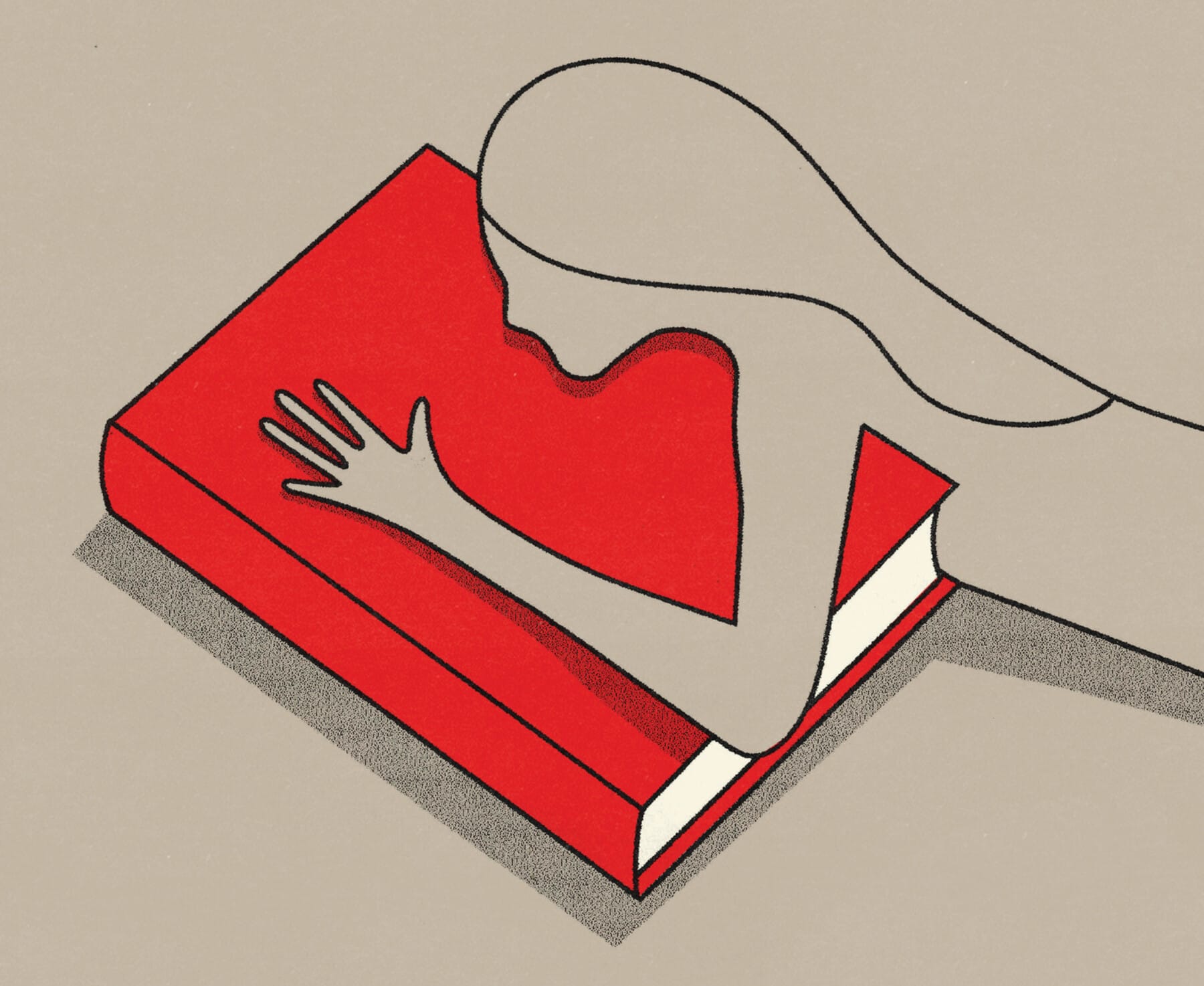
A Cuddler’s Comforts
My very first client as a professional cuddler tried to penetrate me with his finger. David had messaged me through the app of a company called Cuddle Comfort, which promises to connect people ostensibly looking to “start a friendship based on cuddling without any expectations of something more.” (David’s name has been changed, as have my other clients’.) In his message, David included a photo of himself in Fort Lauderdale, where he lived, leaning against a Ford C-900 fire truck with his feet crossed at the ankles and his left thumb hooked into the pocket of his jeans, posing like a cowboy. He would be in New York City soon on business, he said. Was I available to cuddle?
I met David at the Benjamin hotel on Lexington and East Fiftieth Street. In the year between signing up as a “professional cuddler” on Cuddle Comfort in April 2021 and my arrival to the lobby of David’s hotel, I had thought plenty about backing out—that’s why I hadn’t actually seen a client in all that time. But now I was in a bind. I’d recently moved to New York City, as I’d just been accepted into Columbia’s MFA writing program. I was thrilled, and even more thrilled with the generous scholarship of $40,000 a year they offered—but that amount didn’t cover even half of the program’s more than $80,000 annual tuition, let alone my rent and bills. I tried to support myself on $17.50 an hour bagging groceries at Trader Joe’s, but when I developed debilitating joint pain, stocking shelves and manning two-wheelers became excruciating, forcing me to reduce my hours and eventually quit. I needed money fast, and more than I could make at a retail job as I waited for the first installment of my grad school loans.
As David’s fingers daddy-longlegged their way closer to my crotch, all I could mutter was a meek protest.
David met me in the lobby, looking like a fiftysomething man who was too chubby to be a convincing cowboy. Besides his girth, the only thing visually noteworthy about him was his upper lip, which was significantly thinner than his lower. As we rode the elevator, I looked directly into the security camera and felt grateful for its presence. Once inside his room, he handed me what felt like the correct number of twenties, which I stowed in my bag without counting. The two-hour session was supposed to cost $120, which would have taken one full day to earn at Trader Joe’s.
In the bathroom, I changed into boy shorts and a T-shirt, the outfit I’d decided was appropriate for my first pro cuddle session. I returned to find David already in bed under the covers, wearing only boxers. In bed, I rested my head on his chest and looped my leg over his. I ran my hand along his arms and chest. I tried to make conversation by asking about his flight and his plans in New York City, but we spent most of the time in silence. At times, it felt almost like cuddling someone I knew rather than a stranger: there was a nonverbal understanding that felt like dancing, as I sensed what kind of touch he wanted and adjusted my body in harmony. At other times, he would shift my body without asking, and I would have to meditate to stay calm, thinking of all the ways this could end badly.
To keep track of time, I had set a two-hour alarm on my phone. Without explaining why, David had also asked me to set a second alarm for fifteen minutes before the session’s conclusion. Now, at 8:45 p.m., my phone chimed to indicate our session would be ending soon. I untangled myself from David and stood up to silence the alarm. When I rejoined him on the bed, something in his demeanor had changed. He started massaging my lower leg, gradually making his way up and toward my inner thigh, and his breathing became heavy. There’s nothing particularly untoward about a leg massage, I thought, and I expected him to stop there. But then he slid his hand up the opening of my shorts and caressed the hinge between my thigh and torso. I wondered how high up the leg was too high to no longer be platonic.
I had worried this might happen, though Cuddle Comfort, like other cuddling sites, did its best to assuage such concerns and prohibit sexual behavior. The value the service cuddle sites offered and their niche in the market depended on successfully maintaining the distinction between sex work and cuddling—as did the sites’ legality. In the case of Cuddle Comfort, David and I had both been required to read and consent to a code of conduct as well as a separate “Cuddler Contract,” which stipulated, among its thirty-two rules, that no nudity, kissing, or sexual touching of any kind was tolerated. All activity had to be “strictly platonic.” If a client broke any of the rules, the cuddler had the right to end the session immediately, keep all payment, and report the offender to Cuddle Comfort’s moderators.
But doing so in practice was daunting. Suddenly deputized with the task of policing the boundary between cuddling and sex work, I faltered. As David’s fingers daddy-longlegged their way closer to my crotch, all I could mutter was a meek protest, phrased in part as a polite question. “You’re not going to insert your fingers inside of me, are you? Please don’t do that.”
“I just like touching the lips,” David said.
Then his shorts became damp, the fabric blooming with darkness.
I actually came to Cuddle Comfort as a client, like David. Well, not exactly— I never paid, but I had signed up for Cuddle Comfort’s free matching service, which existed alongside its “professional” paid services. I needed help finding someone to touch me. This was at the beginning of the Covid-19 pandemic, when I was sequestered in a redneck town on Long Island (appropriately named Hicksville) near where I grew up, and I was so lonely that risking catching Covid-19 seemed less scary than going another moment without being hugged. So one day I met up with a Cuddle Comfort user in the parking lot of the local Dunkin’ Donuts, where we leaned against his white Mazda SUV in face masks as he gently stroked my arms. This was followed by an encounter with a French-Canadian man who was married to a woman he loved but with whom he no longer had sex. As we exchanged scalp massages in my bedroom, he told me about his dream of opening up an official cuddle venue, a rules-bound space with employees to help guarantee all cuddles were as safe and nurturing as the one he and I shared.
When I later began professional cuddling, I did so informed, even buoyed, by these experiences, thinking that even if some clients inevitably tried to initiate sexual touching, surely not all of them would. Which is to say, professional cuddling for me was never simply about extracting money. I was a peer to these men. I, too, was desperate for intimacy in my own way.
“I’m always surprised this site hasn’t been exposed for the sex factory that it is.”
Unfortunately, over the two years of on-and-off cuddle work that followed my encounter with David, his boundary-pushing proved to be the standard among paid Cuddle Comfort users rather than an exception. There was the Dollar Tree manager who, in his office at work, asked me to pull down my top so he could see my tits while he got himself off. “I’m the manager here,” he said, before pulling out his penis, “so I have privacy. I’m in charge of opening this new location. It’s damn stressful and I could use a little release with a gorgeous woman.” I obliged him, in part because I’d done worse on Tinder’s video app for no pay, in part because the Dollar Tree manager withheld my payment upfront—a common tactic, I would later learn, to compel a cuddler to engage in sexual activity or nudity.
There was Nikil, the seemingly sweet, shy, awkward boy from India ten years my junior who paid me $300 for five hours of cuddling. This is going to be so boring, I remember thinking. What the hell were we going to do for five hours? I didn’t know then that booking long, multi-hour sessions was a common code to indicate desire for a sexual session.
About an hour into our cuddle—we were in a spooning position on my bed, both fully clothed—Nikil started tugging at my mauve tank top as if to pull it over my head. I redirected his hands toward my stomach. He kept trying to tug and I kept redirecting. He might have been as surprised that I was stopping him as I was that he kept trying.
Eventually he gave up. As we lay there together, he seemed deflated, and a part of me even felt bad for not letting him undress me. I knew I shouldn’t feel bad, but it’s natural to feel bad disappointing someone, especially someone with whom you’d just shared some physical intimacy, however manufactured that intimacy was.
When Nikil suddenly jammed two of his fingers into my mouth about four hours into the session, I let him. “You’re supposed to suck on them,” he said. His quavering voice suggested a nervousness that was at odds with the boldness of the act. I assumed he got the idea from one of the porn films he had earlier told me he was addicted to. I don’t know if what I did could be described as sucking, but, as a sort of consolation for not giving him other things he wanted, I let his fingers loll about in my slack mouth, lips parted, tongue limp. We stayed like that a long time. His fingers tasted like burnt milk.
About a year into cuddling, after a particularly difficult session with a client, I sought out information on how other pro cuddlers navigated clients’ sexual expectations. A male Cuddle Comfort user I’d been chatting with and who seemed less creepy than others on the site provided me with some insights. He was close to me in age, in grad school for psychology, and he had a significant amount of “karma” (i.e., good reviews) on his profile from other pros. We’d been trying to book a session but our schedules kept misaligning, and when I told him I’d been having a hard time with my clients and asked if he’d talk to me about his experiences, he agreed to chat on Zoom.
According to him, about 70 percent of the pro cuddlers he’d interacted with were not strictly platonic. He informed me that men on Cuddle Comfort had group chats to share honest reviews about cuddlers and intel about which ones offered sexual services. In some of these group chats, men also revealed that they viewed Cuddle Comfort as a place to get sex for much cheaper than was possible with a standard sex worker: as low as $60 an hour for Cuddle Comfort versus about $500 for a sex worker.
The tradeoff was that there was no guarantee of sex on Cuddle Comfort. For some men, however, this uncertainty was part of the app’s appeal. In a Reddit thread about Cuddle Comfort, a long-term male user wrote:
I’m always surprised this site hasn’t been exposed for the sex factory that it is. I would say more than 55-60% of girls were down for whatever (this was out of over 130 that I met). And it was a fun game because you never really knew for sure a lot of times what was going to happen when you met. It was sort of a mystery. I think this is the appeal of the site. You pretty much know what you’re getting on a [explicit sex-work site] but [on Cuddle Comfort] there is always a chance for success/failure so you have to use your charm and cunning. The moderators try hard to keep things clean by banning SWs. In reality though, it’s pure whack-a-mole.
I would periodically quit cuddling after a bad experience and get a regular job—I worked at REI, for instance, making $21 an hour—but I made less money and had to work triple the number of hours, which distracted me from my full-time course load and from writing, which was the whole reason I was even in New York. In desperation, I’d then go back to cuddle work, determined to be clearer about boundaries and expectations with potential clients before meetings and reaffirm my right to terminate the session without returning payment if boundaries were crossed.
But once contact info was exchanged and conversations moved outside the site’s moderated direct messages, clients would be quick to ask if I did “skin-to-skin” cuddling, a common phrase indicating non-platonic interest and a litmus test to see if I would do nudity and other sexual services. In need of cash, I’d still go, telling myself I wouldn’t give in to their tactics, but something creepy would happen anyway, and I’d quit again.
While maintaining boundaries is hard for me in general, it could be even more difficult during these sessions. As embarrassing as it is, I could relate to many of my clients: the awkwardness of being snuggled by a stranger alongside the thwarted desire for intimacy, and the desperation that arises from that combination of emotions; the shame of realizing that the only person you could find to hug you (and not even fuck you) was someone who didn’t know you, which you tried not to take as evidence that your real self was unlovable (“You wouldn’t choose you,” my therapist likes to remind me.)
Locked in an embrace, it was often hard for me not to imagine what these men were thinking, which produced some weird flicker of affection despite the revulsion I felt at the odors and feel of someone I didn’t know at all. In this way, cuddling, the very thing I had consented to do, simultaneously made it even more uncomfortable and difficult to refuse the things I hadn’t consented to—which almost every client I ever had attempted, whether by grazing my labia or putting their fingers in my mouth.
In that way, cuddling could feel more like dating a jerk you cared about who nevertheless pushed your boundaries than sex work. Despite the app’s terms of service and code of conduct, Cuddle Comfort and its ilk depends on the appearance of such a distinction between cuddling and sex work, a contradictory and confusing state of affairs that awkwardly accommodates both the law and the many users who violates it by using these sites to seek out sexual contact. These contradictions produce a cryptic code that cuddlers and clients alike use to negotiate illicit transactions, allowing clients to exploit the work’s vague boundaries and definition.
My last client was in November 2025. Oddly, it was the only time I ever truly got upset, and it was over the smallest infraction. In fact, the person who caused me to quit—and made me the most enraged—was my only client ever who abided by the rules. He never sought sexual touching.
Noah was in his early twenties, lived at home, belonged to a Jesuit church, and seemed to be inexperienced with women. As we embraced, his head on my chest, I listened warmly as he recounted his recent experience at New York Comic Con and gushed about his favorite Marvel movies. Finally, I had found a man interested in paying for platonic-only cuddling. I almost felt guilty for monetizing human connection and taking $100 from this sweet, lonely boy employed at a Walgreens.
That is, until our second and last session. That day, after Noah prepped in the bathroom for our cuddle, I noticed my roommate’s travel-style toothbrush was unfolded and covered in unrinsed toothpaste scum. I had noticed the toothbrush had been left used after our first session two weeks prior, too, and though my roommate never left his toothbrush unwashed, I assumed he was in a hurry and I dismissed it. Now, as Noah and I settled into my bed, I went into a rage in my head, more of a rage than I’d ever felt with other clients. But instead of yelling “who the fuck uses a stranger’s toothbrush,” I calmly asked Noah if he’d used it. He confessed. I replied that people generally don’t like it when someone they don’t know uses their toothbrush without permission. He apologized and said he should have asked first. I told him I’d buy a replacement from the drug store.
I think I didn’t care so much about my roommate’s toothbrush as the clear violation of an accepted social norm: you don’t involve yourself in other people’s oral hygiene without asking. Noah’s uncomplicated transgression gave me permission to feel anger, legitimate and justified. The norms of cuddling for money, on the other hand, were often so vague to me that I wasn’t certain if the men were crossing a boundary or if I simply didn’t understand the contract I’d implicitly or explicitly entered into by accepting money in exchange for cuddling.
I’m now in my last semester at Columbia. I’m almost done with my thesis, a memoir. I’m over $100,000 in debt. I am aggressively applying for jobs, “normal” jobs like office admin for nonprofits and civil service positions, jobs that would qualify me for loan forgiveness. I hope I get one of them.