, December 5, 2025
Jessie & Lady Jesus
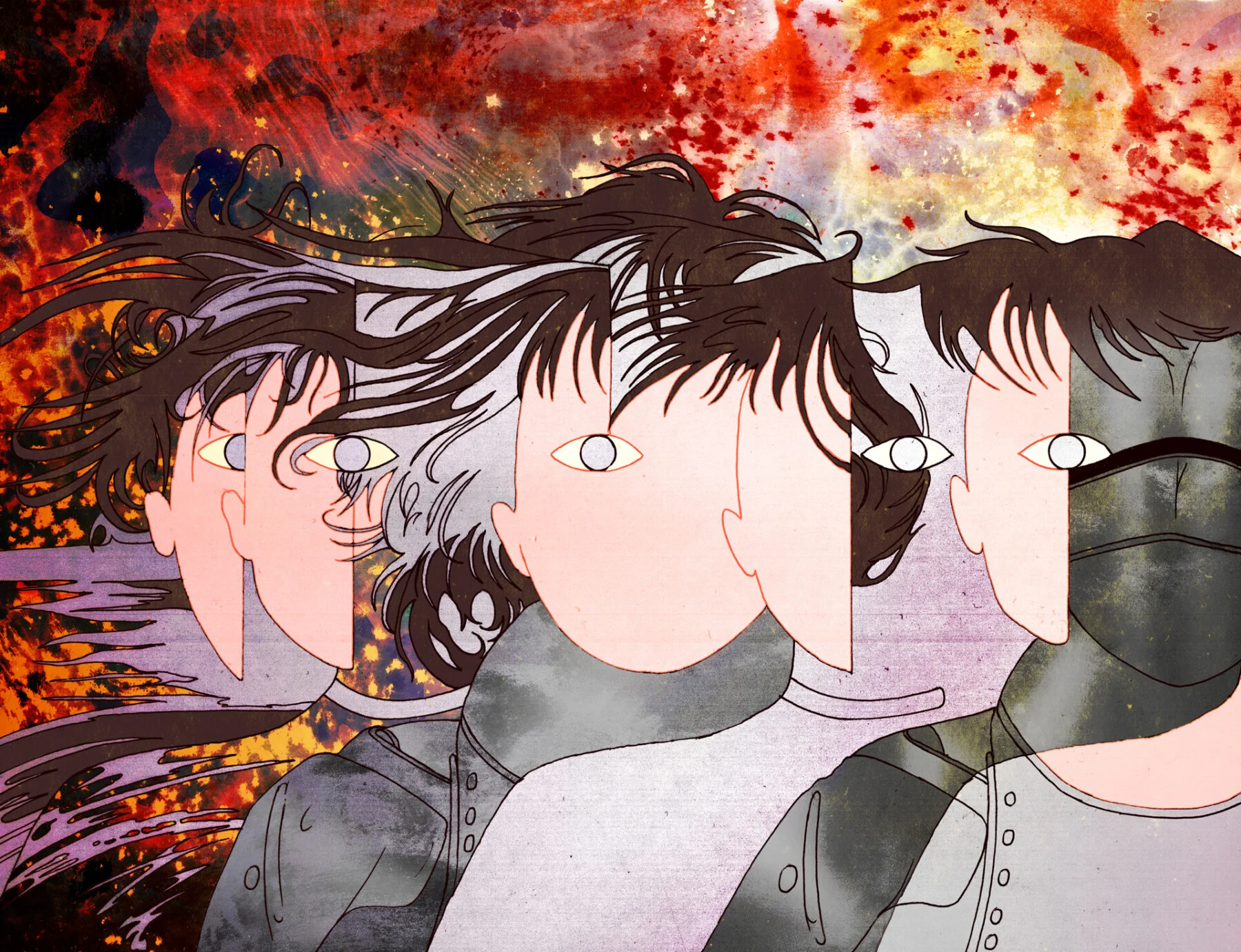
When she says want it sounds like won’t. She can’t help it. No one understands her every time.
But back home her sister gets it. Driving that busted truck in Opelika, Potecasi, Jacksonville—who knows? She ain’t talked to her sister in forever, in years. They used to be two parts of the same whole. What happened? Where is she?
Joan of Arc was from a rural backwater. She couldn’t read, loved God. Basically a redneck. But she led an army and died at nineteen. Burned at the stake, like a devil. Because men were afraid of her power.
Right now, Jessie’s in New Orleans at a conference. But no matter where she is, she can always see the tall grass back home, where the field meets the edge of the woods. Jessie doesn’t even have to close her eyes.
Here in the hotel room, Jessie is watching the U.S. Open. She doesn’t understand it. She’s never watched it before. She just knows that it has something to do with dedication. Putting the work in, training day in and day out. Her mama played tennis too.
It was her mama who said, “Watch after your sister, your sister needs your help. You’re the more mature one. You’re the oldest. You can help her.”
But really Jessie knew that it was just because her sister couldn’t read as good. Her sister would never have a chance to get out.
Jessie knew she had to be the first one. Her daddy said, “You’ll have an office in New York City one day.” New York City was a place no one she knew had ever been.
Joan of Arc was from a rural backwater. She couldn’t read, loved God. Basically a redneck. But she led an army and died at nineteen. Burned at the stake, like a devil. Because men were afraid of her power.
When Jessie first heard about Joan of Arc in the third grade, the only person she knew that had died in a similar way that made her feel awful was Jesus. Joan became Lady Jesus in Jessie’s head.
Little Jessie tried to imagine what it would have been like to have been tied to a scratchy wooden pole. Splinters in her back, flames at her feet. The heat, the sweat, the smoke, the whooooosh and whooooosh of the air igniting. Did she keep her eyes open or close them?
That afternoon, she went home and stuck her finger into the flame of a kerosene heater. She closed her eyes.
So here she is now, at a conference in New Orleans. She’s never been here before. She knows there’s a Joan of Arc statue downtown, and sometime before leaving, she’s going to see it.
She’s here because she’s presenting her paper “La Pucelle, Lady Jesus.” She’s a medieval scholar. She was the first person in her family to go to college. She’s the first one to get a PhD, the first one to learn French.
“Why in the world do you want to go to France,” her cousins said. She was twelve and wanted a Parisian themed birthday party. Her mama got her a poster of the Eiffel Tower from Walmart. She hung it above her bed.
Outside the farmers sprayed chicken shit on the cotton. And in the fall, the dead corn stalks stuck up like bones.
Jessie is sharing a hotel room with a colleague. The whole trip the colleague’s been taking photos of all the “Jesus loves you” signs. She didn’t grow up in church. She’s here to talk about Arthurian legends, dragons and spells.
Last night the conference dinner was a low country boil. The colleague asked Jessie to take a picture of her, her elbows on the table, her head perched in her hands, covering the pile of shrimp like a steeple. I love the South, her caption said.
Later, everyone went out to a bar in the Lower Ninth. Jessie saw that the men there didn’t have any rings on their fingers. This meant they worked with their hands. All the men back home know that when you wear a wedding ring, you might lose a finger or a hand in a piece of machinery.
Cotton pickers can suck you in quick.
Jessie had never seen anyone wear wedding rings until she went to college. Professors, dentists, men in suits at the grocery store.
Sitting on the hotel bed now, watching the tennis ball go back and forth, Jessie thinks that maybe all this ring business just made it all the easier for the men back home to cheat. She feels sad that she’s able to think this. It’s just because she’s a grown woman now. She knows how men are, she knows how men can be.
Last night at the bar, Jessie’s colleague pulled her into the bathroom. So they could pee together, she said. She said, “I believe every single person on this earth has their one person, their one true love.” She said, “You can tell it as soon as you see them.” And it sounded like she was crying then and she said, “And tonight, I’ve seen him.”
The toilet was broken. It wouldn’t flush.
Outside, the object of the colleague’s affection was calling their names. Tapping the bathroom door with a pool stick. Asking them to come out and play.
He’d just won a Guggenheim for his book on Carthage.
“Carnage,” Jessie kept saying. She’d had enough drinks. There was nothing else to do but watch her colleague throw herself around. Desperate, like a wine mom at a wedding but worse.
Guggenheim Boy had started bragging about what he gets away with back at his university. He gets so wasted that he passes out in a sleeping bag in his office, so he doesn’t have to drive back home.
Jessie had heard he had a wife, even a little daughter. She thought of them waiting up for him at night.
Meanwhile, her colleague was chalking up her pool stick, looking at Mr. Guggenheim with longing.
He said that the sputtering AC unit was charming, magical. Said this while it spittled on his button-down. Said, “Don’t scratch,” every time her colleague leaned down for a shot.
Then when the toilet finally flooded, and seeped out under the bathroom door, he pointed and quoted Tertullian: a woman is a temple over a sewer, beautiful, whitewashed tombs on the outside but on the inside full of dead men’s bones and everything unclean.
Her colleague slapped his shoulder.
“Just kidding, just kidding,” he laughed.
Jessie knew Guggenheim Boy had never had his ass whupped, never had to wear a headset in a drive-thru, worry about teeth or dying. Never know that her sister never got out because she was terrified. Never know what that feels like. Never know what it’s like to need a God. To really truly sacrifice because there is nothing else to do. There is no decision, no choice.
After Mr. Guggenheim didn’t invite the colleague back to his room, she spent most the night crying. Saying, “We had a connection.”
Jessie turned her head. There was a time when she wore skirts to make men listen. Anything tight on her ass.
There was a time in her life when she was susceptible to anything. And a man came along and offered to buy her an ice cream. Can you think of anything more pure? More real?
She turned off the bedside lamp, pulled the covers over her head. And thought of all the men she’d slept with who had never loved her, rotting inside her tomb.
Joan would have never felt this. She was a virgin, born the day God first spoke to her.
And she feels ashamed about it, but Jessie likes to think that Joan was raped while imprisoned. Something to make her more real.
The last time Jessie saw her sister, her sister said she was in love with a man on the radio. “Show me,” Jessie said. And her sister turned the radio on. It was real, Jessie saw it. She saw her sister truly in love and thought why not me?
Now, the colleague’s perched on the edge of her bed, waiting for her hair to dry naturally. Still sulking, heartbroken, taking selfies on her phone.
And on the TV, despite all the grunting back and forth, the tennis match is still 0-0.
“Why is it called a love in tennis?” the colleague says.
Jessie gets out of bed, tells her colleague she’ll meet her for supper.
The Quarter smells like piss. Den of sin, den of sin, den of sin, Jessie thinks. She’s walking quickly, determined, as always.
There’s folks passed out, sleeping, asking for money. Juggling, squeezing accordions, throwing up. Mardi Gras beads with breast medallions, penises, little men sitting on breast medallions, little women straddling penises like horses.
Jessie imagines her colleague taking a picture of them, posting again, “I love the South.”
And all the folks just standing around staring, mouths agape, mesmerized.
Joan led men into battle. They believed her.
She’d sleep right there in the middle of all of them, under the stars, and not one of them would touch her. They wouldn’t even look at her body when she changed clothes.
Jessie believes Joan loved plunging her sword into men’s hearts.
But she also believes Joan fell to her knees every time, asking for forgiveness.
“Maybe you got out instead of your sister because you were needed for a higher purpose,” Jessie’s therapist says.
Jessie wants to believe this but knows there’s no answer. She wants to things to be easier. Like believing in the God from her childhood. Was there to listen to her always, no matter what awful thing she did.
Something else she wants to believe: when Joan showed up at Chinon to deliver God’s message, the dauphin only agreed to meet her because his astrologists said the timing was right. “Le lion est à côté de la vierge,” they said.
In the end, they led Joan out to the stake. Shoved her hands into the woodpile and said, “Don’t make us do this to you.”
The lion is next to the virgin. Jessie’s a Leo, her sister’s a Virgo. Together they’re Joan, Lady Jesus.
Jessie finds Joan rearing on a steed, shining by the river. Towering over smokers and drunks. Someone’s screaming, “I forgive you! I forgive you!”
Joan’s in armor, raising her flag. At her trial for heresy, she told the court her flag was embroidered: a field sprinkled with lilies.
Joan didn’t know how to write. We can only trust what’s been said about her is true.
Jessie’s sister has never been able to say the truth. Because the truth is too scary. She’s not strong enough yet to stand alone.
Jessie keeps a picture of her sister. She’s a little girl in an Easter dress standing under the dogwoods. They were taught each corner had a drop of red to remember the blood of Jesus on the cross.
Jessie misses being a little girl. She misses her sister. Before they got corrupted.
All the men floating inside her tomb. She’d dream about hanging them up, gutting ‘em like deer. Standing underneath the floodlight with her sister. Shivering and watching the knife cut.
In the end, they led Joan out to the stake. Shoved her hands into the woodpile and said, “Don’t make us do this to you.”
And Joan said, “I never heard any angels. I never heard the voice of God.”
That night her guards raped her. Ripped off her gown. And threw her men’s clothes to put on.
Then Joan recanted.
She knew she’d lied. She knew she deserved the fire.
Jessie will say all this tomorrow at the conference, to a room full of people who have never heard of her hometown, who will later say out in the lobby, “I had a hard time understanding what she said.”
The last time Jessie saw her sister, her sister said she was going out for cigarettes. “If I’m not back soon, don’t come looking for me,” she said.
Jessie stayed up all night waiting for her. Watched the door, read metered poetry. Wrote, “I dream of you burning. The sirens ring out all over town. But I’m the only one that hears it.”