, April 22, 2026
Eyes of Lillian Bassman
The art of fashion photography
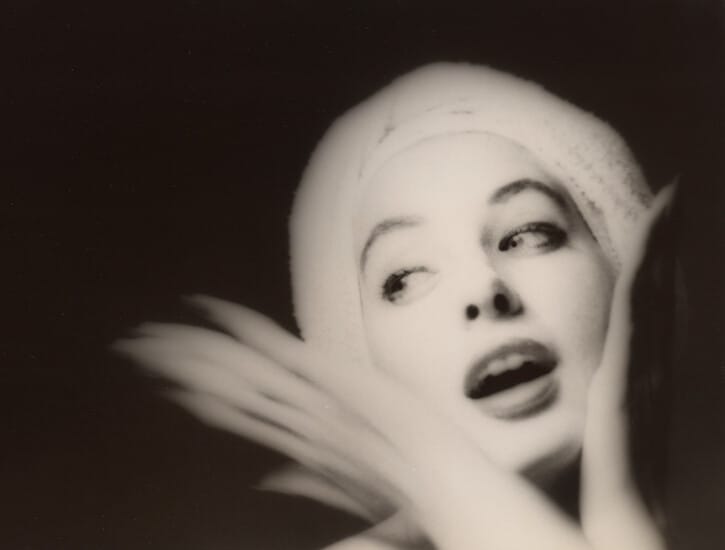
A Report to Skeptics by Lillian Bassman (1952), Metropolitan Museum of Art. | © Estate of Lillian Bassman
Lillian Bassman: Bazaar and Beyond. The Metropolitan Museum of Art, New York City. March 2–July 26, 2026.
It is unfathomable today to think that fashion—that is, the design of wearable clothing—was considered beneath contempt by the art world through most of the twentieth century. Poiret, Chanel, Dior, and Givenchy may have been vaunted names in the upper echelons of civilized society, but they never stood alongside Picasso, Matisse, Pollock, or De Kooning—or Joan Mitchell, Lee Krasner, and Helen Frankenthaler, for that matter—in the pantheon of arts and letters. In earlier centuries, fashion was understood to be a practical condition of high society, and its currents were determined by the evolving development of materials, the quality of ornamentation that determined stature and position, and the layers of undergarments—the corsets, hoops, panniers, crinolines, and bustles—required in the daily construction of the obligatory styles of an era. Yet the distance between the routine customs of society, in which fashion belonged, and the loftier aspirations of the fine arts was, at least metaphorically, as far as the earth from the moon.
In February 1982, Artforum, then the bible of the contemporary art world, featured on its cover a structured black garment by Issey Miyake, the Japanese fashion designer. Regardless of the nuances of his collaboration with a bamboo craftsman (Kosuge Shochikudo) and an artist (Emi Fukuzawa), the garment was a dress by any other name. The appearance of a designer dress on the cover of Artforum sent a tremor through the art world, not only scrambling the unspoken hierarchies that distinguished art from commerce but betraying the church/state divide that kept the vagaries of fashion and other commodities at a distinct remove from the higher calling of pure artistic inquiry and expression.
You would think Artforum had issued a nose-thumbing fuck you to the exalted preserve of art itself, which left artists, critics, curators, scholars, and urban cognoscenti alike stunned and indignant. Ingrid Sischy, the magazine’s young editor-provocateur at the time, defended her decision against the groundswell of criticism, explaining that the art of “now” extended the limits of the traditional form of painting and sculpture, even beyond installation and performance, to embrace a larger system of visual culture and communication. That said, fashion was still thought to be a bridge too far.
And yet, it’s not as if fashion hadn’t been circling the art world for decades. In 1937, Elsa Schiaparelli, a friend of Salvador Dalí, commissioned the artist to create a motif for a dress she was designing. His subsequent drawing of a lobster was incorporated directly onto the silk organza fabric, taking up the bottom half of the gown. It took on symbolic resonance when Wallis Simpson, who wore it as part of her trousseau during the events of her marriage to the Duke of Windsor, was photographed in “the lobster dress” for Vogue by Cecil Beaton. That same year, Charles James, another friend of Dalí, created an evening jacket for Mrs. Oliver Burr Jennings made of quilted satin stuffed with down. It had the look of an eiderdown quilt and the shape of an art deco “objét.” Dalí called it “the first soft sculpture,” a remark that gave it conceptual legitimacy within the Surrealist idea of transforming everyday materials into sculptural forms. One would think it was a prototype for Claes Oldenburg’s soft sculpture of pop cultural objects in the 1960s and 1970s.
While Lillian Bassman was known to be a fashion photographer, the Met is positioning her beyond the genre of fashion—and rightly so.
In 1965, Yves Saint Laurent created six cocktail dresses that incorporated the precise geometric language and blocks of color from Mondrian’s De Stijl period paintings. The art world gesture created a cultural sensation well beyond the fashion world. Writing in Artforum in 1985, William Wilson asserted that “[Saint Laurent’s] 1965 pièce de résistance—the Mondrian-inspired cocktail dress—may have lacked the zeitgeisty boldness, not to mention the starry-eyed idealism, of Courrèges’ blazing white pantsuits and minis. But it’s been in museum exhibitions and on book covers and its creator is still widely held to be the biggest deal of all living (and most dead) designers. Sure, it’s only fashion. But live with it long enough and it might as well be life.”
In 1978, Richard Avedon, the man who so desperately wanted not to be seen as a fashion photographer, despite the fact that his photographs set the tone for fashion for a half century, was given a retrospective exhibition of his fashion photography at the Metropolitan Museum of Art, an unprecedented endorsement from so august an institution. It was the first museum exhibition of that scope to feature fashion photography. Couture had taken a leap from the shoulders of the society patrons who attended the museum’s exclusive vernissages onto its sacred walls.
The Avedon show was such a phenomenon that Newsweek featured Avedon on the cover; Janet Malcolm reviewed the exhibition for The New Yorker; Susan Sontag reviewed the show for Vogue (yes, Vogue); and Bill Cunningham (yes, that Bill Cunningham) reviewed the show for the Soho Weekly News: “Seventy-five years ago, Edward Steichen started the chain of events that has culminated in photography being thought of and looked at as art. It is ironic at this time, when the Steichen vision appears full focus, that the main event should be fashion photography,” wrote Cunningham. “Fashion pictures have long been considered by museums and purists as commercial fluff and an insult to serious photo exhibitions. The critics fail to see that fashion photography, while seemingly frivolous, and often retouched, like a painter repaints his canvas, can mirror just as accurately the real world.”
Indeed. To that point, the genre of fashion photography has been insinuating itself into the history of photography with a capital P for a century. While in curatorial circles its standing as a genre of photographic artmaking remains precarious, last year the Metropolitan Museum mounted a blockbusting retrospective of Man Ray’s work. The show included some of his fashion work from the 1920s and 1930s, but the larger curatorial focus was on his significance in the ethos of Surrealism and his participation in the Dada movement in Paris in that period. His fashion work placed him as an outlier in fashion photography.
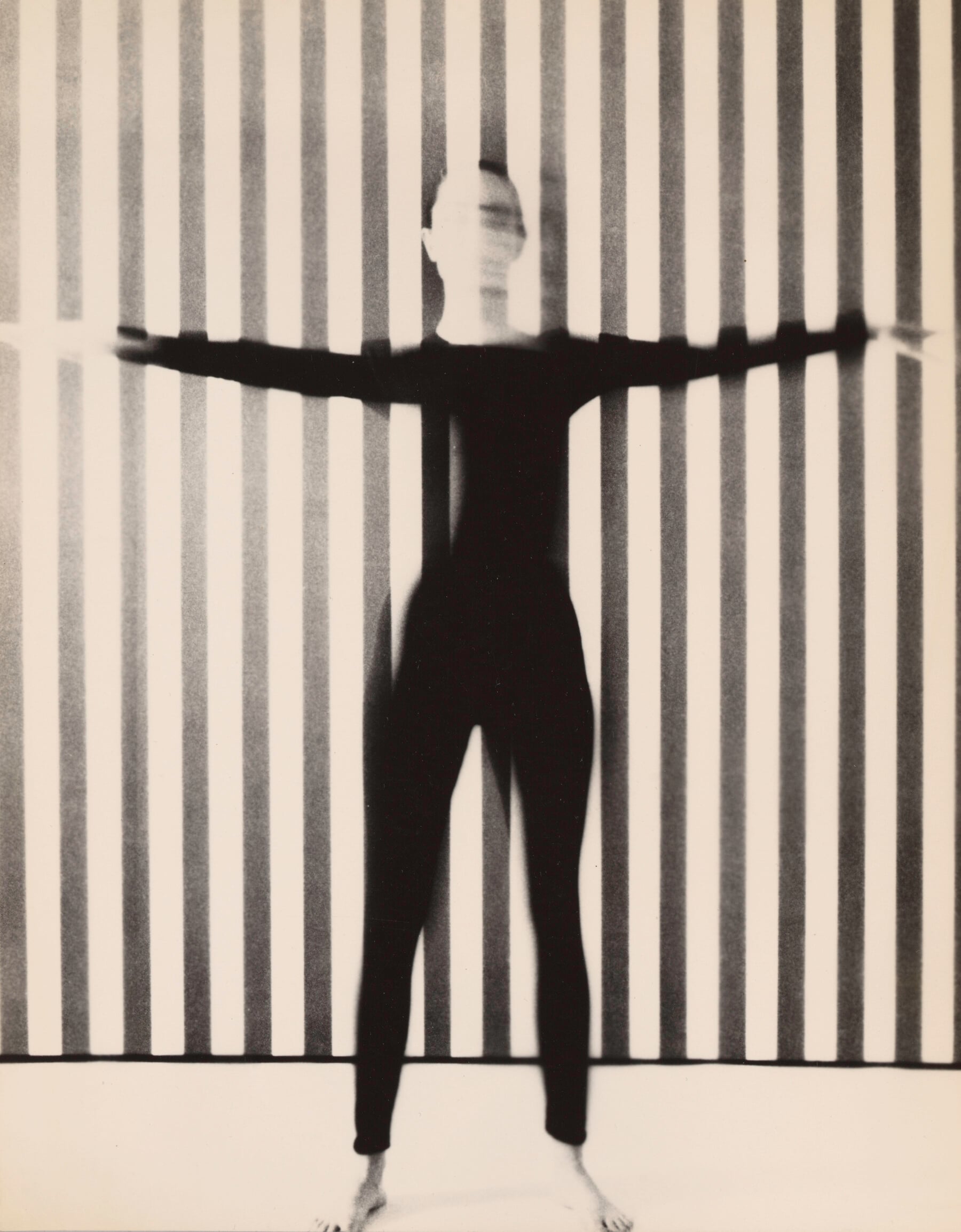
Now the Met has mounted an exhibition of work by Lillian Bassman, another outlier in the genre of fashion photography. Lillian Bassman: Bazaar and Beyond makes it clear that fashion may be the genre in which Bassman’s photographs reside, and all the photographs in the show are fashion-based, but her eye was much larger than her subject, and her imagination was operating well beyond the dresses, hats, and undergarments she was commissioned to photograph. Her subject was not fashion so much as photography itself; more distinctly, it was the graphic possibilities of the medium that she was so expressive in exploiting.
Fashion is a touchy subject, still, within curatorial ranks, even as preparations for the Met Gala are underway with this year’s theme, “Fashion is Art.” Over the years, the Met Gala (also known as the Costume Institute Benefit) has become a necessary perversion of what was once a more discrete form of philanthropy. Now a media carnival of pure burlesque, it provides substantial funding for the Costume Institute, a distinct and self-contained entity that remains ancillary in the hierarchy of significant departments at the Met, quite apart from the upper echelons of painting, photography, sculpture, and antiquities. Yet even though the Costume Institute is partitioned from the fine arts by attitudes that remain invisible, its blockbuster shows have been installed in galleries neighboring those of European Painting. And, while Bassman was known to be a fashion photographer, the Met is positioning her beyond the genre of fashion—and rightly so.
Bassman, who grew up in New York in the 1920s and 1930s, had always intended to be an artist. In her twenties, she and her husband, Paul Himmel, were urban hipsters in their time, by turns “intellectual, discriminating, political, artistic, original and, ultimately, restless,” according to their daughter, the photographer Lizzie Himmel. Aware that she would have to support herself in the commercial world, Bassman found work as an assistant painter of murals for the Works Projects Administration; she took classes in fashion illustration at Pratt Institute; she was a textile designer for a short period; then she applied to Alexey Brodovitch’s design workshop at The New School for Social Research.
Brodovitch recognized her distinct talent and awarded her an unpaid internship in the art department at Harper’s Bazaar, where he presided as the art director. Brodovitch was already a towering figure in graphic design, and soon he put Bassman on staff as his design assistant. Working for Brodovitch, a cantankerous mentor, she could not have landed any closer to the center of the zeitgeist as it had shifted from the art world in Paris to the modern cultural swirl of mid-twentieth century New York. “Alexey Brodovitch was both a captive witness and an enthusiastic participant in the symphony of artistic experiments that was Paris in the twenties,” Kerry William Purcell wrote in his definitive book about Brodovitch.
Moving to New York in the 1930s, Brodovitch would turn Harper’s Bazaar into a laboratory of original graphic design that reflected the wit of Dada, the geometries of the De Stijl movement, and the structure and shape of Constructivism. Frank Zachary, the editor of Holiday and Town & Country in the postwar years, who coedited the short-lived Portfolio magazine with Brodovitch, framed his unique design sensibility in architectural terms. Brodovitch “takes that white sheet [of paper], it’s like the side of a building, [he’d] pierce it with a couple of windows, and a door, and it’s a beautiful facade, page by page,” Zachary said in a 1991 interview.
Before photography galleries emerged in the 1970s, the magazine page was the only platform to see the work of notable photographers. Brodovitch published portfolios by Man Ray, Brassaï, André Kertész, Lisette Model, Cartier-Bresson, and Robert Frank. He hired the young Richard Avedon, who Bassman worked closely with in the late 1940s. When Brodovitch made Bassman co-art director of the Junior Bazaar, an offshoot of Bazaar created for a teenaged audience, she would collaborate with Avedon on entire issues of the magazine.
For several summers, Bassman and her husband shared a summer house on Fire Island with Avedon and his wife. They used their time on the beach dreaming up fashion features, generating much of the content for Bazaar, since, in the new postwar era, there was not yet a burgeoning fashion industry to draw ideas from. With impish irreverence, they conceived the visual themes for several months’ worth of multipage fashion spreads. “One time,” she remembered, “sitting on the beach, [Avedon] and I planned a whole issue around green: green vegetables, green nail polish, green clothing. So we sent the fashion editors out to find things that were green. We sent the beauty people out to get green nail polish made, and I made a layout with these wonderful drawings of vegetables. Then [Avedon] photographed all the girls and made it look like they were climbing through these fruits.”
After almost a decade designing pages, Bassman decided to pick up a camera. She started photographing fashion for Harper’s Bazaar, and, with an eye informed by the photographers Brodovitch had been publishing, she experimented with shape, line, gesture, movement, and blur. She obscured the dresses and undergarments in her photographs with a variety of improvisational techniques: She achieved astonishing visual effects in the darkroom by blowing cigarette smoke under the enlarger or placing tissue over prints to diffuse an exposure, both of which resulted in atmospheric distortion and ambiguity. While the fashion itself is suggested in her pictures, the female form in space is the dominant motif.
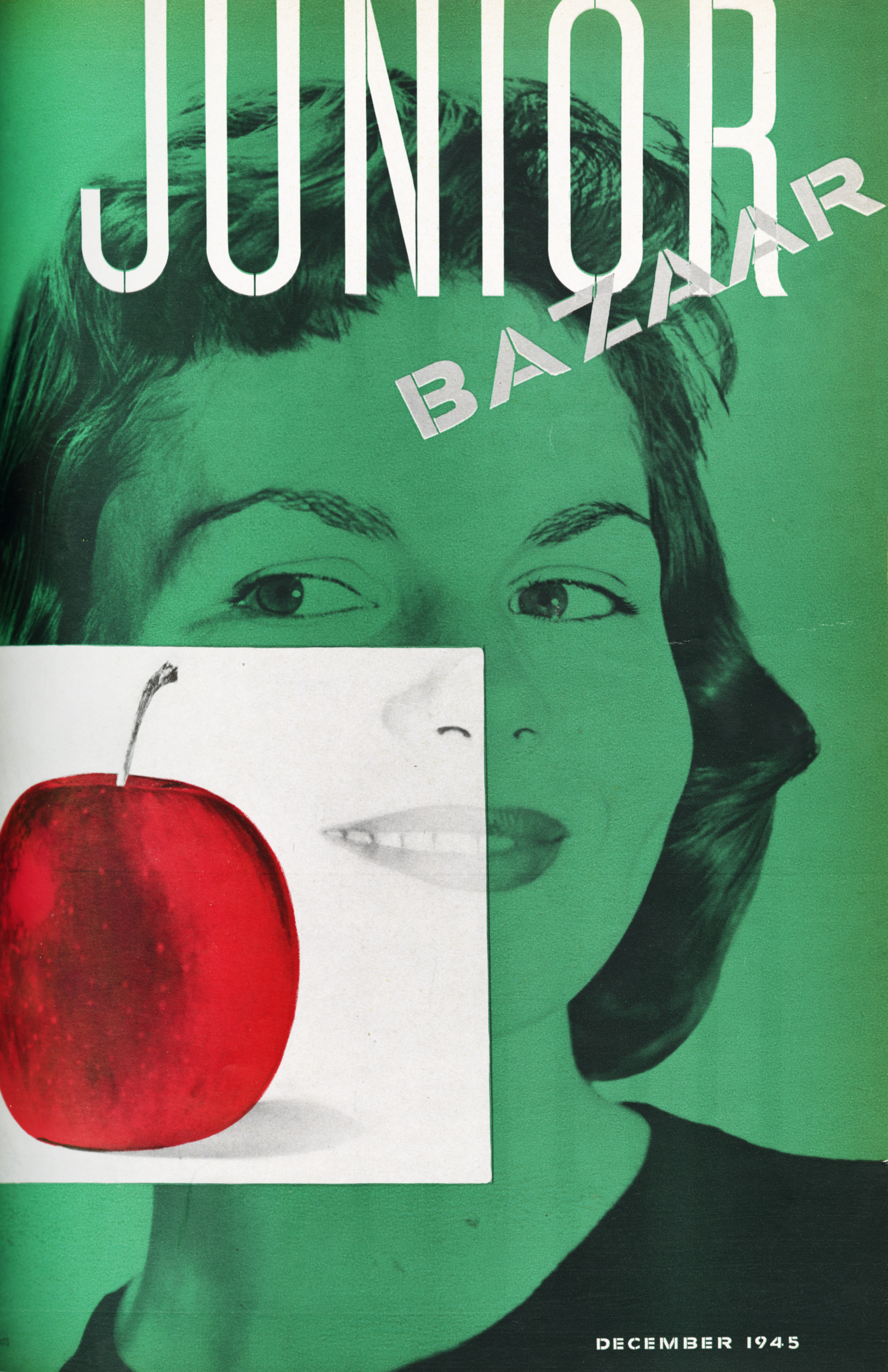
While dresses, scarves, shoes, and hats were supposed to be the point of her assignments, her pictures seem to eschew the cut of the dress in favor of the silhouette of the model; they emphasize an attitude or a gesture, as if she were trying to capture the sensation of the movement instead of the details in the clothes. In Variant of Perfecting the Line (1955), her assignment was to photograph lingerie—in this case, a foundational garment known as a torsolette. What we see first is the graphic blur of movement and the glow of an aurora around the silhouette of the model. It was provocative for Bassman to obscure the model’s face to direct our eye to the garment, rendered in full detail, even though it takes second place in the focus of the viewer’s attention. The object in the picture becomes an excuse for her exploration of various properties of the medium— exposure, light, contrast, sharpness and haze. “I didn’t know anything about photographing fashion,” she once said, “but I knew about photographing women.” The elongated hourglass shape was a mid-twentieth-century aspiration, and Bassman was speaking to the style of the era as much as to her constituent audience.
“Although her work reflects a close attention to—and, indeed, a love of—fashion, her artistic achievement transcends its subject,” said Virginia McBride, assistant curator in the Department of Photographs at the Metropolitan Museum, who organized the exhibition. “When photographing couture looks for Harper’s Bazaar, Bassman sometimes bristled at expectations to ‘show the clothes,’” even though, McBride added, “her experiments accentuate the formal qualities of the fashions, sometimes to the point of abstraction.”
There is a choreography about her photographs in which movement is accentuated in indistinct spaces. It was a canny move on her part, and it leaves one wondering if she merely tolerated the clothes as a point of departure to be able to roam the visual ideas of her imagination—as well as the era—and tease out the properties of the medium in which she was working to create images that challenge the eye and evoke a purer emotion. In Variant of the Wonders of Water (1959), which appeared in Harper’s Bazaar, there was no specific article of clothing featured in the photograph. Instead, a figure is shown swimming underwater, as if she has just made the dive; the beautiful arc of her body, the bright graphic squiggle of line following her movement, and the substance of the water all conspire toward the effect of an of an elegant, enigmatic drawing.
In another image, we are standing behind a model who is lying on the floor with her legs crossed on the wall. Her dress is obscured by the angle of the viewer’s position, although we can see a pattern of stripes across her body that fans out on the floor, as if she were lying in a puddle. She is insouciant lying on the floor smoking a cigarette in an extended cigarette holder, and her irreverence about her dress makes an intentional statement that reveals more about Bassman’s sensibility than about the article of clothing she is photographing. In 1982, not long after Artforum’s Issey Miyake cover, and likely as a result of it, Kennedy Fraser, the fashion critic of The New Yorker, wrote a meditation on fashion’s standing in contemporary culture:
For until quite recently fashion was a despised stepchild in the design world, an irrational, feminine form of fetishism, additionally damned by virtue of being at the mercy of commerce at its most corrupt. And now this view is being eroded by a growing group of people who see fashion as a perfectly respectable part of the whole mosaic of contemporary visual expression. There seems finally to be a new and genuine attempt to look at fashion in terms of painting, photography, dance, performance, sculpture, architecture, and the like: as a question of shape, form, mass, structure; of moving through space or simply taking up space in particular ways; or of the play of color, light, and shade.
I can’t say that I am arguing for fashion photography to be embraced as a genre in the art-historical sense, even though there are individual photographers who have defined the genre by taking their own work to a level of visual inquiry and creative expression that deserve art-historical attention: Man Ray, Edward Steichen, Irving Penn, and Richard Avedon. Lillian Bassman has a place in this circumscribed pantheon. Her pictures are serious, complicated, elevated, at times lovely, and, finally, inquisitive and probing into the structure of a mechanical and chemical process that has been rendered virtually extinct in the digital age. Her work falls in place in a continuum of experimentation with the medium that began with Man Ray in Paris and Moholy-Nagy at the Bauhaus in Dessau, Germany. In fact, throughout her career, for all the leading fashion magazines her photographs appeared in, fashion really had nothing to do with it.