, January 23, 2026
States of Denial
What is the lesson of ICE’s occupation of Minneapolis?
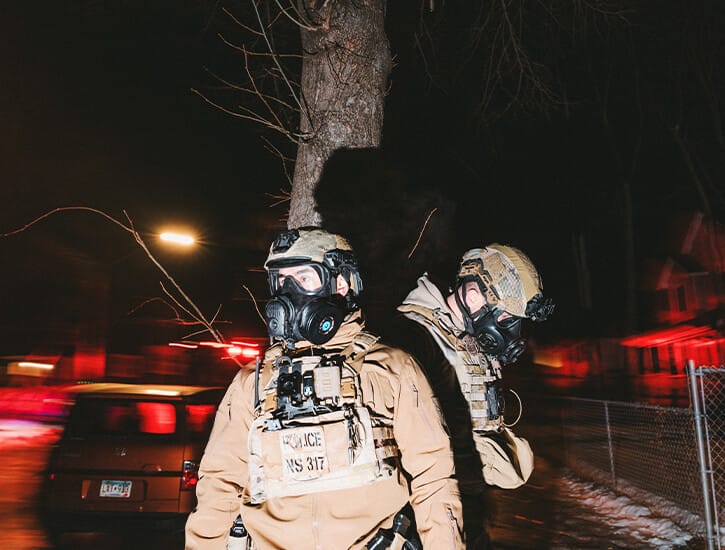
Donald Trump is somewhat unique among modern U.S. presidents in that he appears generally unwilling or incapable of taking anything more than a half-hearted stab at rationalizing military intervention abroad. Special forces had barely deposited Nicolás Maduro in New York City before the president was rambling about drugs and oil, and it really did seem for a few days like he was willing to touch off a skirmish with NATO over Greenland because it looks big and important on a map—and also maybe because Norway didn’t give him the Nobel Peace Prize.
The public defenses, weak as they are, tend to toggle between U.S. security and the tried-and-true argument about bringing democracy to the wanting masses. The latter formed the basis for Trump’s toying with the idea of military strikes on Iran as that country’s regime cracked down heavily on anti-government street protests earlier this month. There’s a plain irony in the notion that Trump would send troops to ostensibly secure victories for anti-authoritarian demonstrators as hordes of masked men descend on Minnesota’s Twin Cities, smashing and grabbing people out of cars for reasons that range from undistilled racism to something more sinister.
Let’s talk plainly. To call these “immigration operations” at this point is a misnomer. There’s no doubt that immigrants are being detained, but that seems at least partially incidental to the twin missions of ethnic strife and disempowerment—related but crucially not identical to immigration enforcement, as the efforts to terrorize a large population of Somali Americans in Minneapolis demonstrates. On top of that, there is the performative trampling of local control and the denial of fundamental civil liberties.
What the people calling the shots—by which I mean people like Stephen Miller, who have far more direct control over day-to-day operations than Trump—want to do is win a perception war, to declare themselves the winners by technical knockout. While they’ve shot markedly fewer people than the Ayatollah’s men, the intent is more or less the same: don’t bother with your expressions of dissatisfaction or, if you’re a person of color in our land, to even try to live normal lives.
If we didn’t end up here during Trump’s first term, it was only because his takeover of institutions was incomplete.
This is garden-variety authoritarianism of the ethnic hierarchy flavor, drawing on the United States’ long history but decidedly advanced in manifestation, and it doesn’t do us any good to dodge around that fact. Trump is the ailing figurehead of a movement to impose rule by junta on the United States, and this plan is simultaneously advancing briskly and on weak footing. Only a clear-eyed acceptance of the former can drive us—by which I mean all of us, from community organizers to journalists to local and state and federal officials to civil society groups to judges, unwieldy as such a coalition might be—to effectively use the latter to destabilize it.
In some ways, this is a tedious story, in that it was so predictable. It might take a while, but the imperial boomerang’s nature will always have it swinging back, especially if the wielder refuses to learn any lessons along the way. The expansion of the tools and practices of immigration enforcement into an all-encompassing expression of visceral state power was something there were flickers of since I first started writing about it a decade ago. The detention apparatus, the parallel systems of justice, the Department of Homeland Security’s culture of self-righteousness, the surveillance technology itself—all of these things have been years, if not decades, in the making. I won’t pretend to have some special or unique insight, only the willingness to look a few moves ahead.
If we didn’t end up here during Trump’s first term, it was only because his takeover of institutions was incomplete. Among the most fascinating and most studied stories of the Trump era will someday be how and why so many of these apparently titanic centers of power—from Congress to the Ivy League to Big Law to the Fourth Estate—crumpled so easily, though we already have a sense of the basic mechanics of cowardice, of anticipatory obedience, which is so often couched in the bloodless language of pragmatism. In any case, we’re here now, many of us feeling like somewhat passive watchers of an authoritarian collapse foretold, and for the same reasons of ostensible pragmatism apparently unable to state the plain facts of it.
It’s a lesson we apparently have to learn and relearn: authoritarian tools left available will eventually be used. Why wouldn’t they? Our supposed betters have left behind the divine rule of kings only by cutting out the middleman; their belief in their inherent right to rule over us is now crasser and a touch more circular. It’s because they have more money, more technology, more vice, less tolerance, fewer morals, and this makes them better suited to the task of subjugation, which they understand to be the only real power. As Trump recently told reporters from the New York Times, the only restraints on his power are “my own morality. My own mind. It’s the only thing that can stop me.”
To say this out loud falls on more receptive ears than it once did, but we’re not yet at widespread acceptance. An instinct for rationalization and adaptation has been our greatest evolutionary triumph and perhaps also a perennial curse. We can get used to pretty much anything, and quickly, which is a neat trick for survival but often a barrier to realization. So let me lay this out explicitly: where we are now is not where we were six months ago, which itself is not where we were at the start of last year, when Trump returned to the White House. Things have shifted, and they’ve shifted dramatically in a direction that’s obvious and would be plainly described in the mainstream press if the mix of normalcy bias and American exceptionalism wasn’t such a damn intoxicating cocktail.
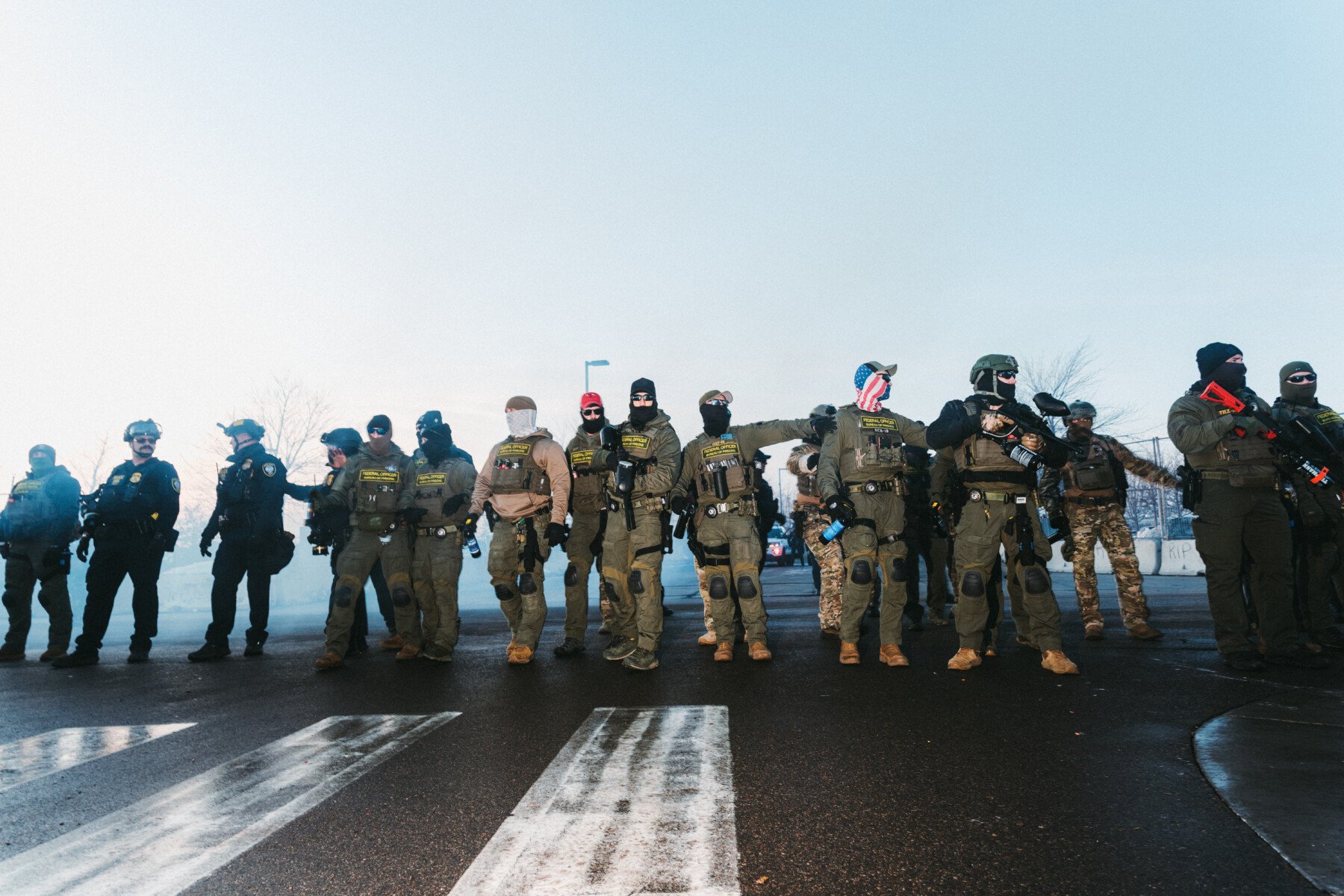
There are two polarities of denial about what we’re seeing on the ground in Minnesota and elsewhere, both equally useless. The first says no, it’s not really happening, or not happening like that, or what we’re seeing are unfortunate, isolated incidents that can be reined in. As Matthew Yglesias put it earlier this week, the recent excesses of ICE do not constitute “an emergent structural property of American immigration institutions and [do] not require structural remedies.” The distortive effect needed to keep this argument going just keeps growing as the cities under siege pile up, each producing dramatic and often-near identical video evidence of agents engaging in a clear pattern that is, if anything, getting worse each time. This doesn’t have to be direct denial; when local officials put out statements along the lines of “we respect our federal law enforcement and recognize that we need secure borders, but,” that is a denial of a different sort, a refusal to acknowledge the plain objectives and current mission of DHS.
Then there’s the refusal to see it as new, which mostly takes the form of people online insisting that this is the way it’s always been. Outrage at a video of, say, a woman getting aggressively dragged out of her car after accidentally driving through a checkpoint on her way to a doctor’s appointment is really naïveté, because that’s just how things are. Call it defeatism or smug savvy, but it posits that the battle is long lost and we are merely noticing now.
Brutality in various forms is, of course, foundational to the United States and a core facet of these particular agencies. Border Patrol has long been a secretive paramilitary organization that made a point to continuously break the law until Congress eventually relented and gave them additional powers. But this is different. We ignore that at our peril. We can lose here; nothing guarantees that we won’t succumb to fascism. Yet we haven’t, and we don’t have to.
I would like to talk about the use of violence. Anyone who has a clear or simmering lust for it is not someone you want to have in your movement, for ideological and frankly practical reasons. I’ve met exactly zero people—who aren’t otherwise psychopaths—who’ve experienced the raw honesty of violence, be it from the state or other sources, who pine for more. Revolution, civil war, armed sectarian strife, these are things that end in ways that are unpredictable and tarnish lives heavily in the meantime. I don’t want violence, and trust me that you don’t either. Communities throughout the Twin Cities and around the country have been notably successful at constraining and repelling ICE activity without it, relying on hard-learned lessons from the last decade of organizing and employing a mix of high-tech tools like ICE tracker apps and low-tech but effective implements like whistles.
If you’re Walz, or any other blue-jurisdiction executive in a place besieged by the Trumpian shock troops, there are no good options on the table.
Still, regrettably, force or at least the threat of it is sometimes the only counterbalance to force. Combatting authoritarianism sometimes means literally constraining its agents’ ability to impose it, and we do have entities that are capable and equipped now to do so. A couple of weeks before ICE officer Jonathan Ross fatally shot Renee Good on the streets of Minneapolis, I wrote for The New Republic about the mechanics of federal agent immunity and its limits. As the federal government defiantly and explicitly refuses to investigate Ross and instead turns its attention to Good herself and her widow, local prosecutors could, at any time, issue an arrest warrant for the agent—but they have declined to do so. Governor Tim Walz has put the state National Guard on standby with the vague objective of preserving peace and public order. There’s one obvious way to do that, because there is one party that is clearly responsible for disrupting that order.
I understand why state and local officials feel trapped here, and why they seem to waver between rhetorical defiance and relative paralysis. If you’re Walz, or any other blue-jurisdiction executive in a place besieged by the Trumpian shock troops, there are no good options on the table. A commitment to maintaining some diffuse semblance of order—which functionally means targeting the protesters and organizers, over whom you have far more tangible power than the invading feds—paired with weak protestations and the occasional lawsuit makes sense as a reflexive response, if only because these are people who are by nature risk-averse. The federal officials understand very well that the expectation is an imposition of outside authority, outside the scope of the laws as they exist and outside the social contract. They won’t go gentle into that good night.
What I hope local leaders might soon grasp is that there are conceivable—even likely—scenarios where the main choices they are going to have are the ways and degree to which their constituents will be harmed, not whether they will be. If you read the sum total of the coverage out of Minnesota, it’s clear that regular life is at the very least destabilized for everyone in the occupied areas, and practically impossible for anyone of color, regardless of status. Perhaps the idea here is to wait this out until Stephen Miller feels like Minnesotans have learned their lesson and sends word to Border Patrol commander Gregory Bovino to decamp to the next target, at which point the active threat might seem to diminish, but with some rather dire caveats.
Besides helping doom the next unlucky locale to even worse—because this has been an iterative process, with each deployment imparting the lesson that they can push the envelope a bit further—what local leaders then demonstrate to both their own constituents and the federal government is that the latter has nothing to lose now. If anything, the lesson learned is that they have to keep going because the main thing an authoritarian government has to fear is a loss of power that could one day make them answer for their actions. Will local prosecutors and the National Guard save us? That’s certainly not a sentiment I’m going to express here, but states’ rights cut both ways, and local force in tandem with the effective community-level organizing we’ve seen can toss this dictatorial effort fully off balance.
Ultimately, Miller’s operations are not going well. He doesn’t have enough agents to occupy multiple cities at once and instead must shuttle them from place to place. They are universally hated not only wherever they land but increasingly by the country as a whole. Trump is enormously unpopular and burning through allies quickly. Consolidation is far from guaranteed. It’ll just take some pushing.